Hiking the W Trek was a challenging and amazing experience! For those of you unfamiliar with the area – Patagonia is listed amongst one of the most beautiful places in the world. It’s full of mountains, glaciers, greenery, flowers, and clear aqua lakes (formed from the summer sun on the mountain ice). Most of the year it’s freezing here, but when the short summer comes, hikers from all over the world travel to the area to view the beauty. When we were booking our trip, we were advised that if we enjoyed hiking, the W Trek was a must, and I must agree!
While planning the trek, we had a lot of trouble figuring out how and where to sleep. Torres Del Paine (the National Park in which the trail is located) has campsites and refuges at several points along the trail, but you have to have a reservation to stay at them and open camping (camping anywhere) isn’t allowed. We happened to end up here right at peak season, so even though we were trying to book back in November, several of the sites were already full! We ended up settling for a 4 day/three night hike instead of the 5/4 we originally hoped for, and really, I think it worked out for the best!
This was my first multi day hike. After reading blogs and articles about the hike, I had decided that it was going to be a literal and figurative walk in the park since this is at a significantly lower altitude than we’ve been hiking the last two months. It turned out to be a little more difficult than I originally anticipated (mostly because of the additional weight my pack put on my not-so-great knee), but it was definitely worth the the few difficult points we encountered! Not to mention that Kirk was incredibly encouraging through it all. He was so patient when I needed to rest or go slow, and carried the large majority of our stuff in his pack so that less weight was on my knee!
Below is a map of the park with the part we hiked in red. Some individuals do the entire “O”. We didn’t quite finish the “W” since we couldn’t get a reservation on the left side of the park. 
Day one: Bus from Puerto Natales to Pudeto, Ferry from Pudeto to Paine Grande, Hiking from Paine Grande to Camp Frances
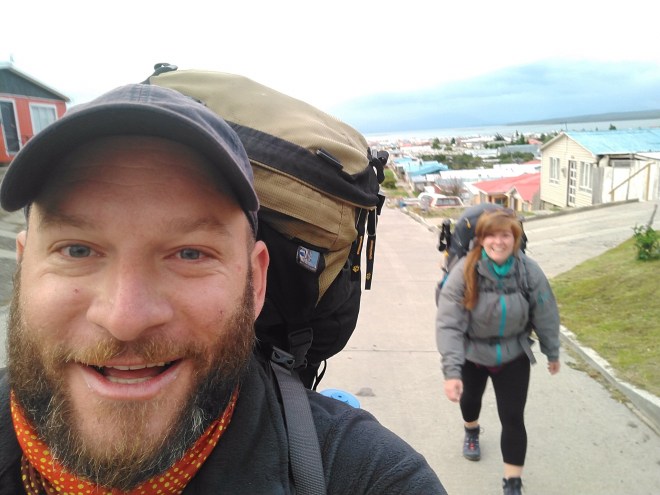
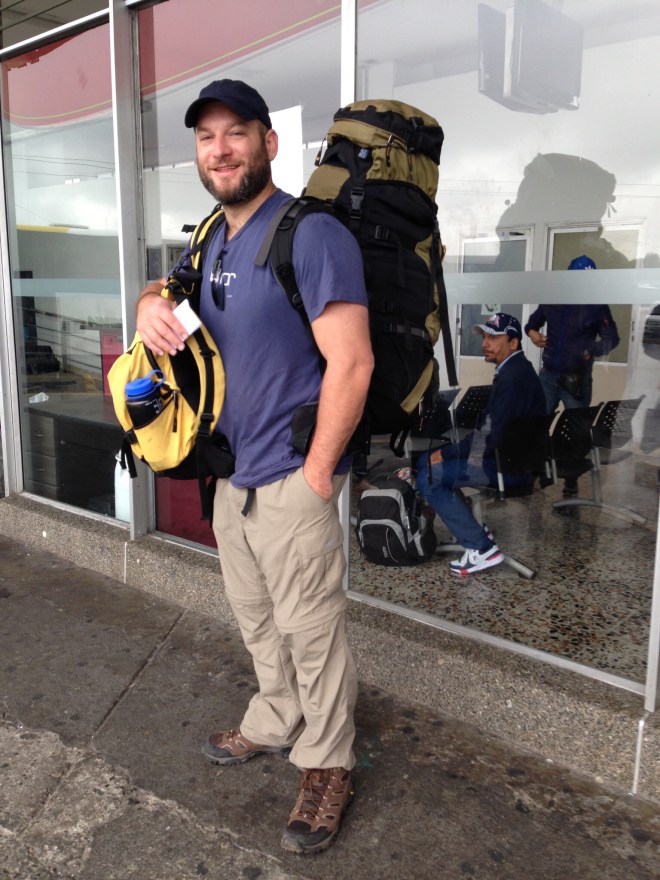
Heading to the bus station! We were running late, but made it with two minutes to spare! Behind us is the neighborhood we stayed in in Puerto Natales.
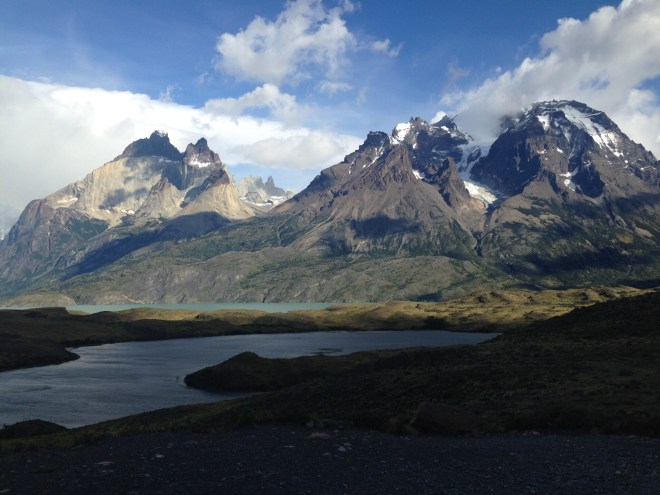
Our bus made a stop between Laguna Amarga (the East end of the park) and Pudeto (where you catch the ferry to go into the park) to let us take a picture of the range. It was beautiful! The video I posted on facebook/instagram was of this site.
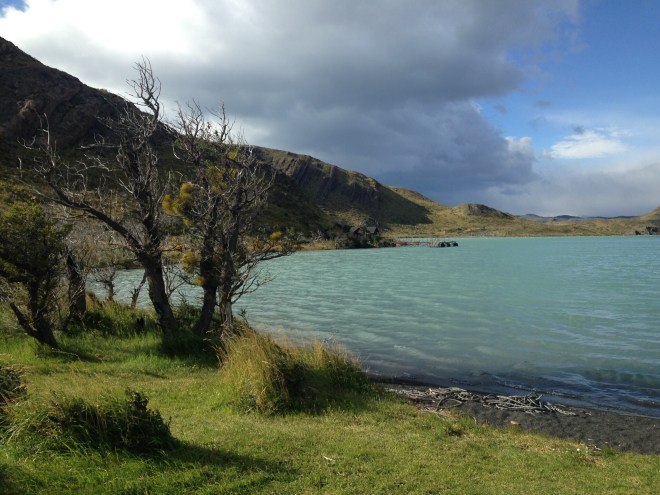
In Pudeto we drank a cappuccino while looking out over Lake Pehoe, then boarded a ferry to take us into Torres Del Paine.

The mountain view from the boat was beautiful! What is not pictured is the crazy wind that was spraying water all over us!
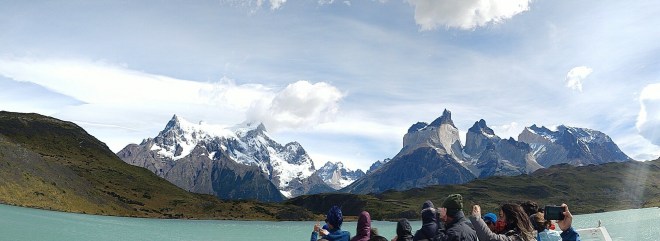
—
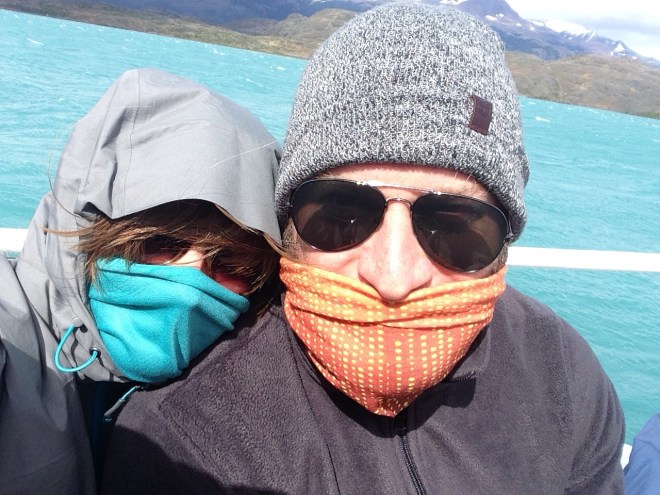
We were thankful for our buffs. My friend lizzy warned us we would want these for our travels, and she was so right! It’s a wind shield, sun shield, scarf, or cover for dirty hair – these things are great!
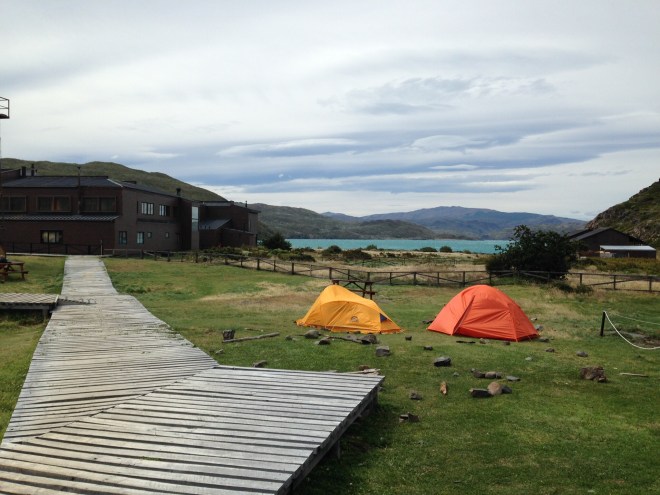
Paine Grande – where we paused for lunch before beginning our hike. This was one of the sites we couldn’t get a reservation for – otherwise we would have dropped out stuff here and hiked up to see Grey Glacier, then back for the night.
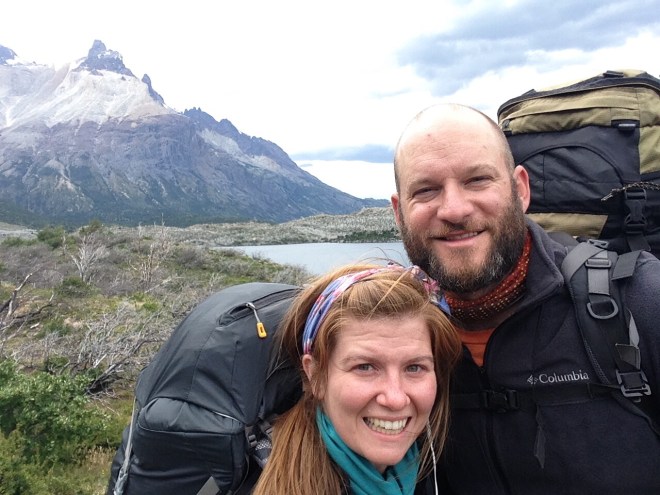
Starting out!
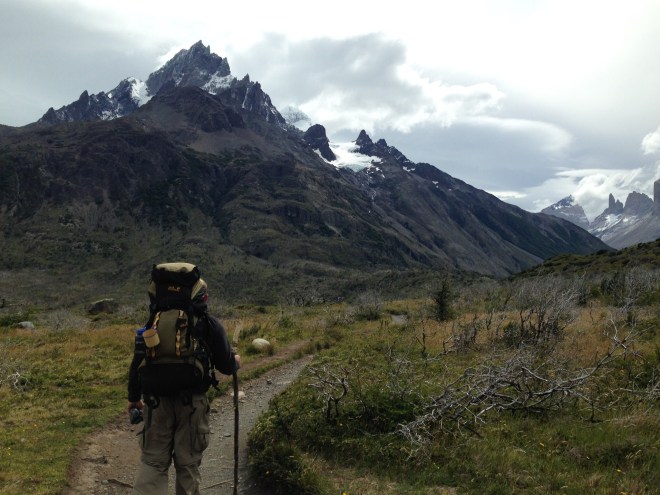
I wish the pictures showed how windy this first leg of the hike was! At first I thought it was just me being blown over, but when Kirk took the lead I watched as he struggled to keep his balance too! It was like walking in hurricane speed winds – impossible to walk straight. I don’t know how strong they were while we were there, but I read that the gusts reach up to 110 mph! I would have been fully blown over had I not had trekking poles!

—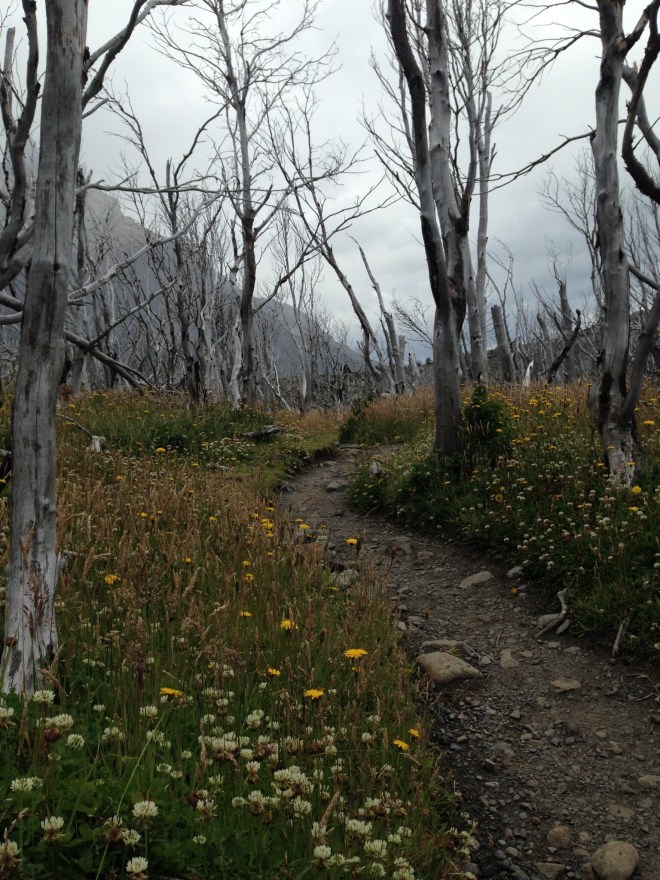
This picture didn’t turn out near as beautiful as the scenery looked! We were walking through a white forest speckled with clovers and yellow flowers. The white trees shone bright against the grey sky and green grass!

After we arrived at Frances, Kirk cooked. We had the best meals… since we stayed our first two nights at the same camp, we only had to carry most of our meals for the first 5 miles. Kirk packed in wine and made this delicious lentil curry with couscous for the first night!
Day 2: We left our big packs at the camp and went up the Frances Valley and then back to Frances. We actually didn’t make it all the way up the valley – the amount of uphill to the first look out wore me out! Our next day was the longest hike, so we opted to save my knees for when I was wearing the big pack. Even with our turning back early, this was my favorite lookout point. Every side was beautiful from the top!
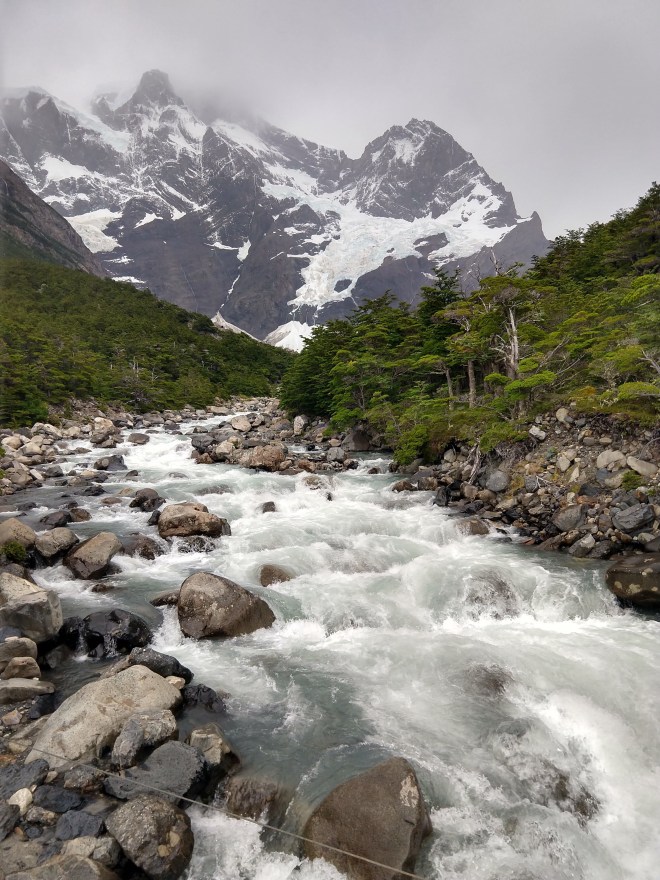
One of the many rivers we crossed!

Climbing up the rocks to the first lookout.

Those people are sitting on the first lookout point. As we were walking up I kept wondering how much better the view could get because the mountains were so beautiful even far away…but man, the closer you get, the beauty just grows! 
Mountains to the right of the lookout (the green trees were so vibrant!)
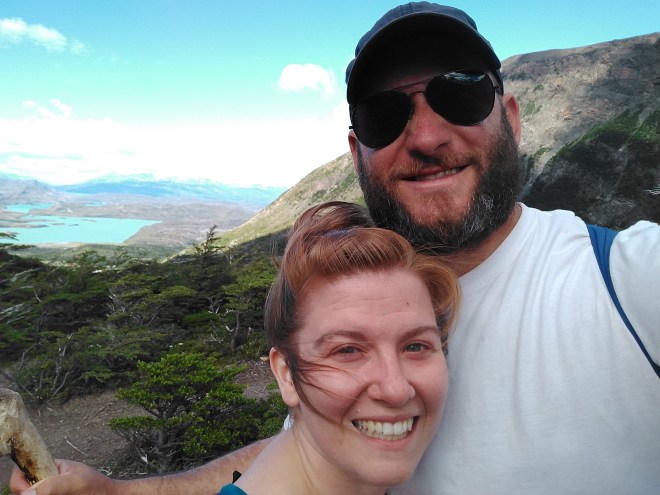
Us on the lookout with the aqua lake behind us! Everywhere you turned, as far as you could see, was gorgeous!
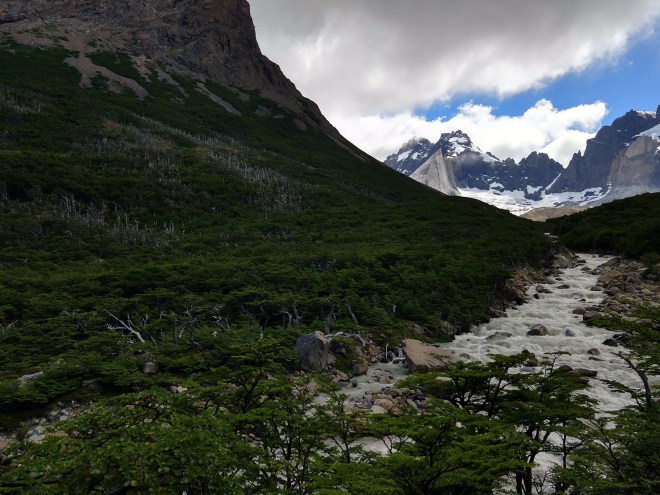
We walked on a little past the lookout and got some pictures of the river with the snowy mountains :).
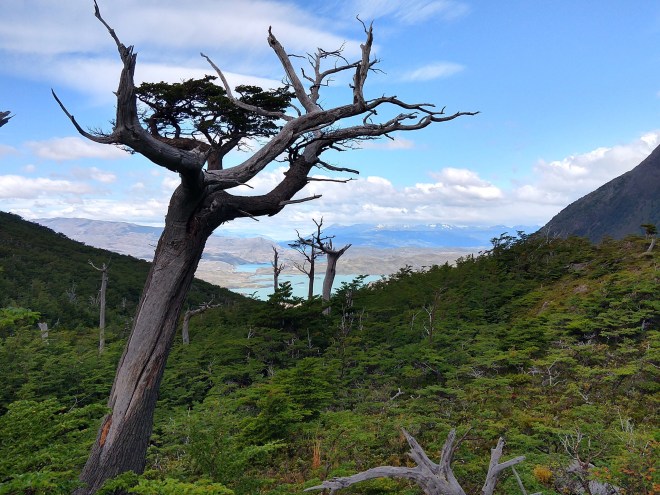
❤
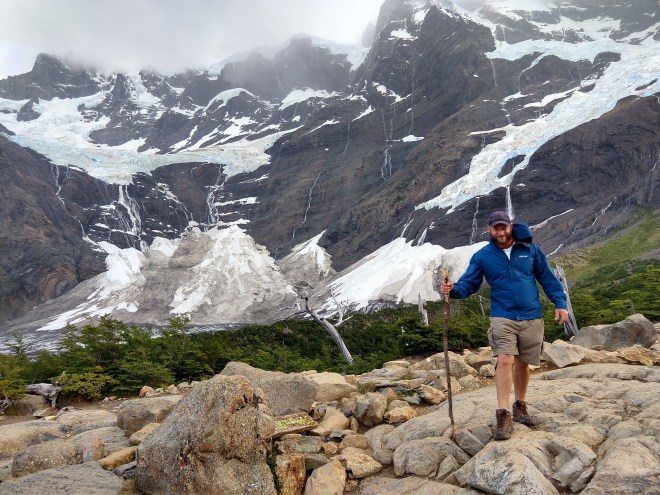
It started raining on us on the way back down, but it was only a mist! We hit the weather perfect on this trip – it was really raining days before we arrived and days after we left – we only ever got misted.
Day 3:
From Camp Frances to Chileno Refuge. In Frances we rented a tent and mats, but carried our own food and sleeping bags. Chileno, on the other hand, only lets you stay for full board – although you can still opt for a tent (which we did). This was our longest day hiking, but we knew we had a hot meal waiting when we arrived!
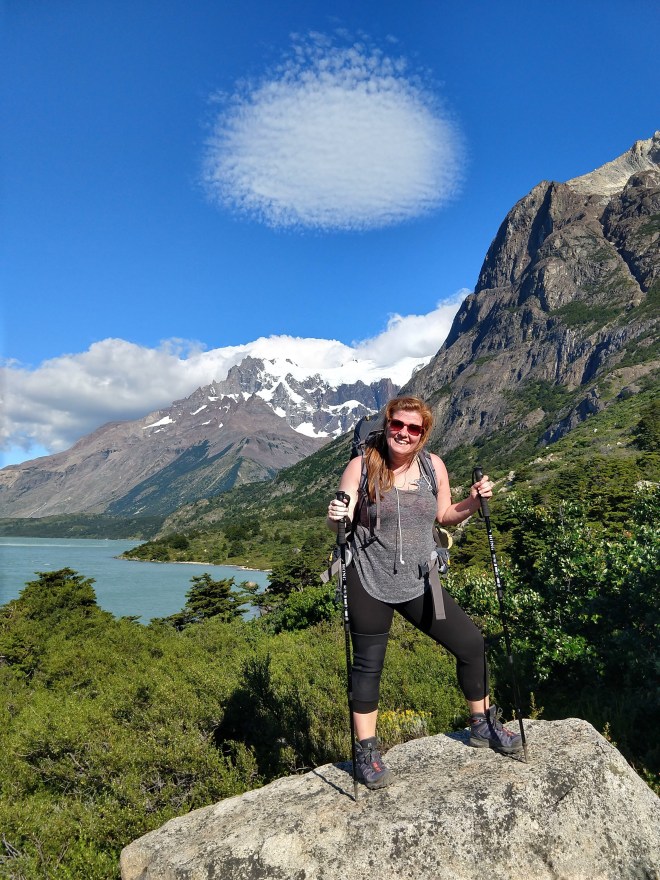
That view 😍
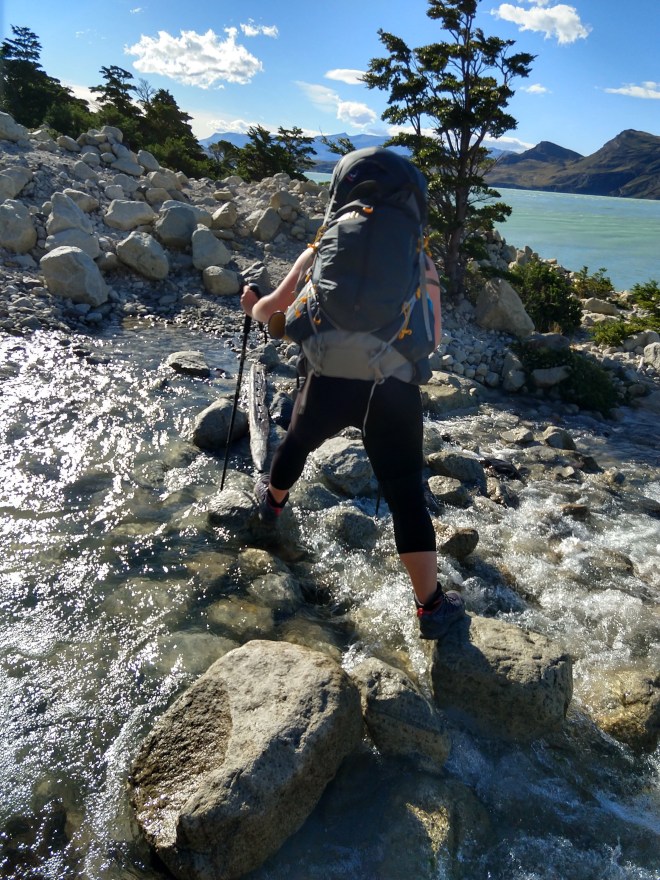
Crossing rivers was always a challenge for me with my little legs! Later this day I made a few wrong steps and my shoes got soaked!
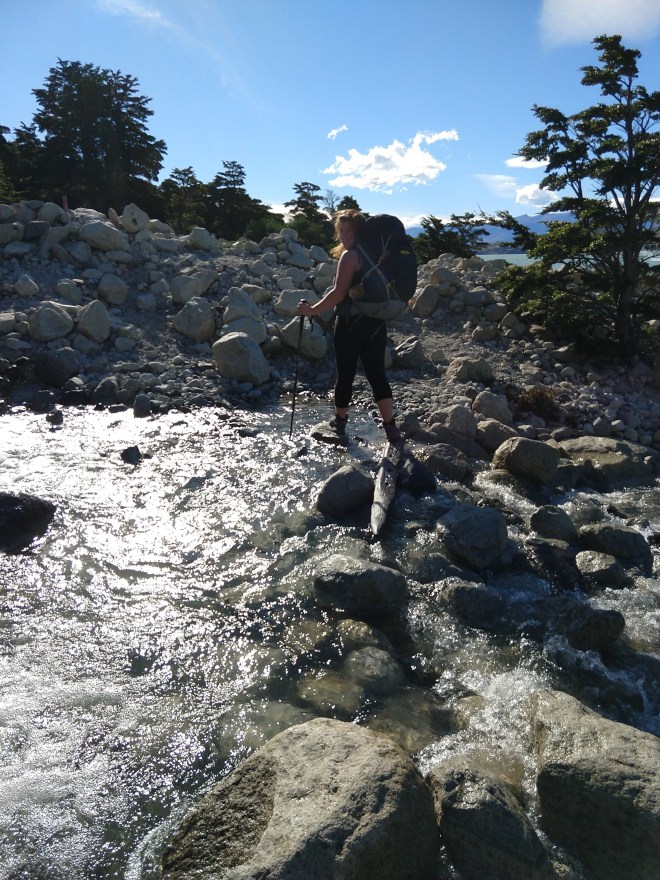
This time I made it though 🙂
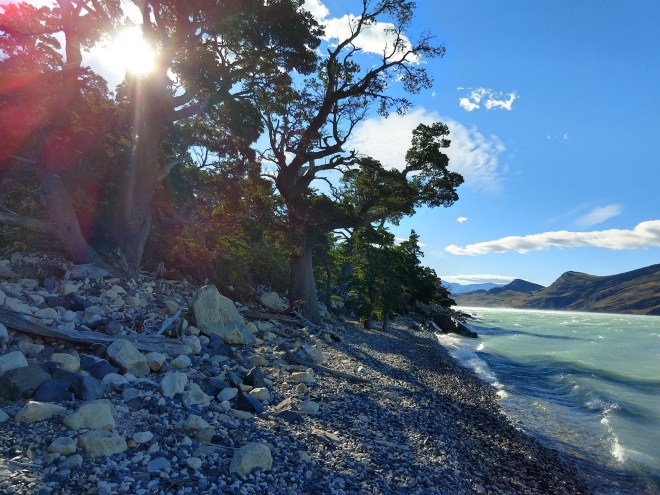
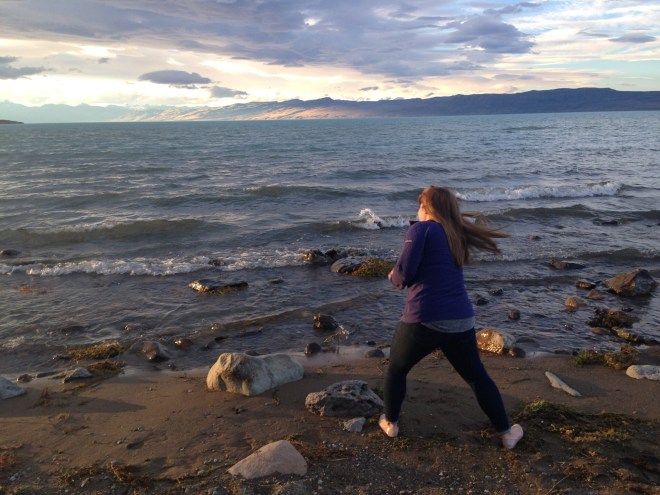
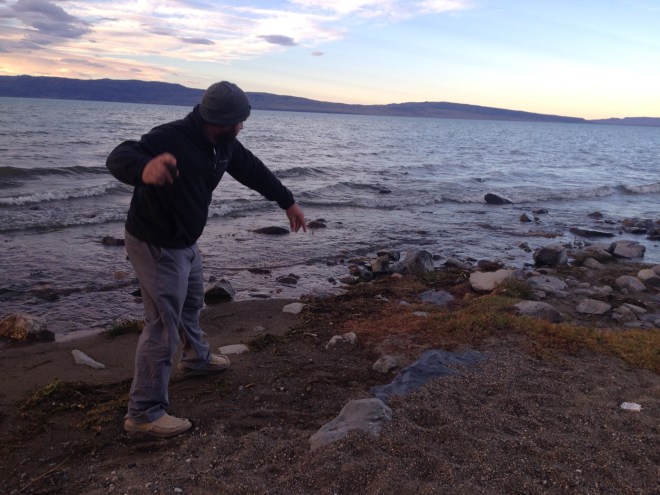
Our path this day led us right down to the lake. We skipped a few rocks and stared at the glossy blue.
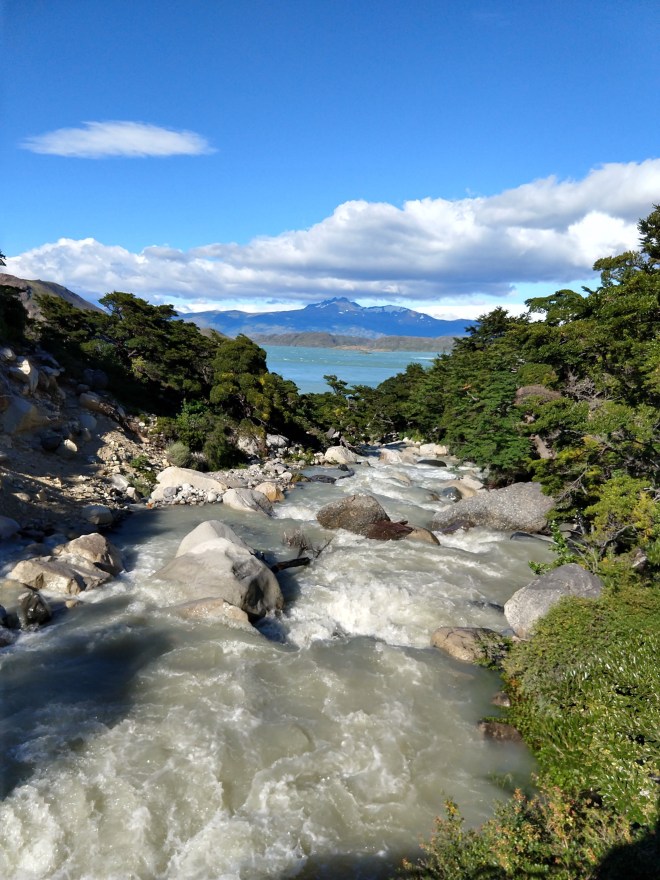
We were informed when we got to the park that all the water in the rivers was safe to drink. We filled our bottles up in the steams and never got sick. It was the best water we’ve had all trip! Even the stuff we filter out of the sinks still tastes like chlorine, but this had no taste!

So many rivers! We never had to worry about running out of water!

This was towards the end of our hike this day. We walked through a bog (with much difficulty and no pictures) and then through an open field before arriving at our final mountain. We went up…

And found ourselves overlooking the river we would sleep next to that evening. This part of the trail was the most dangerous. We were next to the edge the whole time and the wind was almost as gusty as it was that first day!

This is us at the campsite. We were sitting, waiting on dinner when a person we’d encountered on the trail earlier that day walked up and said, “Do you have a camera?” Kirk said yes, and then person asked if we wanted a picture of ourselves. This is how it turned out 😂. I mean, we were pretty tired 🙂
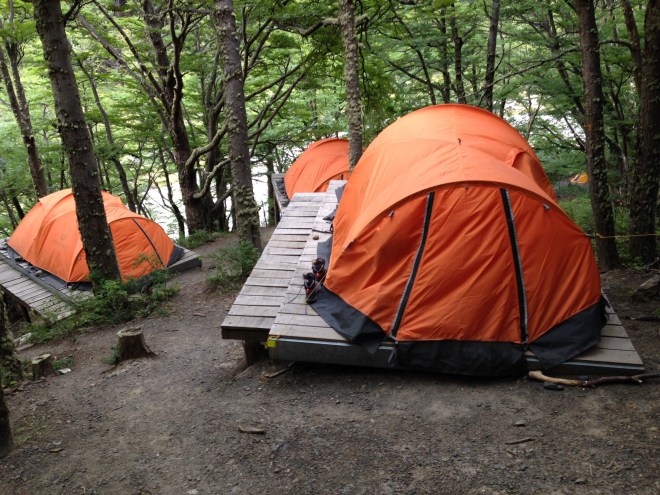
This was our tent for the evening. The one the prior two nights was a little smaller, but also on a platform. We slept terribly the first two nights, but when we opened this tent, we were delighted…
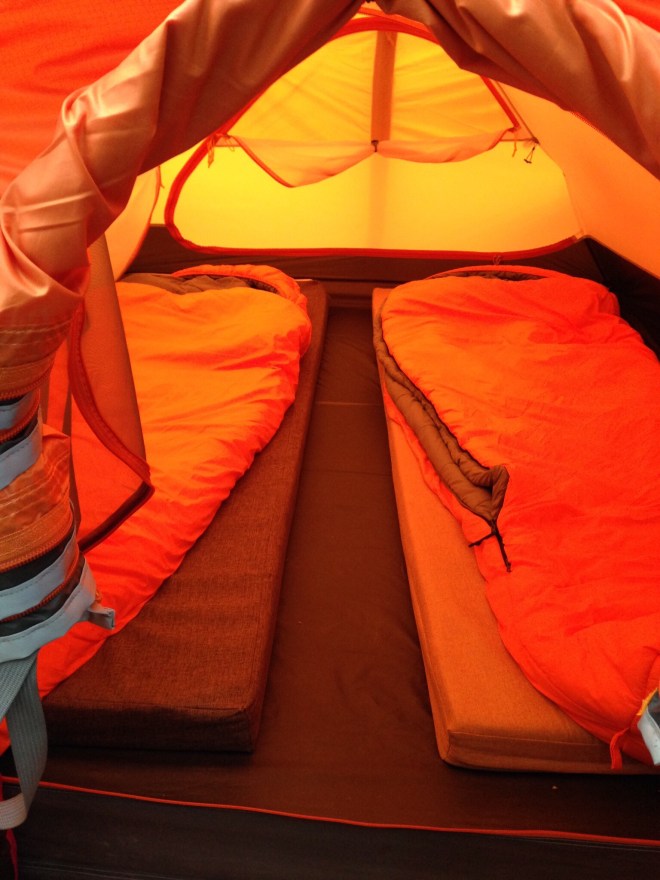
Those mats might as well have been mattresses! They were super soft, and we couldn’t feel the ground at all! This place was significantly more expensive, but we ate a four course dinner, slept the whole night, woke up to breakfast already made for us, and were sent off with a packed lunch! We would have chosen the cheaper option had we had one, but a little luxury was nice to have forced upon us!
Day 4:
Hiking Chileno Refuge to the Torres Mirador and back. Then hiking from Chileno Refuge to the welcome center, bus from welcome center to Lago Amargo, and bus from Lago Amargo to Puerto Natales.

Final day! We really lucked out with the weather. Not only did the sun shine most of the time we were there, but it was in the 70’s! We were anticipating possible freezing temperatures (which it can actually get down to in the summer there!)

—

The forest we walked through on the way to and from the towers was such a vibrant green!

The first 3 kilometers of our hike this day was a pretty even up and down, but the final kilometer went straight up! We climbed rocks for a least an hour before reaching our final destination.

The picture does not show the grandness of what is before you. This peaks are huge, the glacier is melting into tons of waterfalls (which are thin, but also very tall), and the water is a glowing teal, which particularly stands out against the mountain grays. We ate lunch sitting in front of of this :).
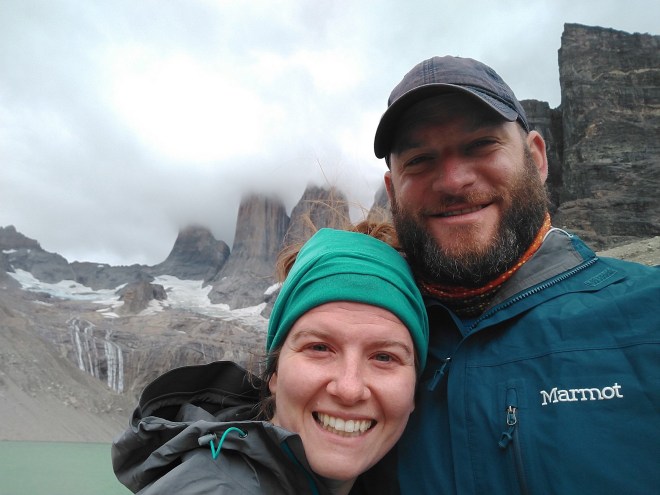
Selfie before heading back down. We went back to Chileno, grabbed our big bags and started down the mountain we had climbed the previous day.
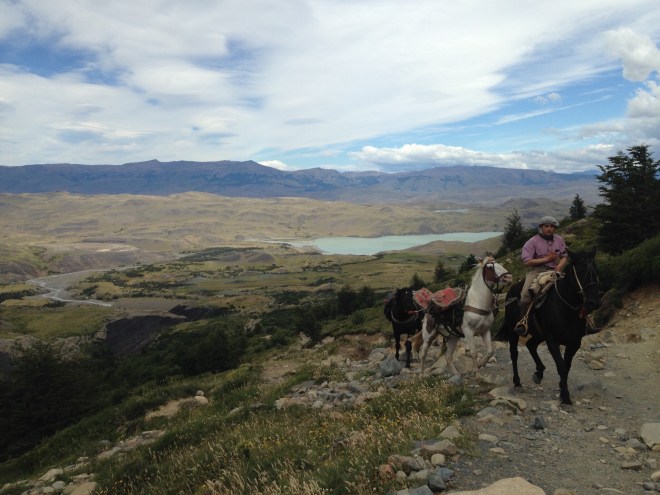
On our way out we passed horses taking supplies up. A Gatorade at the top of the mountain was $10! Even more than beer ($8.50).
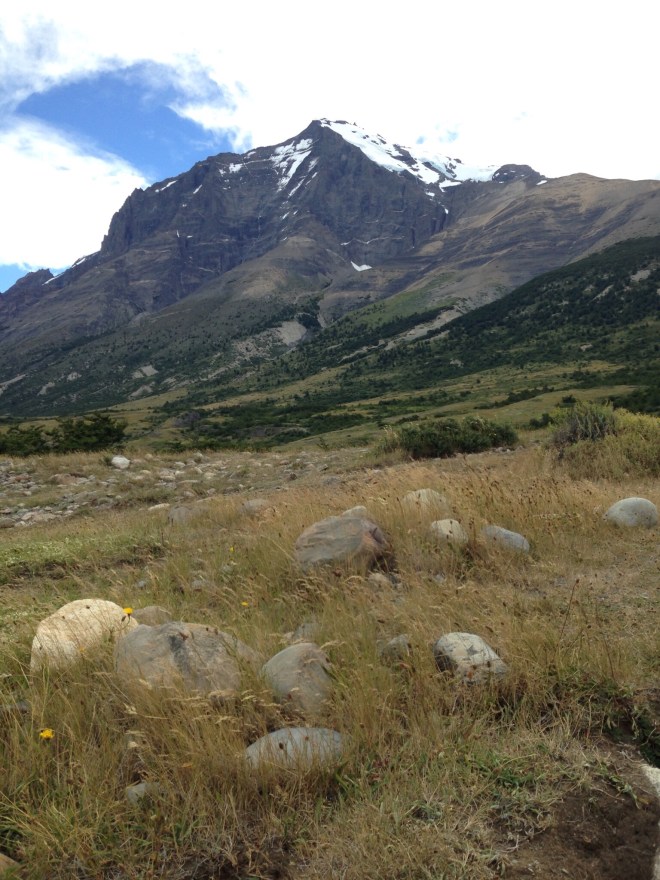
One of our final views of the mountains.

This is the hotel on the edge of the park. You pass it walking out to the welcome center and it is gorgeous! If you aren’t up for camping, and have some money to spare, you can stay here and take day hikes in! Although – this was the most windy place we walked. It’s the only time I was actually blown of the path (and the path was a road big enough for a car – it was so strong I just couldn’t walk against it! Kirk also had to chase his hat for a while here 😂)
Overall we had a wonderful time! If you are interested in hiking the W sometime, you are welcome to ask for advice! As I mentioned, we had a lot of trouble navigating the park and refuges from so far away – and even once we got in the park, we found the information to be incorrect (for example, you’d start a trail that said it was 9 km to the end, and at the end there would be a sign saying you walked 11 km 🤷🏼♀️) We also joked with a lot of fellow hikers about the “hiking time” listed on the signs (5 km, 2.5 hours). You’d think – 2.5 hours for two and a half miles – no problem, but we actually had trouble getting it done that fast! At first I thought Kirk and I weren’t making the times because of my knee, but it turned out that no one we got to know on the trail was making the time. One guy said he thinks they had a race and wrote the winners time on the sign 😂. For an average hiker with a pack, you can add at least a hour to the times they list – more if it’s majority up hill.
I leave you with a picture of a statue in Puerto Natales – the city is known for the discovery of a nearby cave with the remains of a giant prehistoric sloth – I think he looks like he dancing 😉
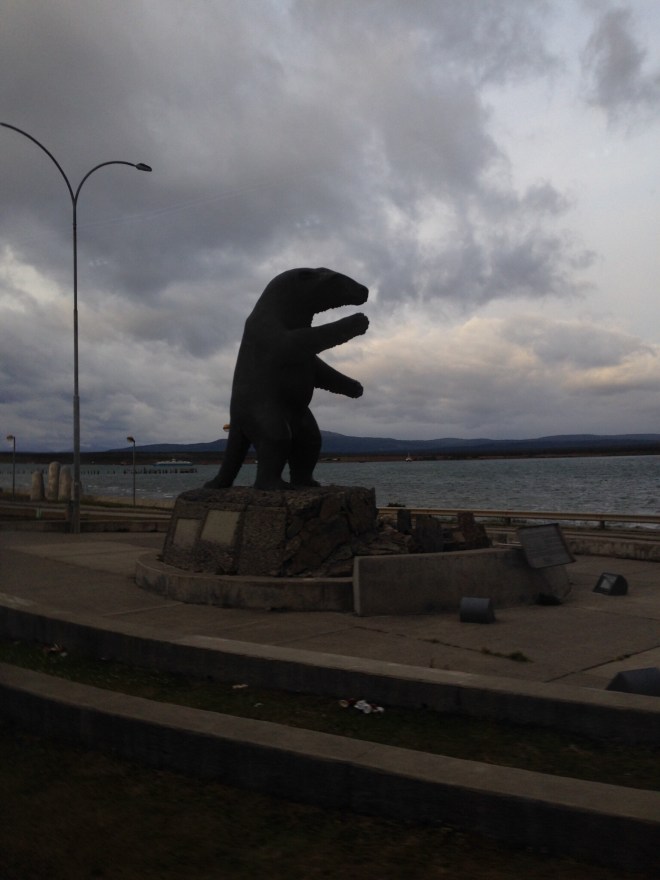
That’s all for now! We are currently in Punta Arenas resting and relaxing. We have about two weeks left before our time in South America is over – then onto New Zealand 🙂
 This was our hotel. It was quite a walk from town, but right next to the lake! It was also the second cheapest place we could find! We think the rate might be lower because they aren’t in the town center, but we sure didn’t mind!
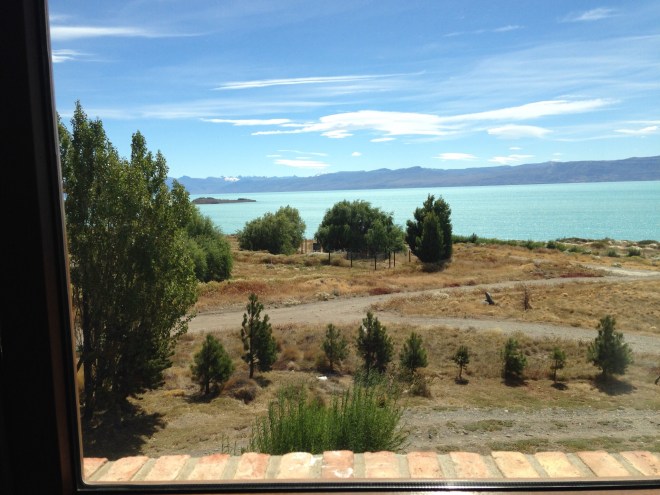 This was the view out our window 😍.
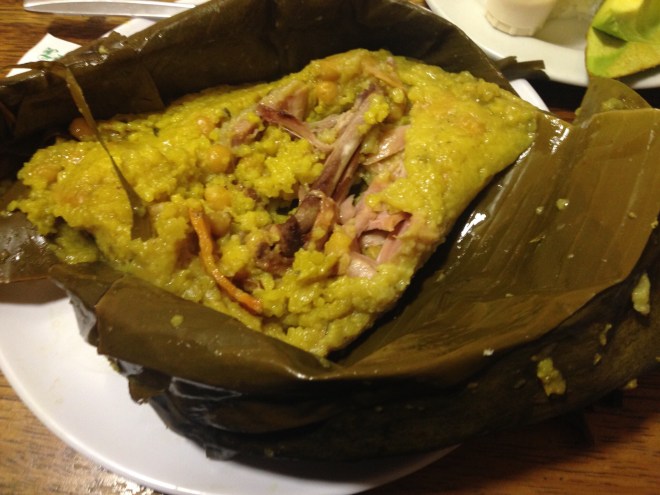
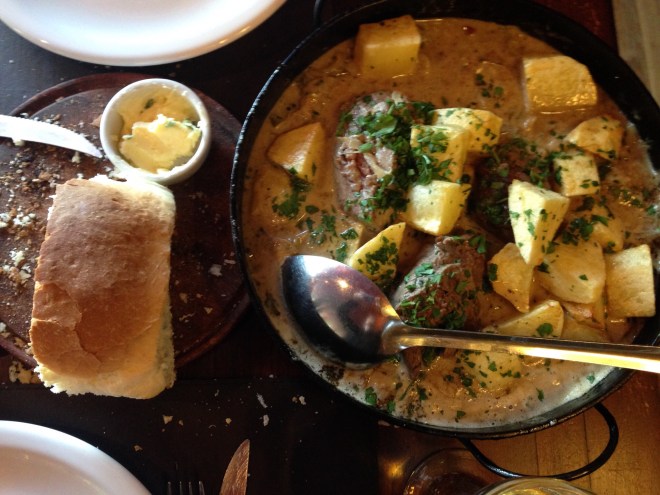 This is a traditional dish we ate at a restaurant called Isabel. Pretty much the entire menu there is made up of “cocina al disco” or “plow disc” meals. They are all made and served in the disc shown above and taste like some good down home cooking meal with great sauces and fresh bread to dip in it. Also, the butter that came with the bread was just butter mixed with green onion, which I’ve never considered doing, but it was quite tasty!
 This is a lamb stew that we had at La Zorra – a taproom with the cheapest food we had in Calafate, and it was SO YUMMY!
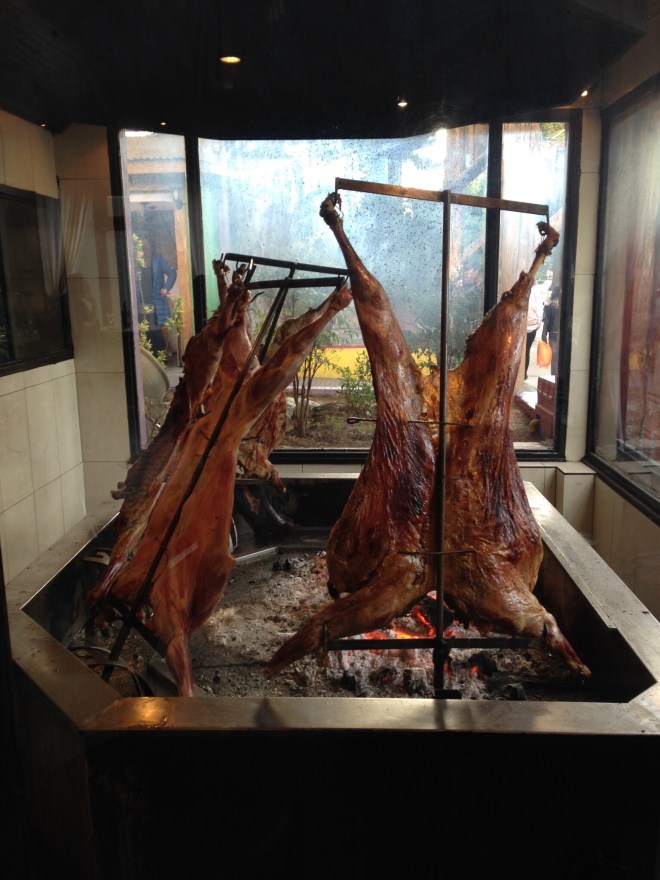 This one was also posted on Instagram, but this is the campfire lamb that Patagonia is known for. It too was tasty!
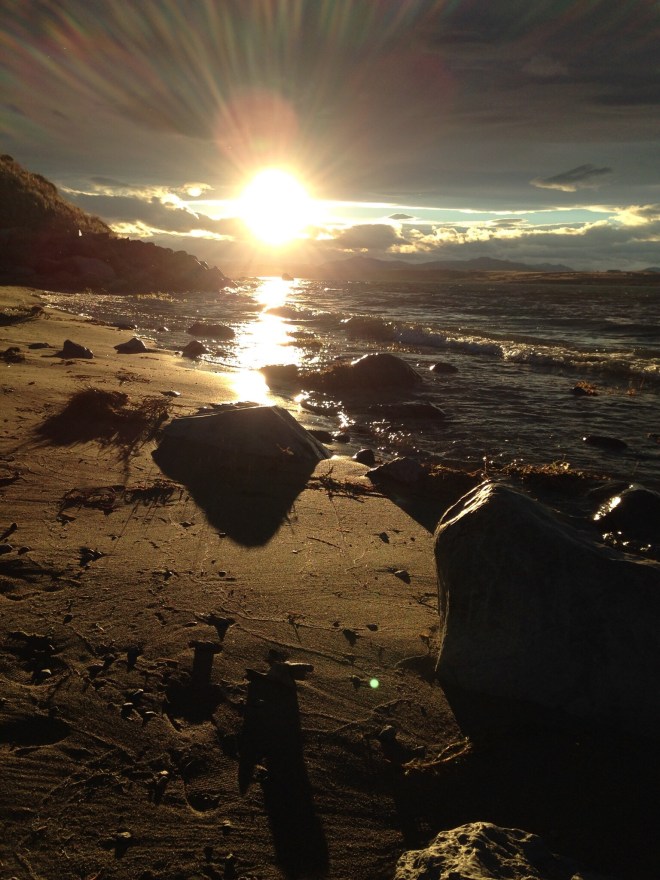
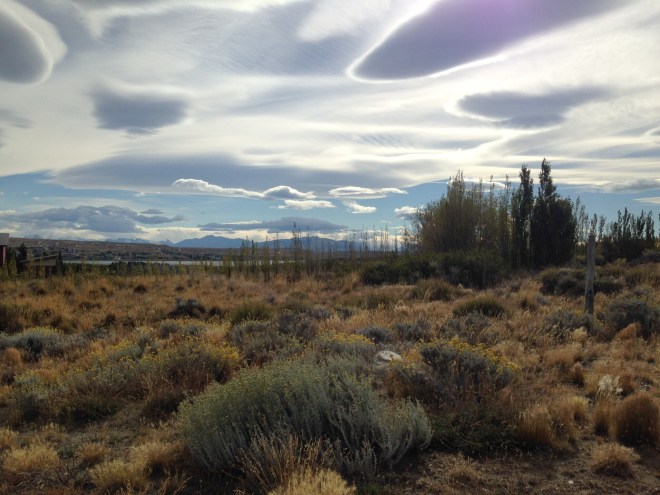 The clouds this day looked so strange and beautiful!
 This picture didn’t turn out well because I took it at dusk (10 pm here!) out one of our hotel windows, but it was my first time to see an owl not at the zoo! He was huge!
 In town there were huge lavender plants (as tall as me!) that were always filled with bumblebees.
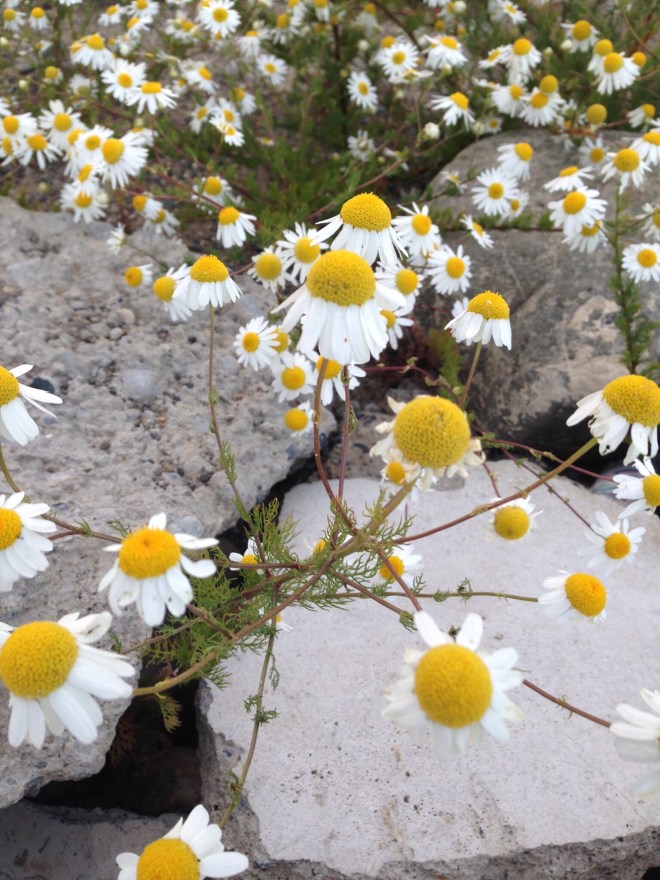 —
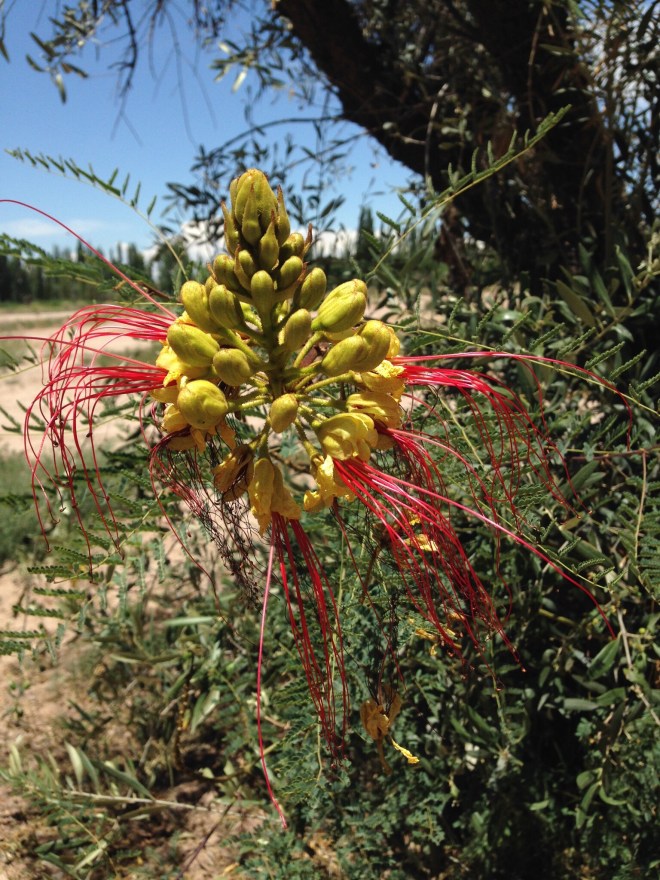
—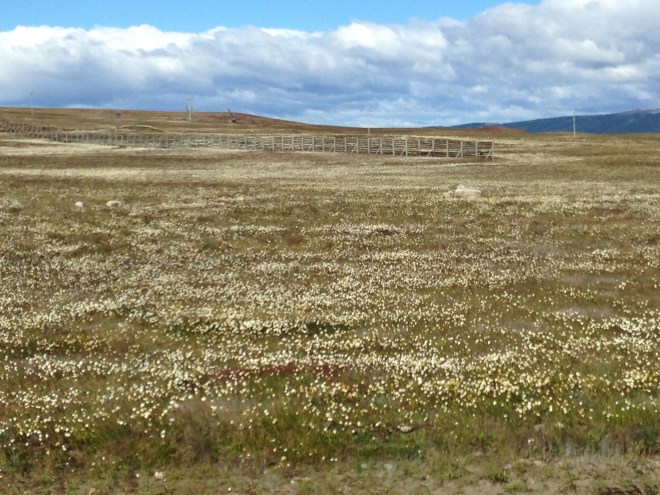 This also isn’t the best picture, but it shows some of the fields of flowers we passed heading out of town.
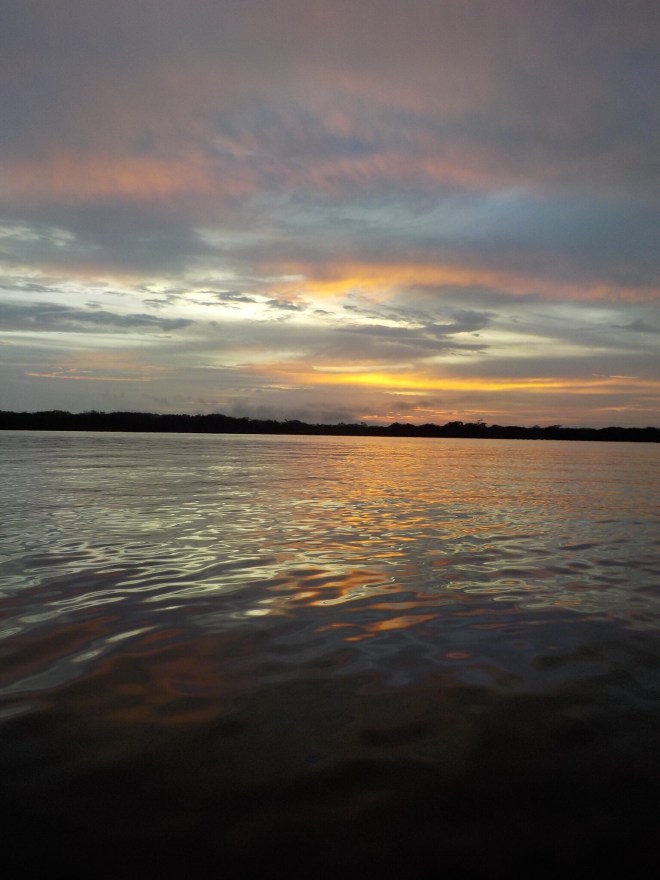
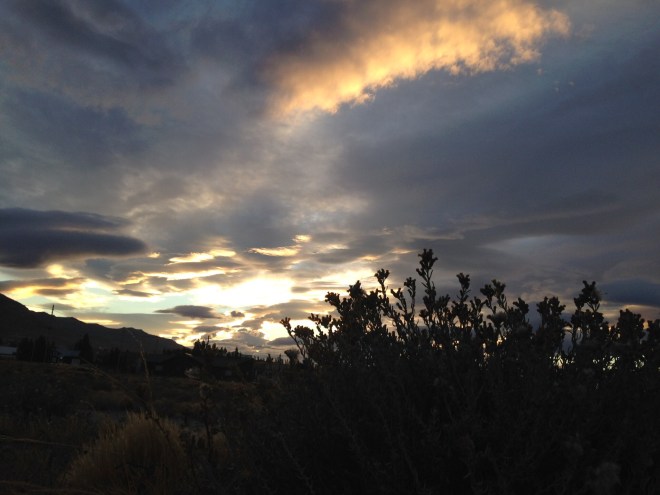 The sunsets there lasted for hours. Coming to El Calafate after being on the equator two weeks ago made the difference between the two stand out immensely. When we watched the sunset in the amazon on the lake, I could turn my head away, say a sentence to Kirk, and look back and actually be able to tell the sun had “moved”. In Calafate, (at least during this season) that time before the sun sets when the sky is bright with color – it lasted well over an hour. We went from the sun setting around 5:30pm to the sun setting around 10 pm. It’s crazy how your position on the globe can affect your way of living so much – temperature, amount of daylight, foods that grow, animals that survive well.
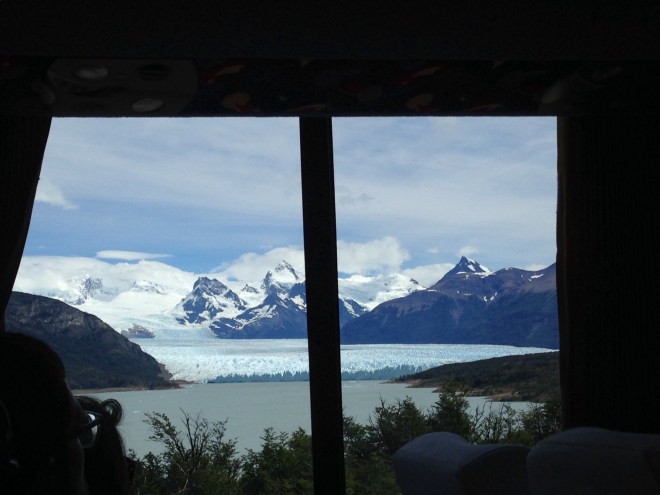 This was our first view of the glacier out the bus window.
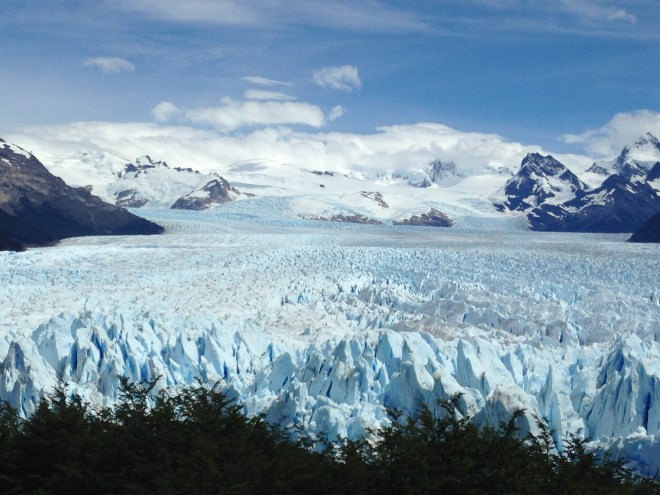 And our fist view off the bus…Look at how far it goes!
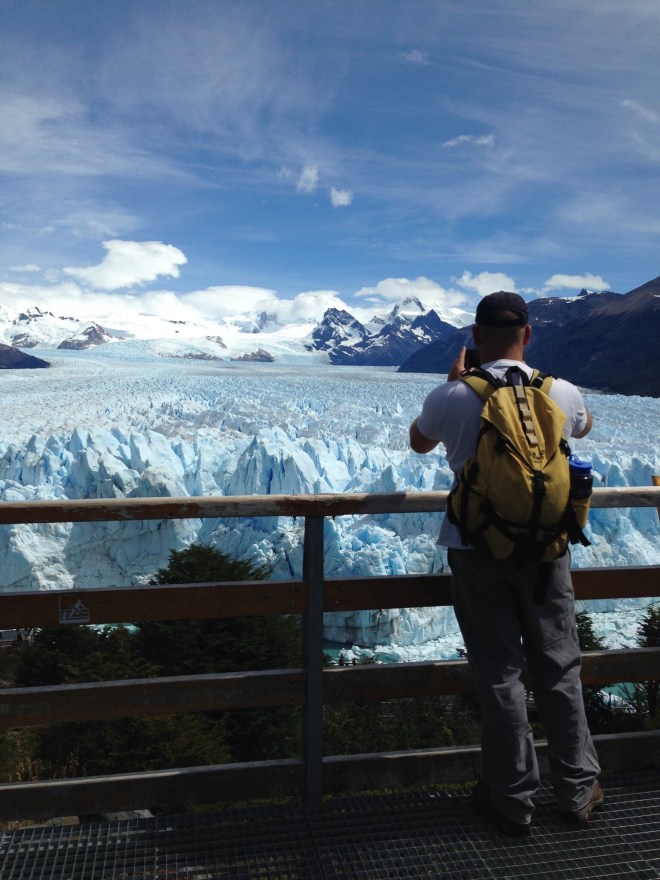 —
—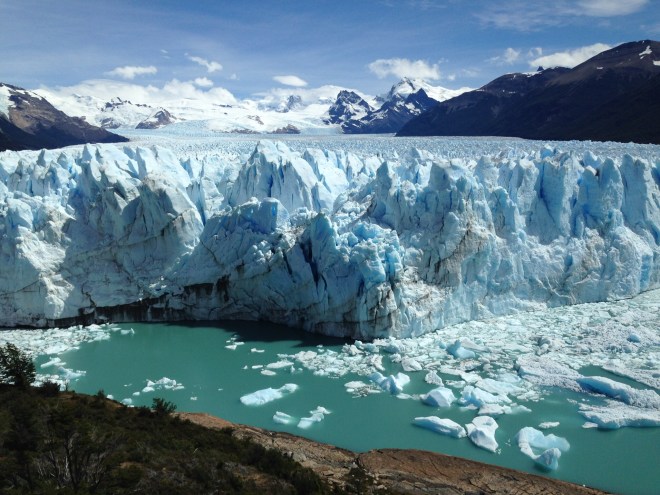 The closer you got to the glacier, the less you noticed how far back it went, and rather, you focused on the height!
 This was our view for lunch! We read on someone else’s blog that they brought wine, cheese, and crackers…we followed suit 🙂
 Kirk on our lunch bench
 We forgot the cork screw. Necessity is the mother of invention! We poked one of the prongs through to let some pressure out and the forced the rest down – just in case you are ever in the same bind ;). This is also a wine from the final winery we mentioned in the last blog! It wasn’t apart of our tasting, but this one was delicious too!
 Our spreadable cheese ended up lacking in flavor a bit, but thankfully Kirk, of course, had some hot sauce packed :).
 Several large pieces of ice fell off the glacier while we were there – and it was so loud when it did! Two times we saw chunks of ice, almost the entire height of the glacier fall! Those were the craziest – you would hear a loud crack, and then a big boom, followed by a giant splash! All the sounds echoed off the mountains! Between the branches above you can see some of the splash from a large piece of ice that fell. Kirk called it – he noticed the piece beginning to spilt when we arrived and guessed it would fall before we left. It took a couple of hours, but it did fall!
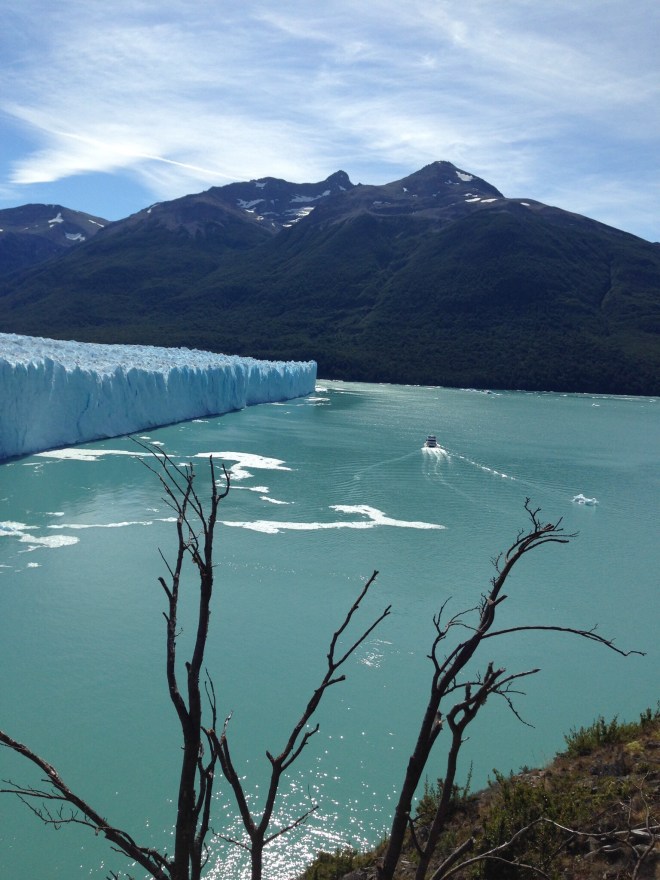 That boat was over four stories tall, but it looks tiny next to the glacier!
 We walked around a bit to see different views of the glaciers, but for several hours we simply watched it. It was fascinating to hear and see the ice fall!
 It was so beautiful and there was so much ice that had fallen!
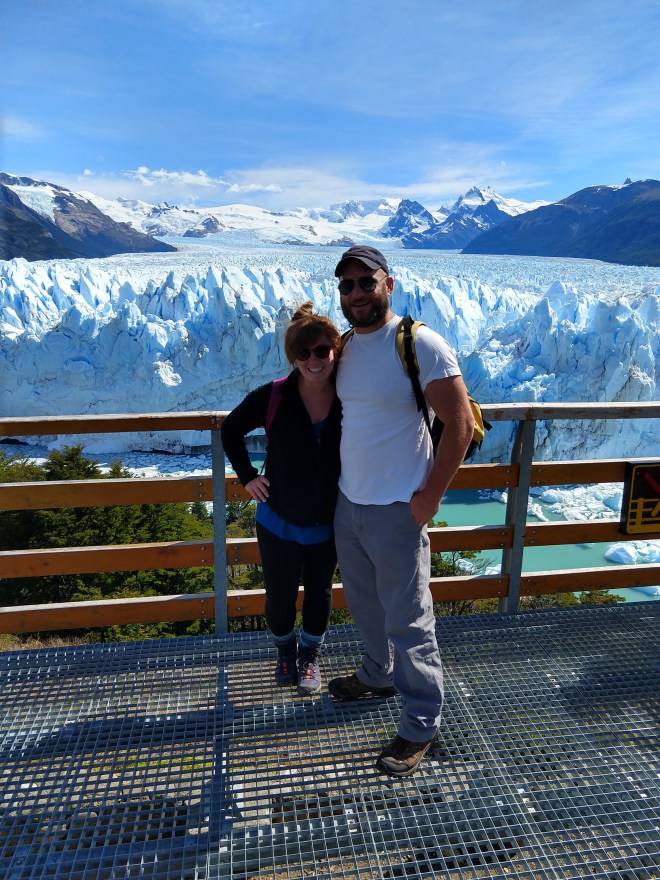 I posted one of the worse pictures that was taken by a stranger on instagram – that was the one good shot we got :). Going to the glacier was truly amazing. Definitely go if you have the chance!
 —
— —
— It was beautiful!

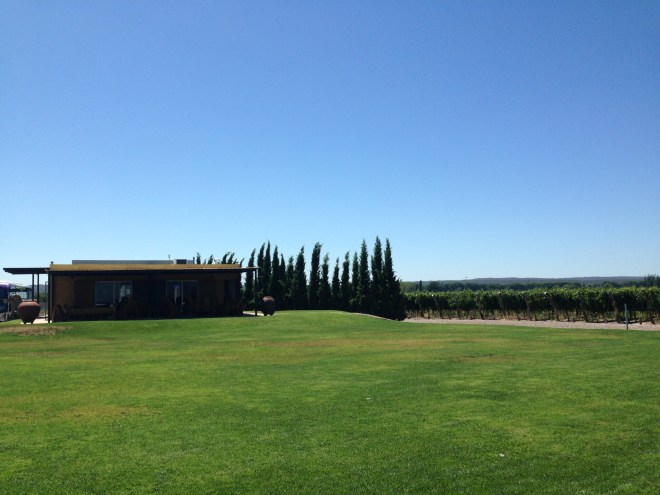
 Bodega Pulmary, just a small place, but the owner was lovely and so excited to tell us about their work!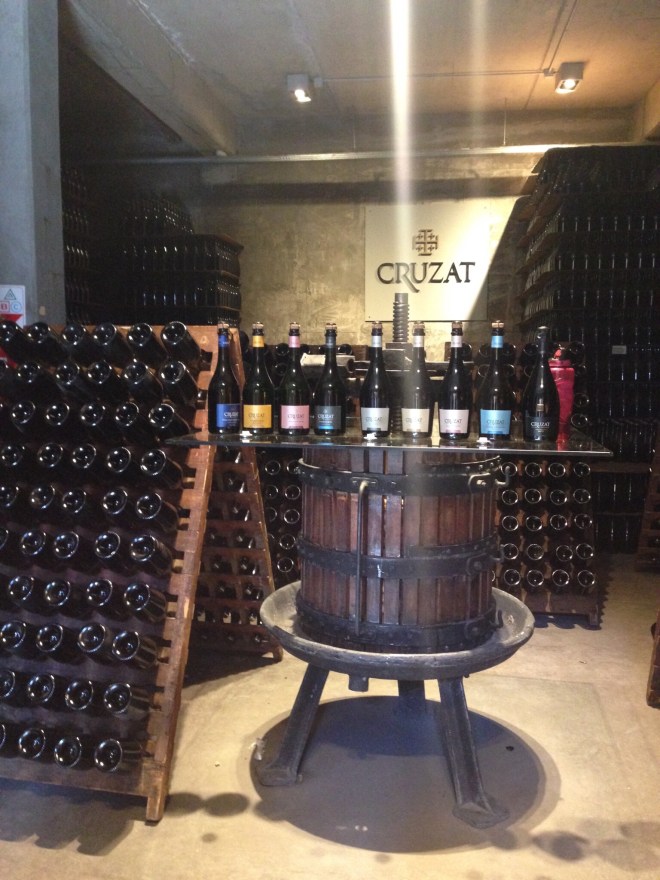
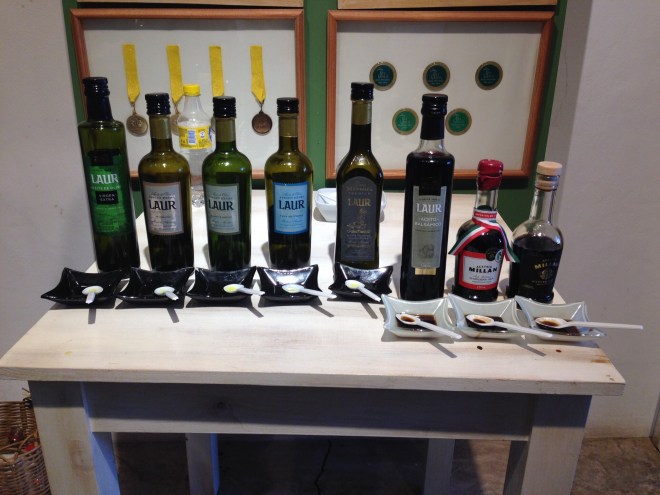

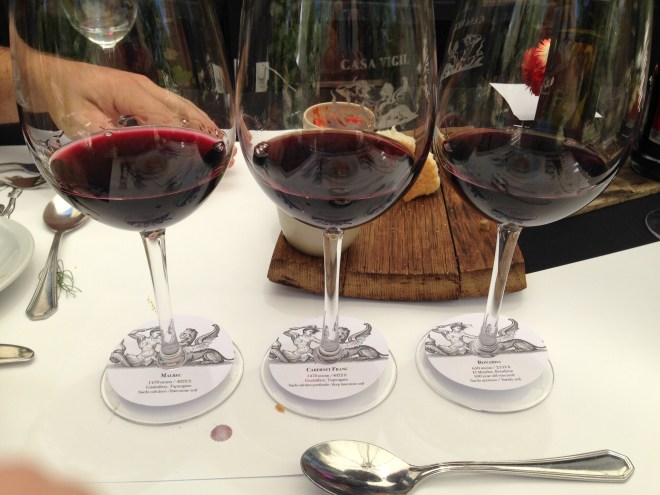
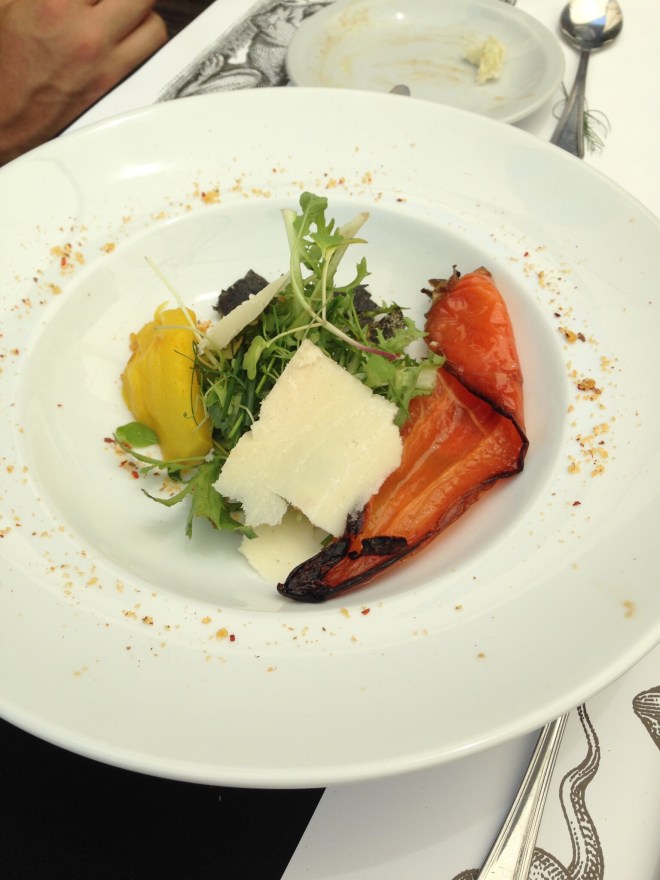

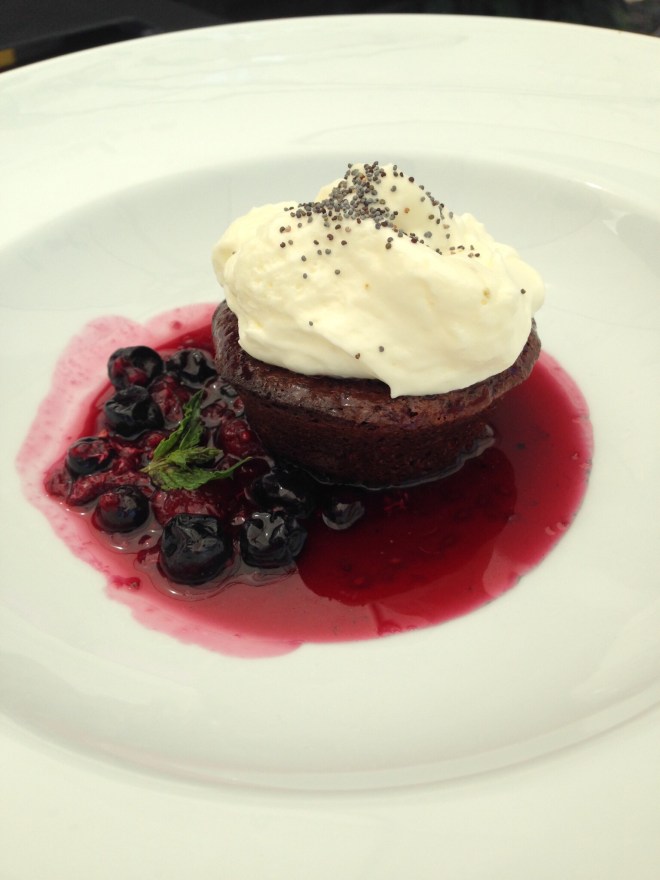 Finally, dessert. Warm chocolate cake with a Cabernet franc sauce, fresh cooked berries and, what really brought it all together – a light lemon poppyseed cream on top. I don’t always love chocolate and berry flavors together, but that lemon brought it together in a way that makes me want to try and replicate it at home! I wish I could send all these flavors to you instead of the pictures! I guess you’ll all just have to visit for yourselves! 🙂
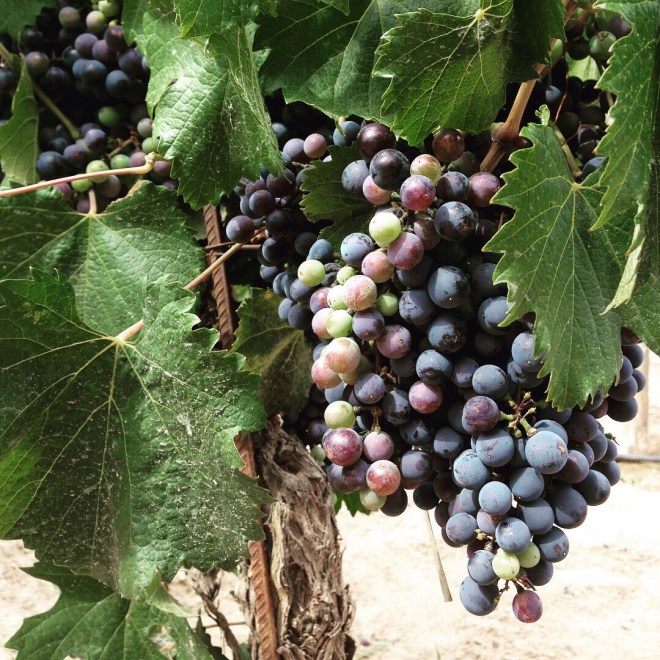 The final winery we visited on the day we went with an actual tour company was Vista Alba, and they certainly saved the best for last. Above is a picture of Malbec grapes growing in their vineyard.
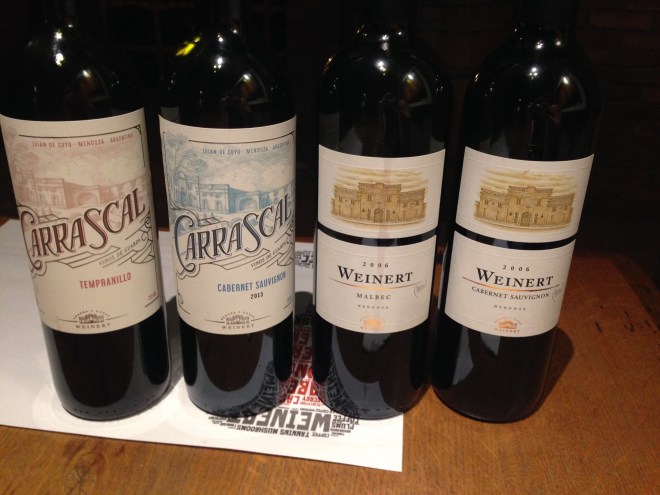
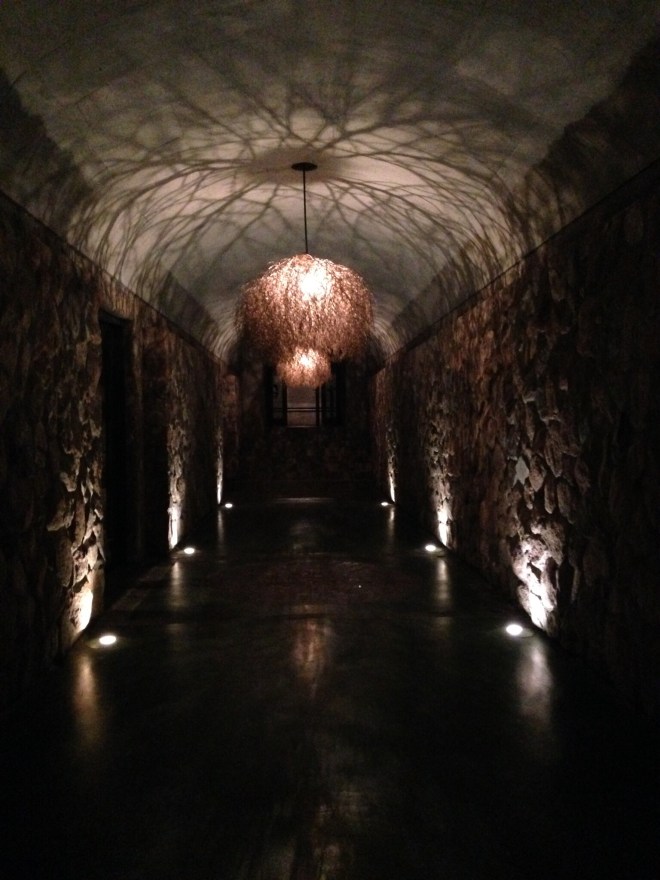 This is a picture going down into their cellar. That’s tumbleweed lights that make it so beautiful! We happened to come for a tour right after they had finished a premium tasting (the expensive stuff), and since they had some left over, they let us try for no additional charge! We loved all the wines here though, even the Cosecha Invernal, which was a sweet white wine, similar to a good ice wine. They also let us sample an olive oil they produce. This one actually turned out to be better than our previous tastings, but we were glad we had already purchased some since this was a little more pricey.
 —
—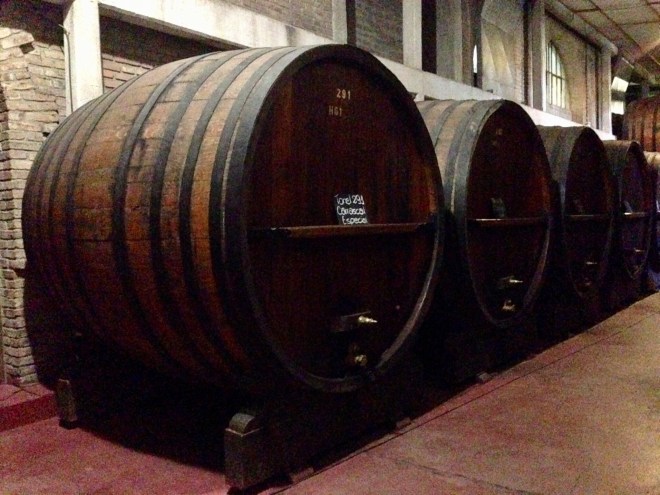 These are some of the huge barrels…but the biggest one…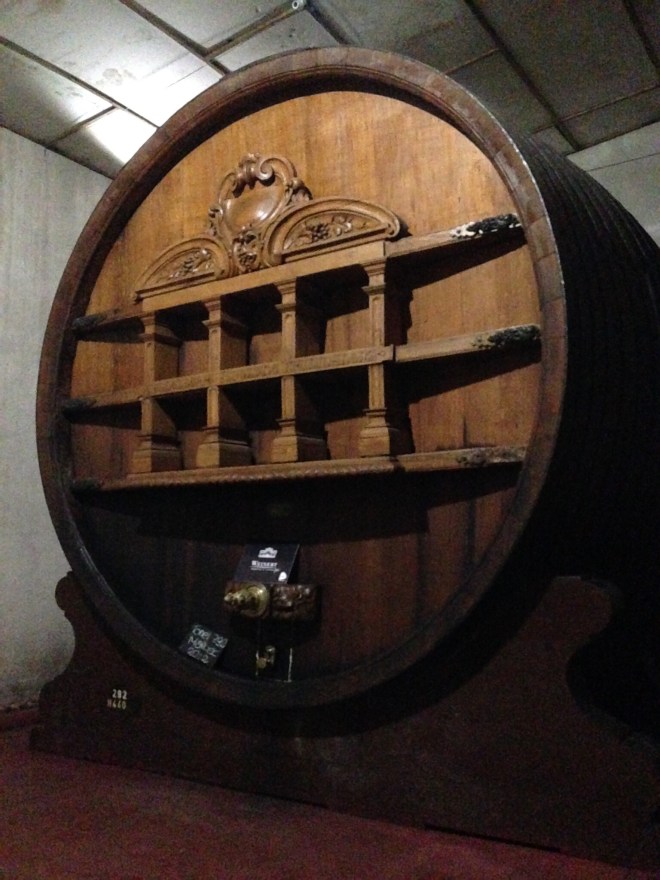


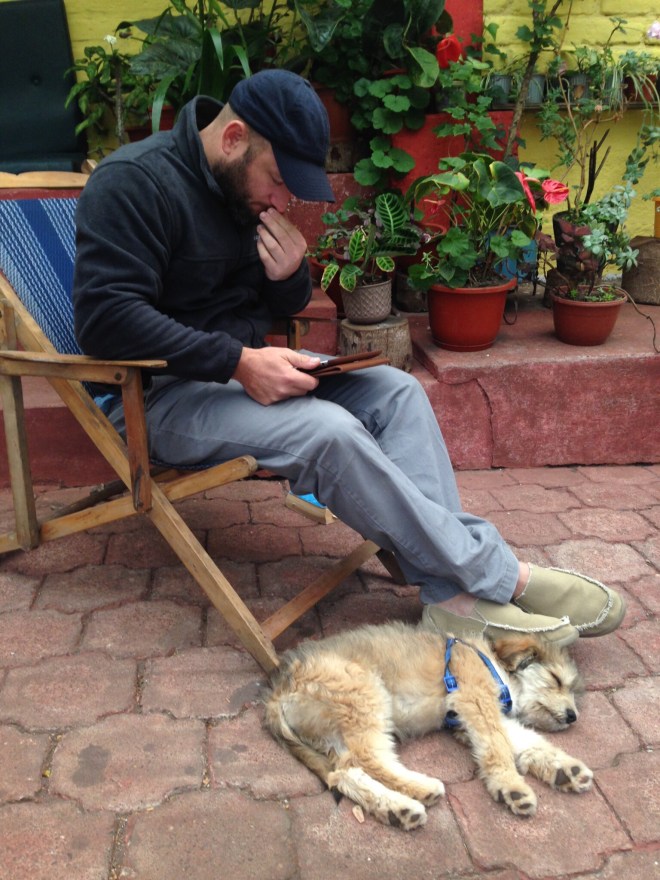
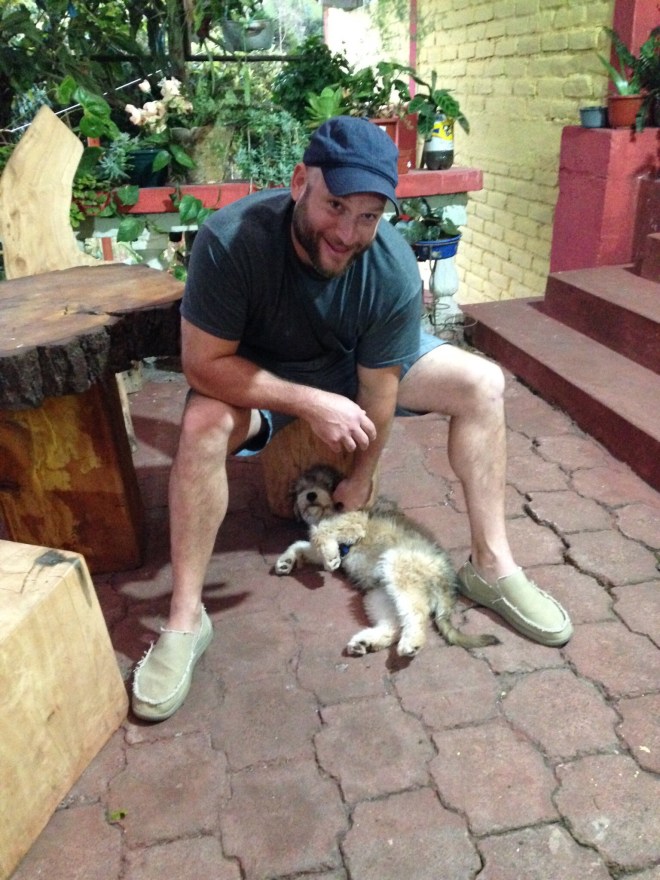 This picture, as well as the one below is Kirk with our favorite puppy, Douglas. He belonged to the owner of the hostel we stayed in in Banos, and we loved him! He was clumsy and fluffy and always so excited to see us. I heard Kirk tell Douglas one day that he was apart of the plan to convince me to get a dog😂. As cute as he was, it’s wouldn’t take much convincing!
 —
— This (above) was our view walking from our hostel into town. Banos is a beautiful city planted in the middle of a valley. The views everywhere were great!
 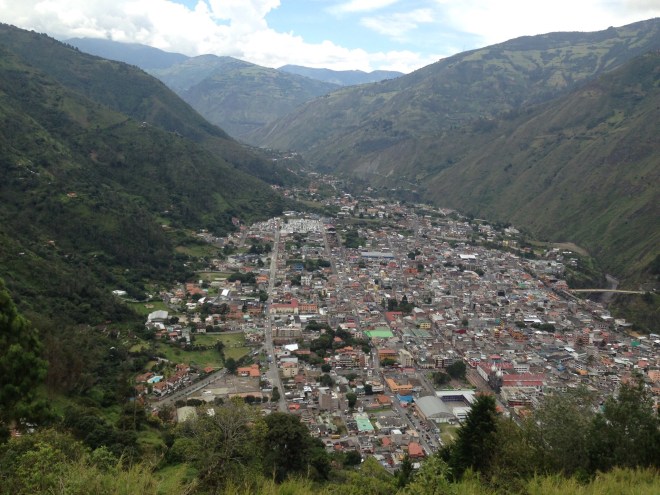 One day we hiked up one of the smaller mountain paths there to a place called Bellavista. You could see the whole city!
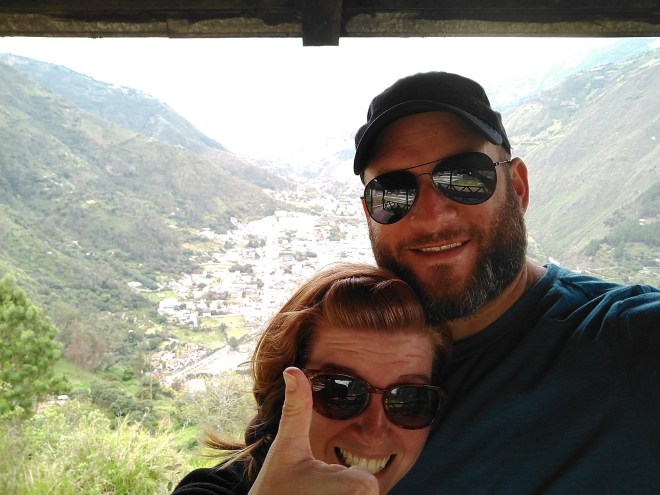 Us at the top 🙂
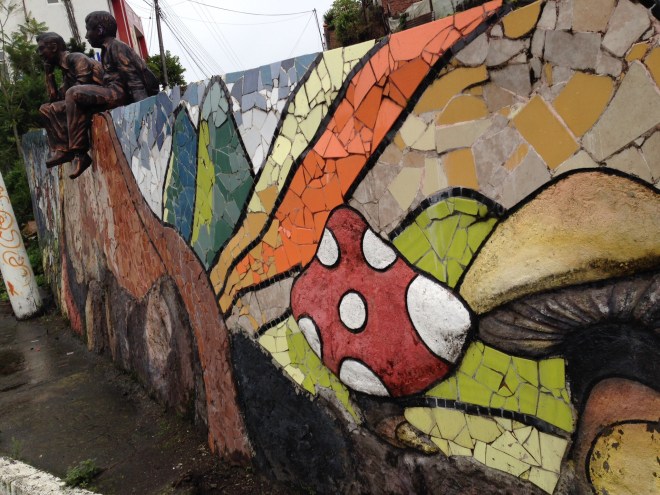 This picture, as well as the next few, are some of my favorite art pieces around the city.
 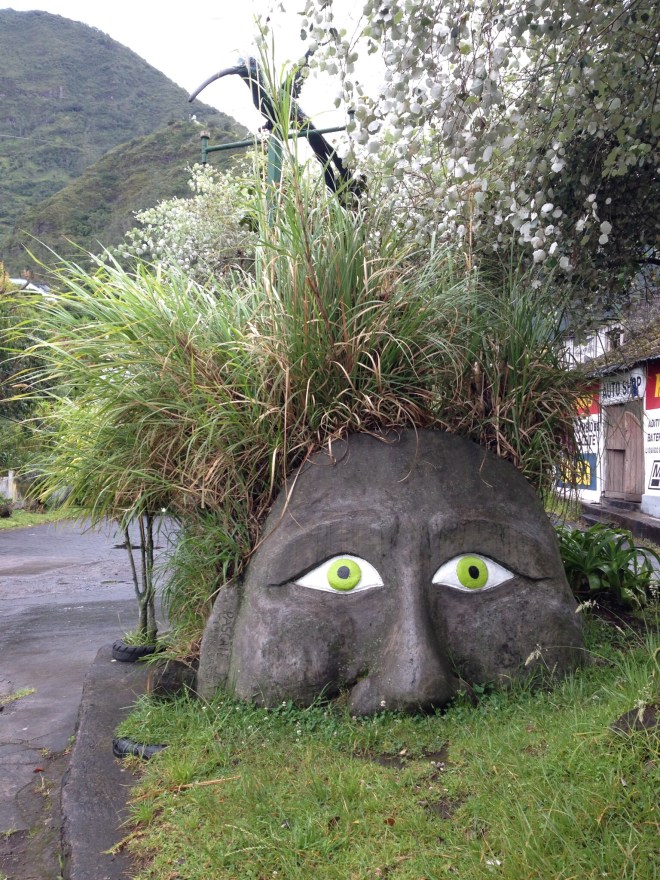 —
—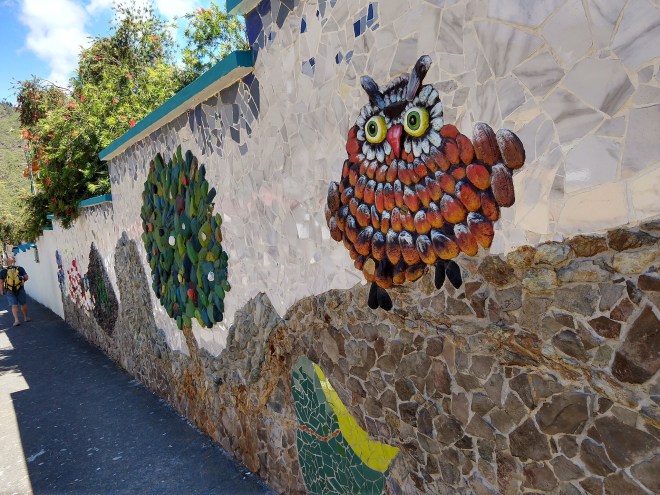 —
—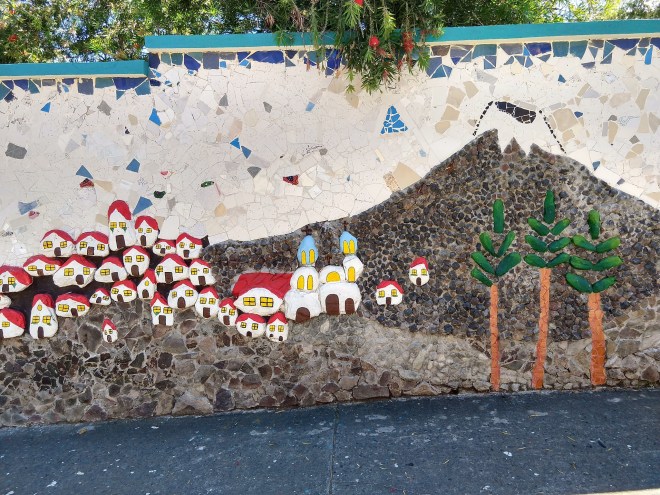 —
— This is a view out of our hostel bedroom window. The snow covered one is a volcano!
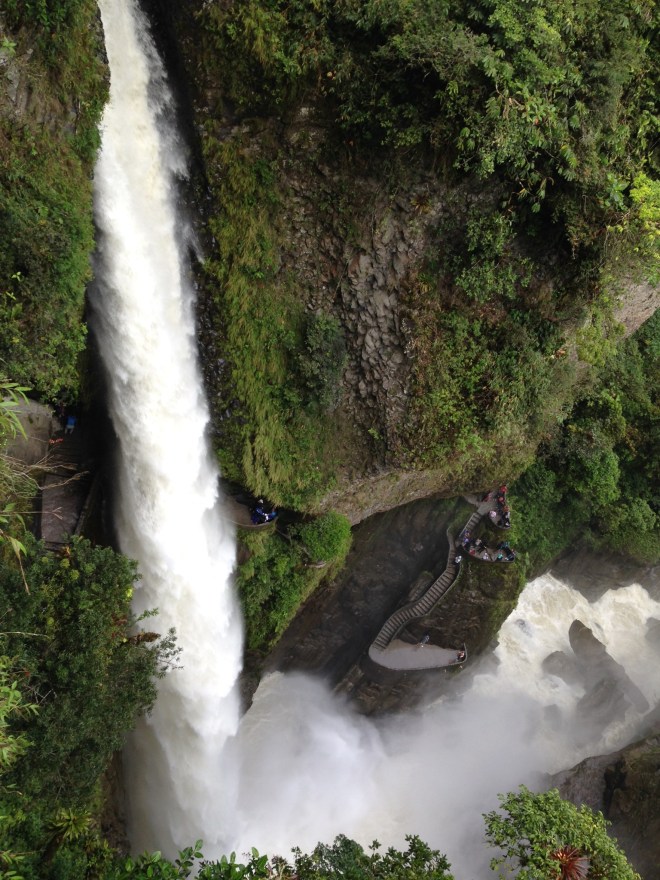
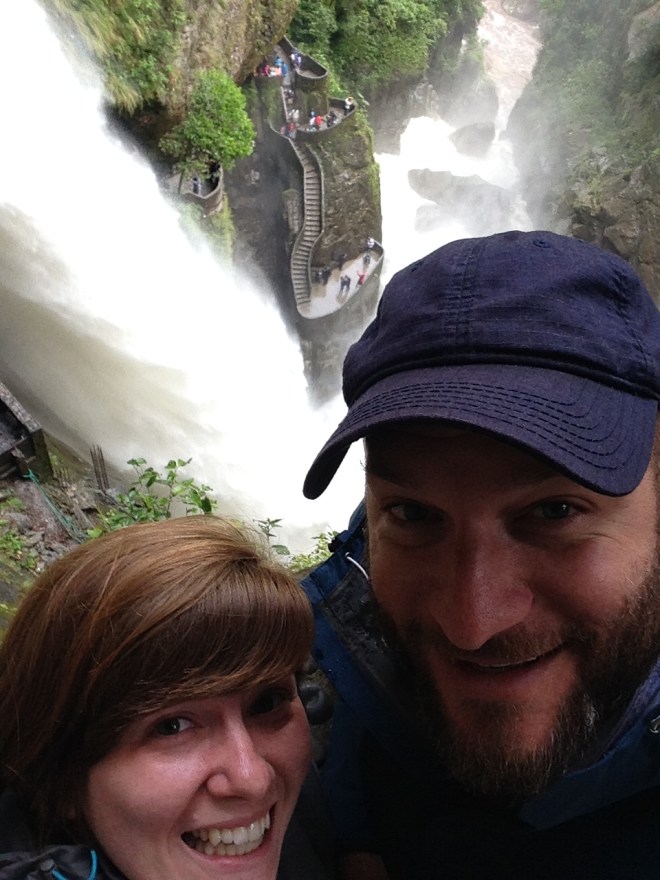
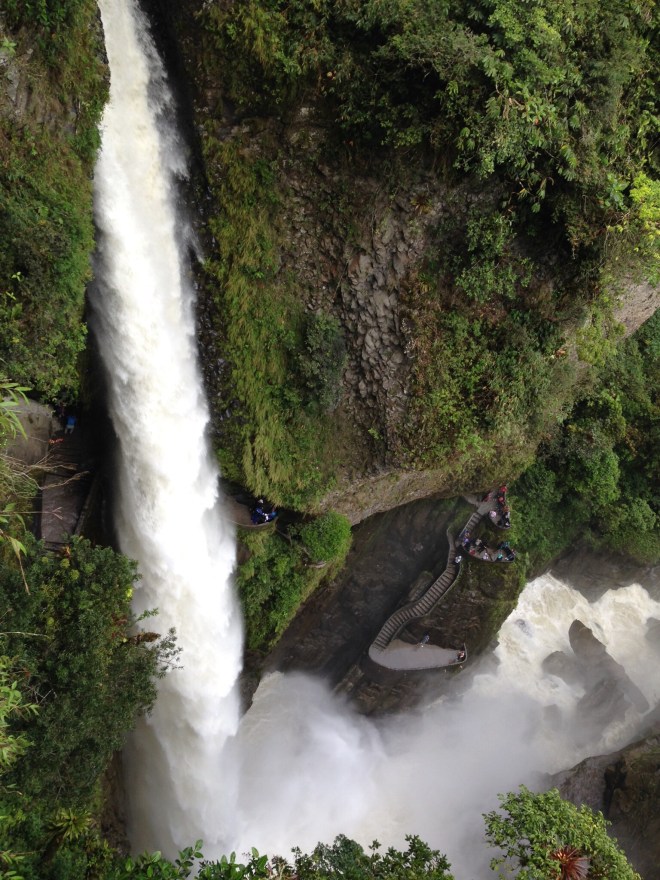 There are many waterfalls around Banos, but the only one we went to see was Devil’s Cauldron. It was quite large!
 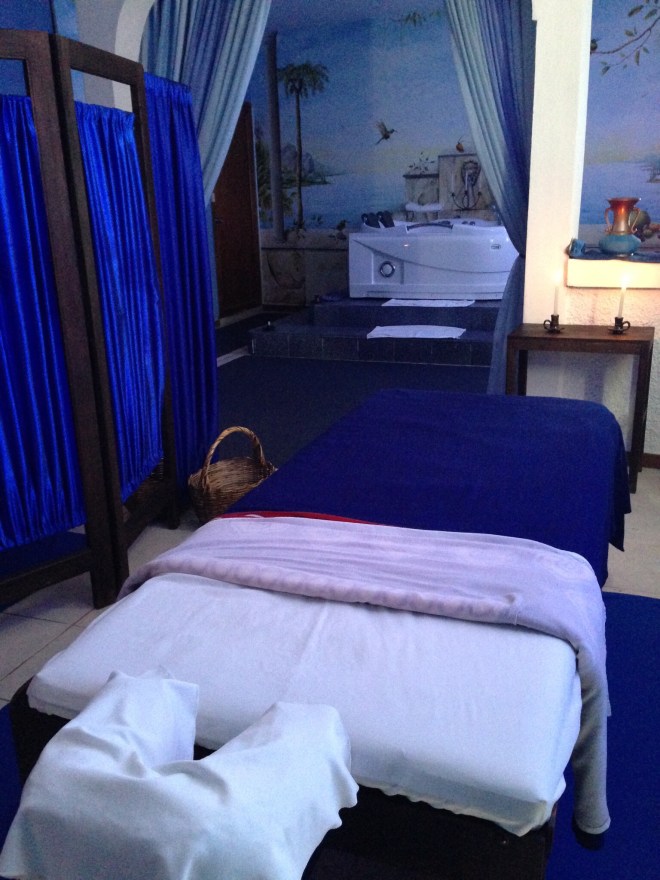 Above and below are a couple of pics from our spa day. You can get hour long massages for around $20 in Banos!
 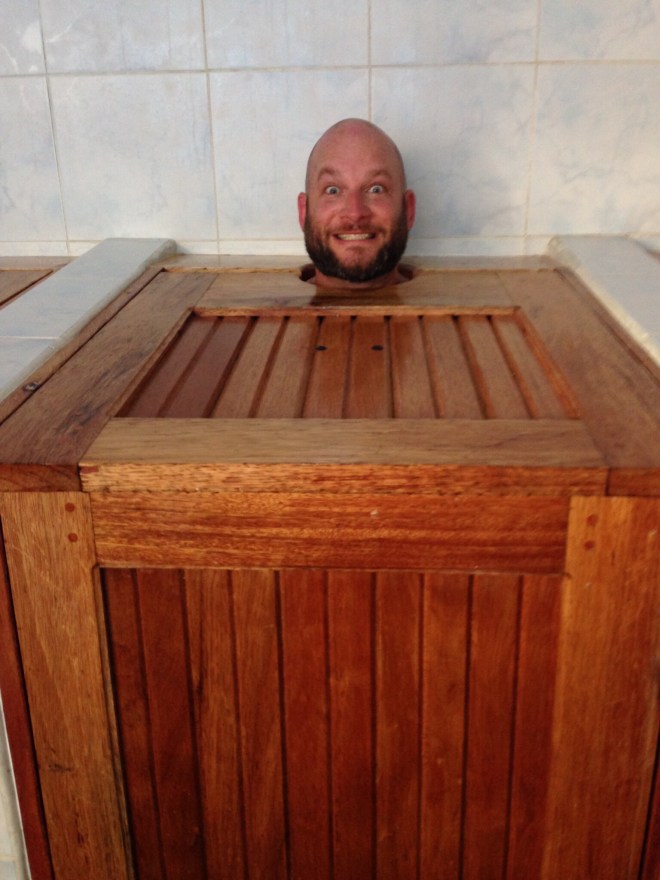 Kirk in the steam box. 🙂
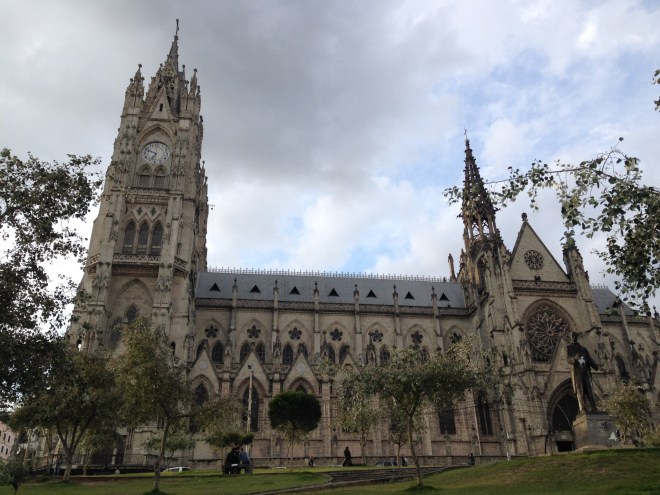 The Basilica
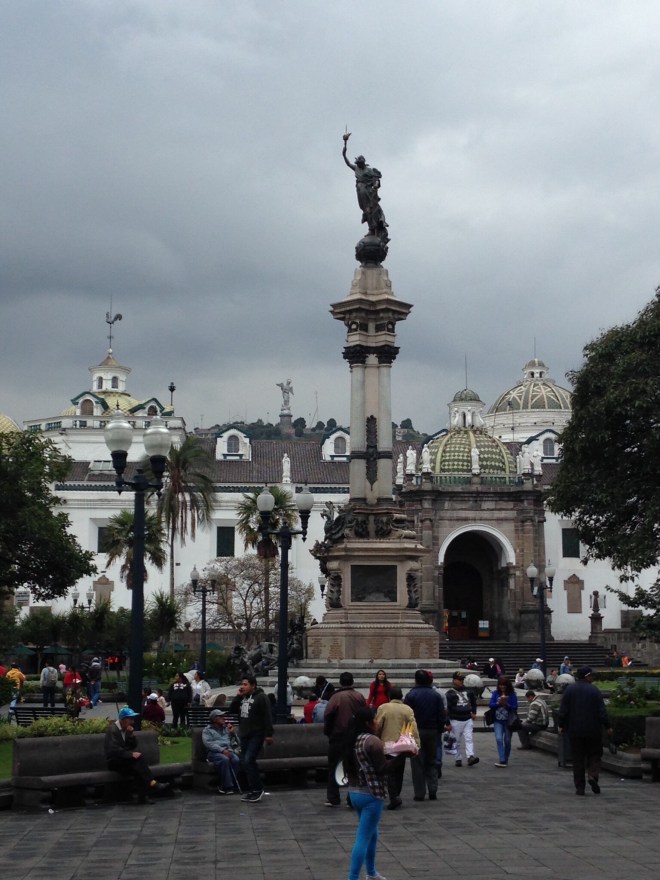 This is one of the plazas in the historical district of town called Independence Plaza. The statue you can see in the background is the Virgin of Quito, which is viewable from nearly everywhere in the city.
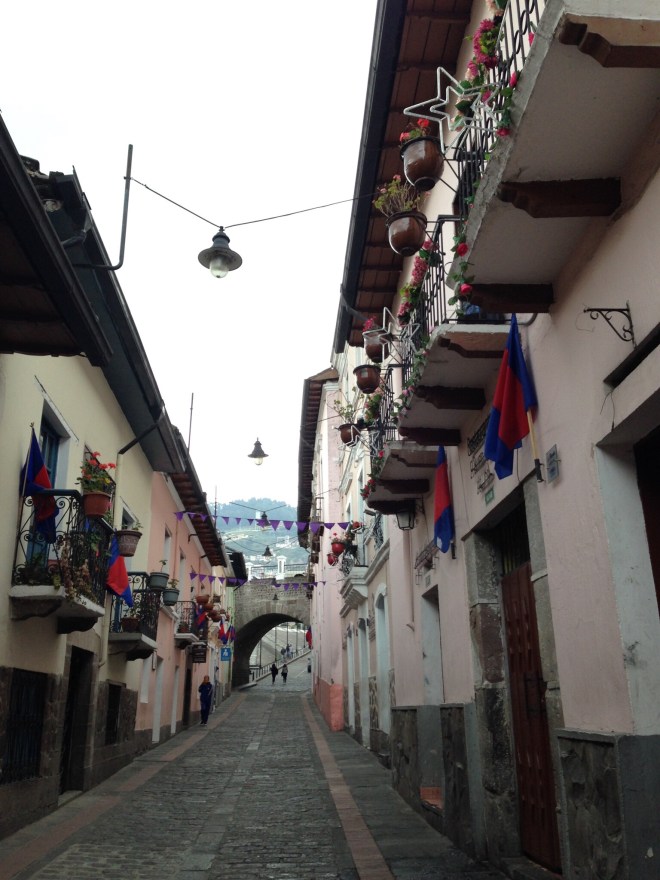 This is one of the streets in the historical district. It’s now one of the more touristy streets, but I thought it was beautiful.
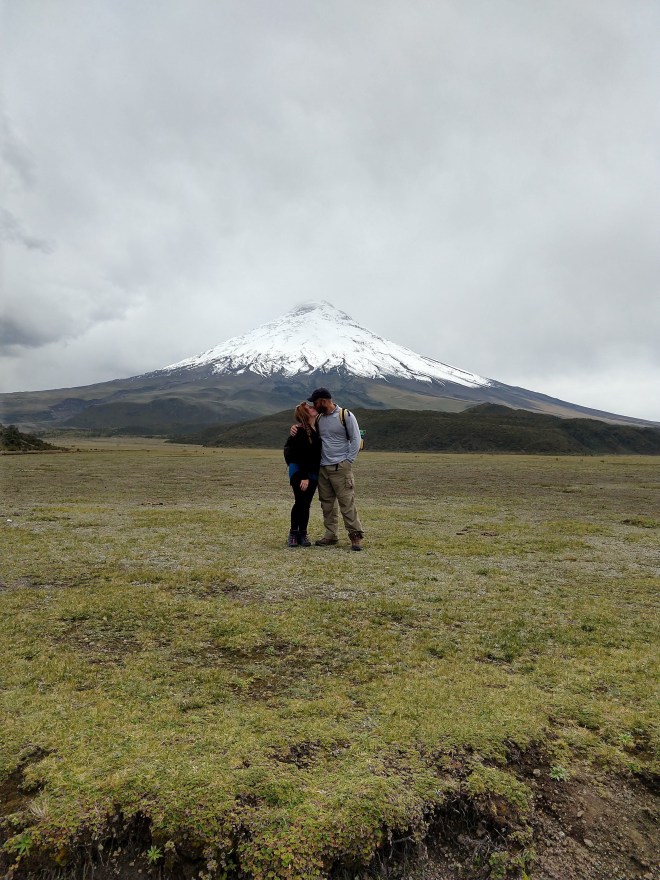 It was a young girl taking our photo in front of Cotopaxi. She said “Give a kiss!”
 Mountain man – or, I guess, volcano man 🙂
 —
— —
—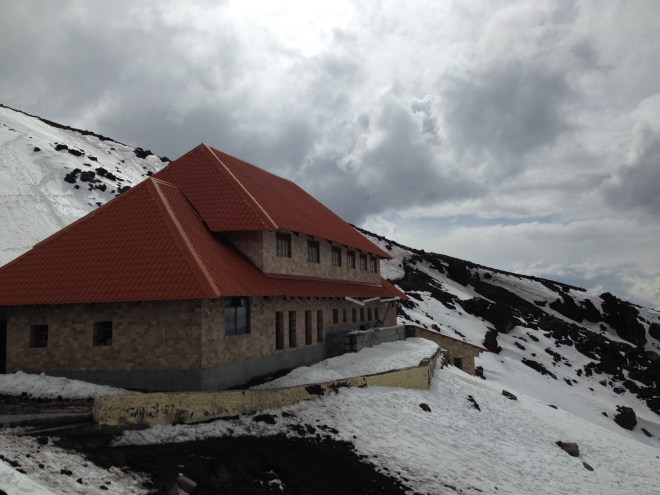 The refuge to which we hiked and ate lunch. This is the place that it snowed while we were there 🙂
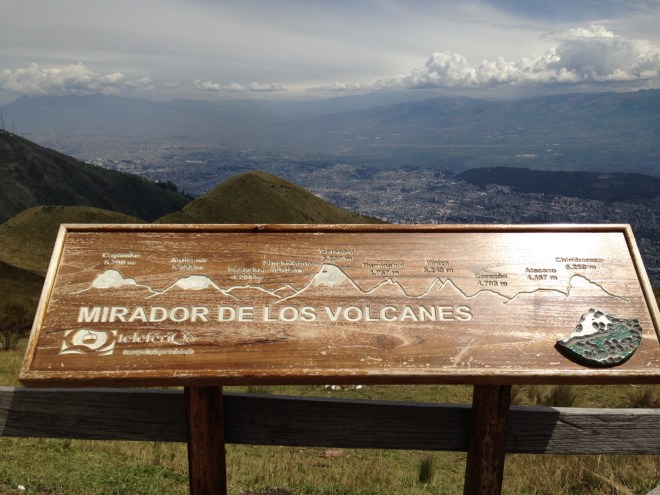 The next day we headed to a different volcano (Pichincha) from which you can view other volcanoes in the area. It was a little to cloudy to see, but above is a picture of all the potential viewable volcanoes. The tall one in the middle (Cotopaxi) is where we were in the above photos.
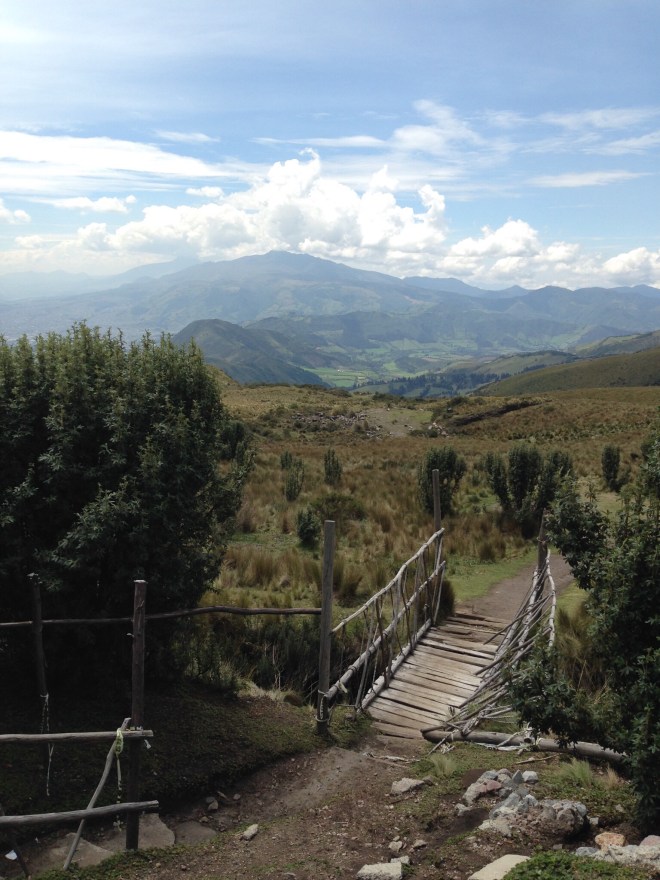 —
—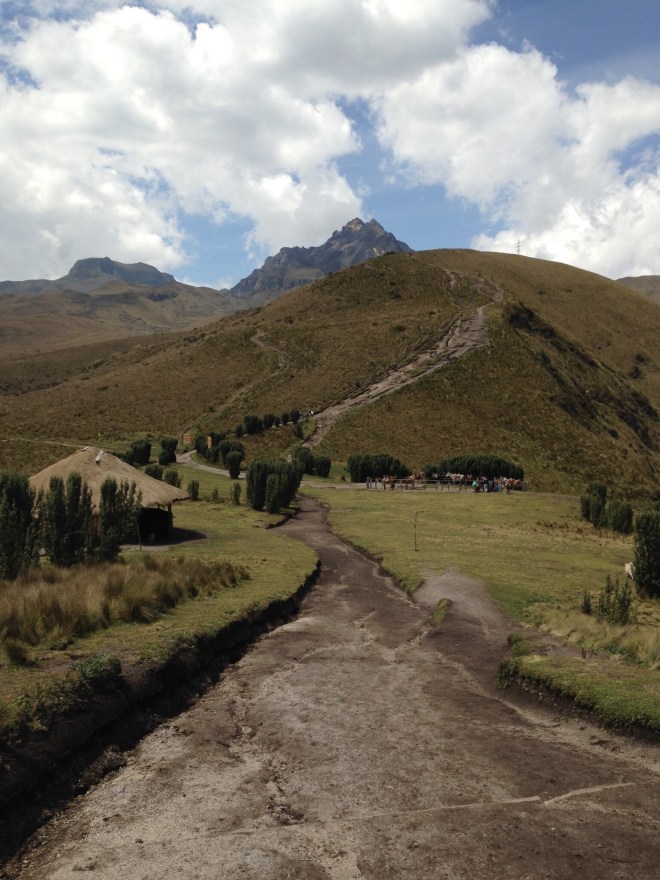 —
—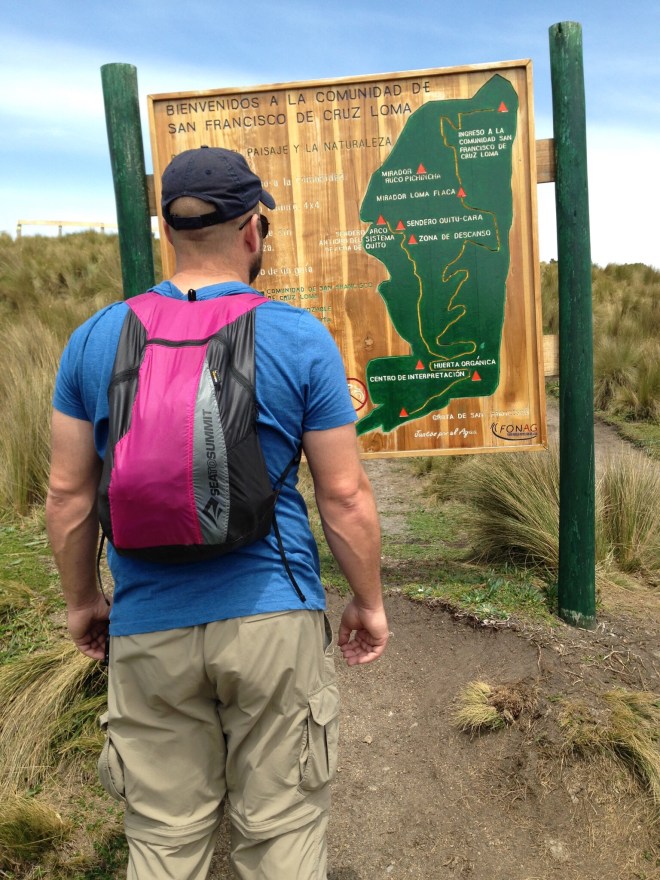 Kirk switched backpacks with me this day so I could practice carrying the heavier one (we’ll be doing a four day trek with our big packs in a few weeks!). Also, this backpack is one of my favorite things we got for the trip. It’s a day pack that packs down smaller than one of those 8 oz cans of coke, but is incredibly comfortable and sturdy even with no padding. It’s nice when you don’t want to have to unpack another bag to carry around!
 Recoleta cemetery was the most interesting cemetery I’ve ever seen. I’ve been in graveyards with raised graves before, but these were especially tall and many were covered in statues. There are a few other pictures posted on Instagram and Facebook if you are interested.
 This is Eva Peron’s grave. She is a former actress and First Lady of Argentina who, in her short life, made huge strides for women. She seems very loved by people here (it’s the only grave we saw covered in flowers) and many people attribute Argentina having already had a woman president to the strides made by Eva (often called Evita).
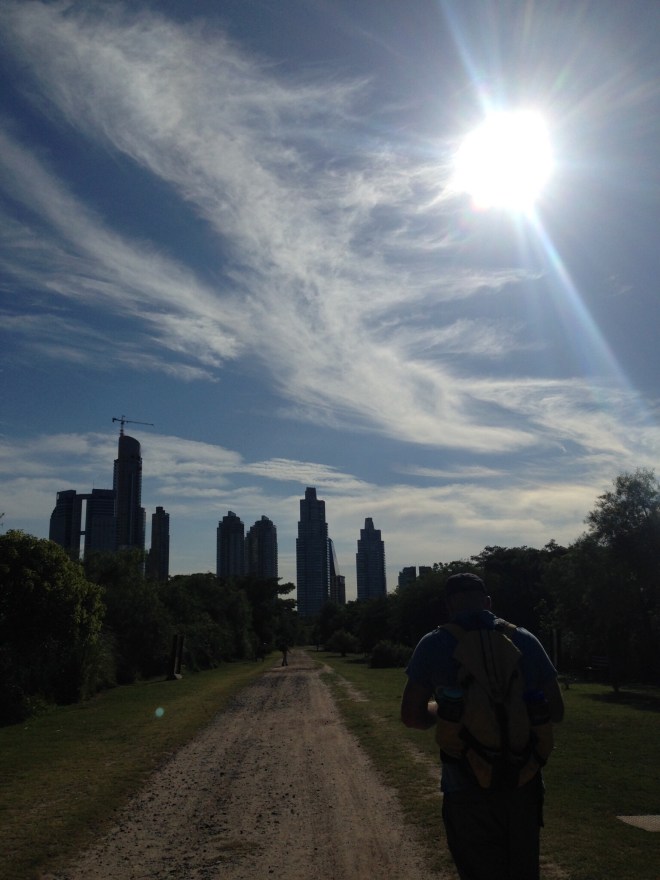 This is a picture from the nature reserve we visited in Buenos Aires.
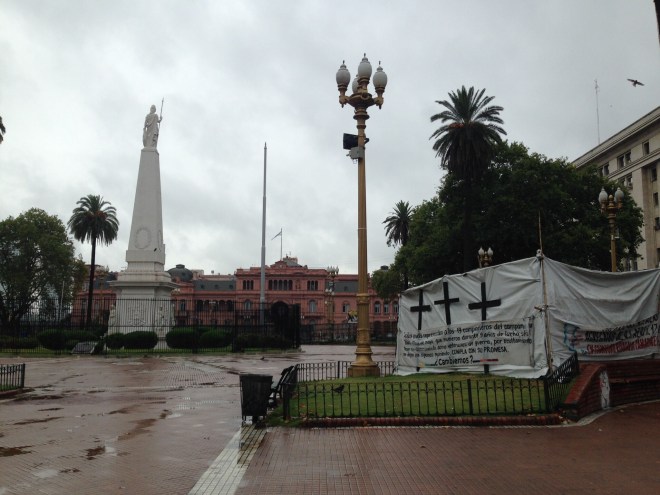 This is Plaza De Mayo, which sits in front of the Pink Palace. We hear many protests go on here – which is pretty evident based on the political statements posted all over the Plaza.
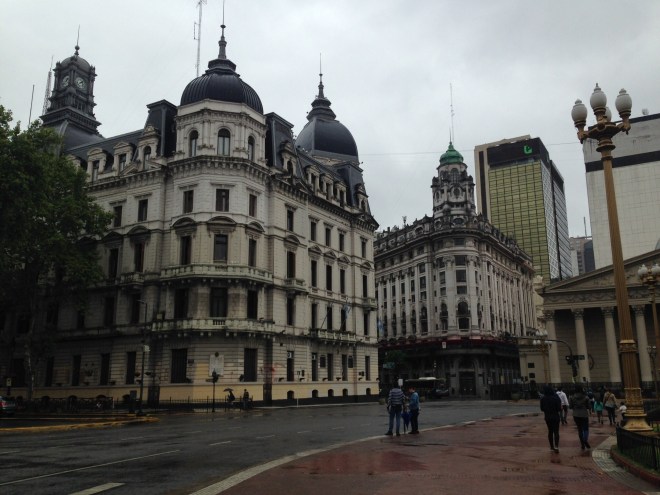 I currently don’t remember what these buildings are but they are next to the Plaza and are beautiful!
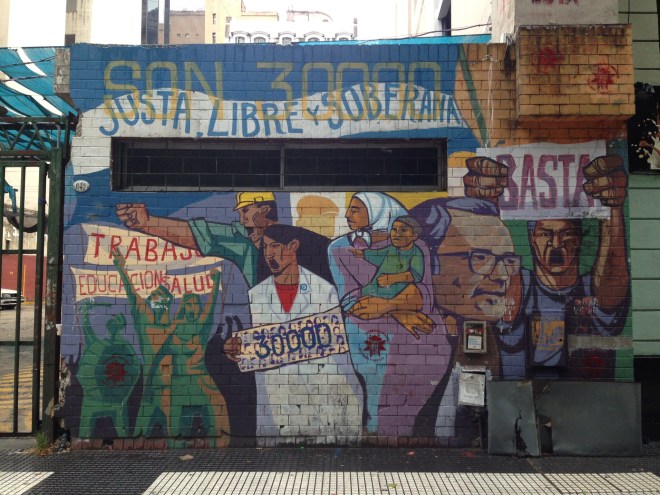 Most of the cities we’ve been in have had a lot of political artwork all over the city. I like it- most of it anyway. Some of it shows the voice of the people while others show the nations history.
 This pizza place has almost 7,000 positive reviews on trip advisor – open since 1932. It was, of course, delicious!
 —
— That’s all for now! Whew, it feels good to be caught up!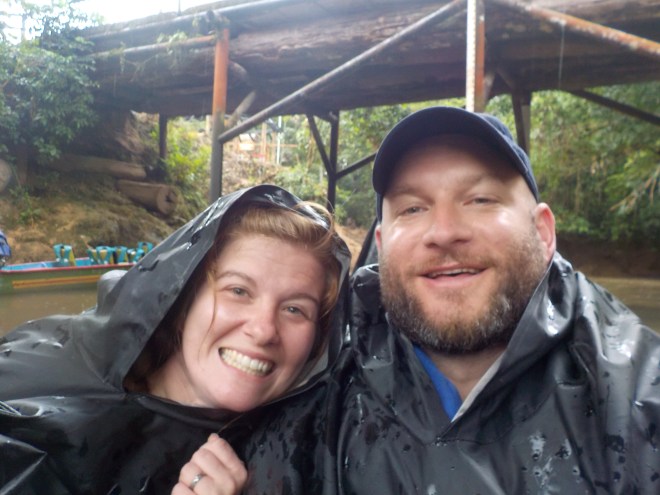

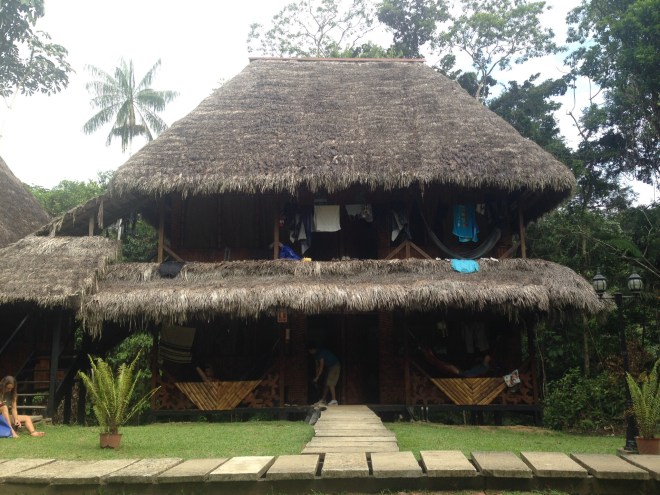 Our building- that’s kirk in the hammock on the bottom right.
 Our fellow tourists and the lodge lookout tower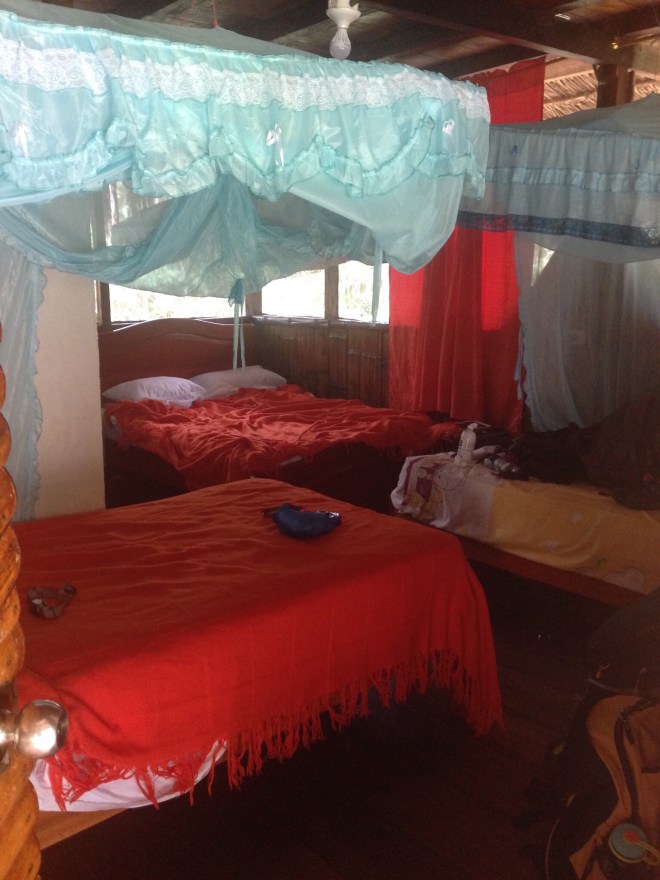
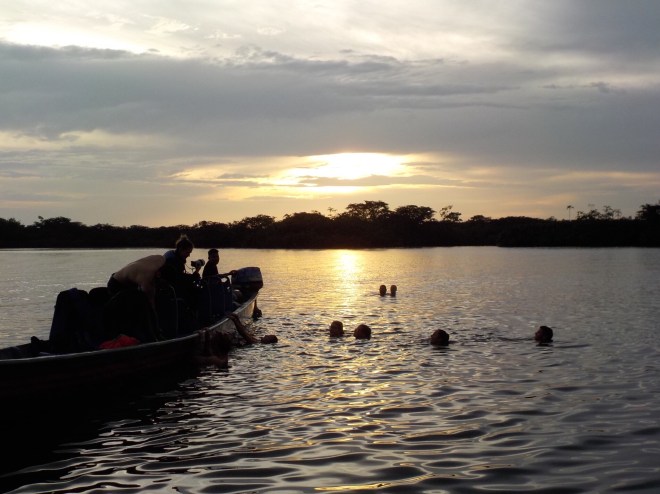 Swimming in the lagoon at sunset
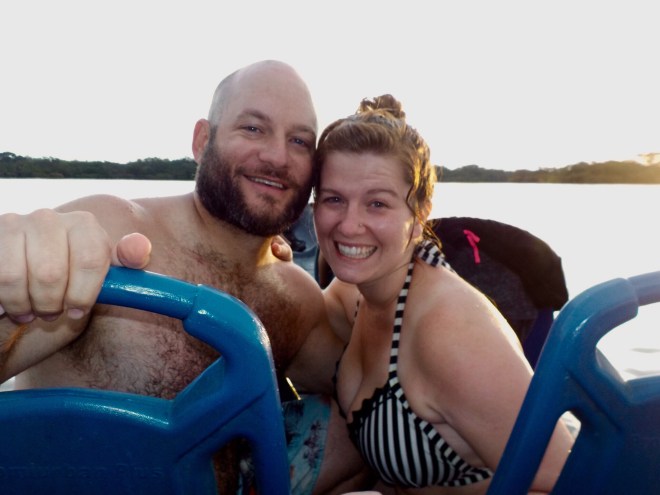 —
—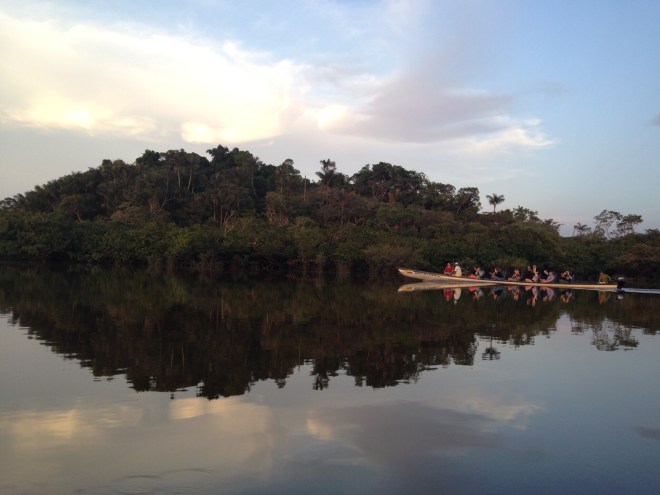 —
— Day 2:
 Monkeys we saw! They moved so fast it was hard to get a picture!
 Mitad Del Mundo (Middle of the world- the equator) in the Amazon
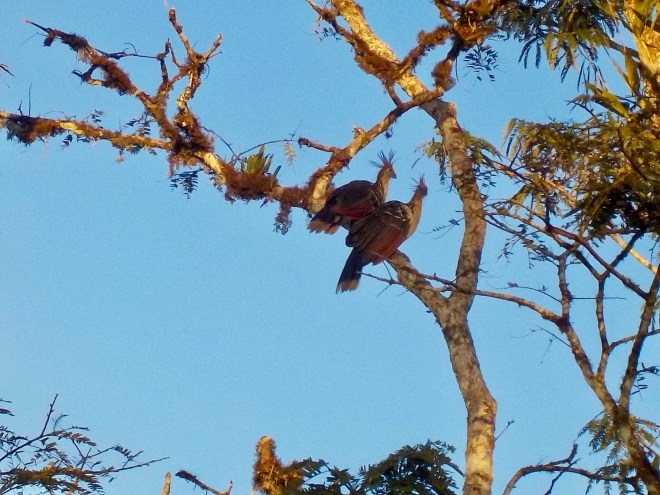 They called these prehistoric stinky birds. Apparently these guys have two stomachs and the way in which they digest food makes them smelly enough to ward off predators. They are pretty big and can’t fly far.
 We saw many colorful parrots, but this is the only one we got a picture of that you could actually see the color! He’s green, so he blends in, but he’s in the middle of the trunk if you have trouble finding him!
 We saw many trails of leaf cutter ants. This is a terrible picture, but under each of those leaf pieces is a tiny ant carrying it! There’s a video on insta/facebook that gives a better look.
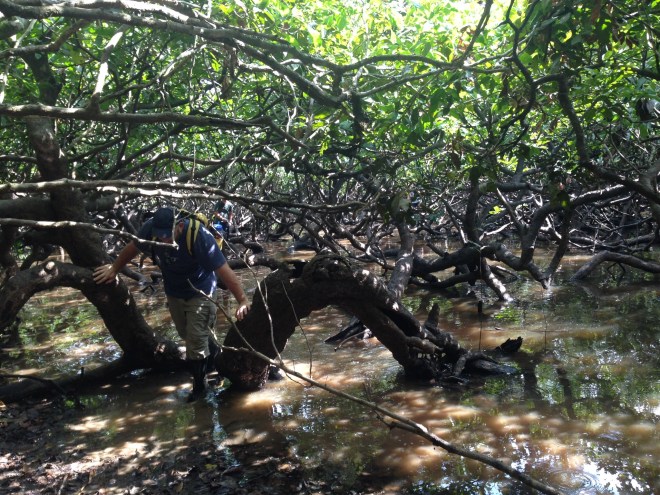 We didn’t walk for long before I gave up and let the water flood my boots. We waded for several minutes before one of the fellow tourists spotted it. The snake was just hanging out in the water, part of him wrapped around a branch with his head barely out of the water. We gathered around it like we were at the zoo – Kirk and I both within five feet of the head of this at least 13 foot long wild snake (the one they’d found the day before was over 20 feet!) One girl took a picture with her hand about 3 inches from this thing’s middle section. It just sat there – vulnerable. I’m still shocked you can get that close.
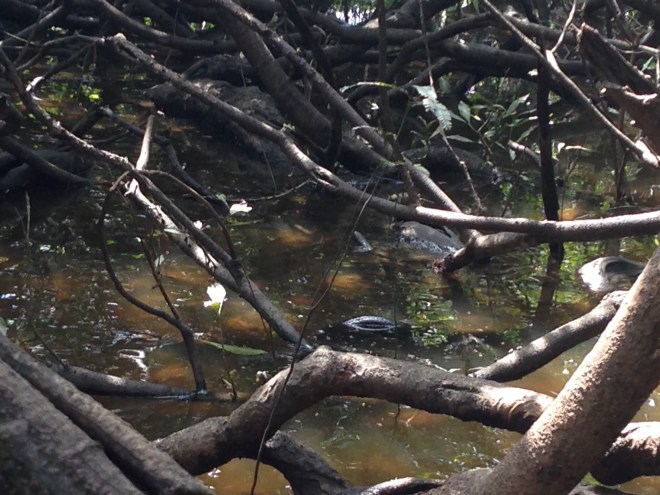 Can you see it?
 Here’s some help if you are having trouble
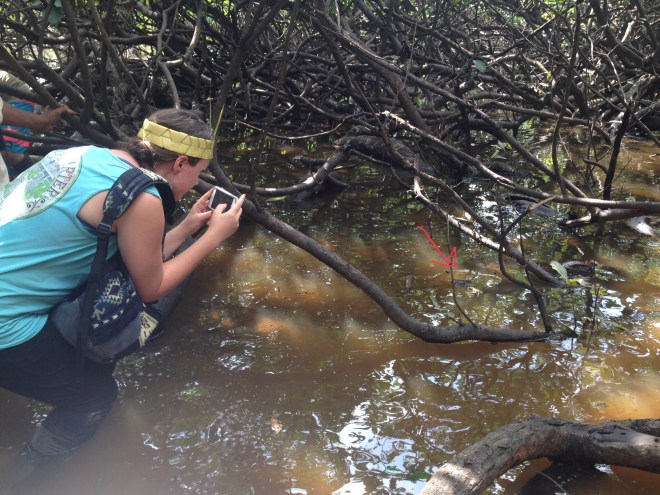 This helps show how close we were…though it was bigger than it looks here.
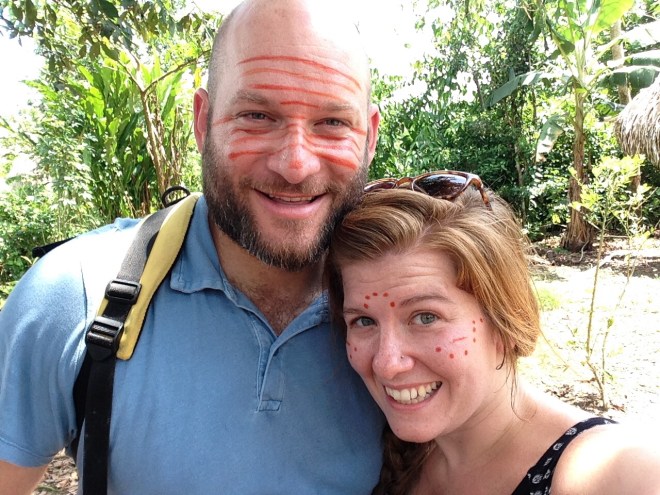
 The “paint” is fruit!
 —
— This is our guide, Luis, with the woman who taught us to make the bread. The plants near her are yucca plants and the part you eat is the root (seen in the next picture)
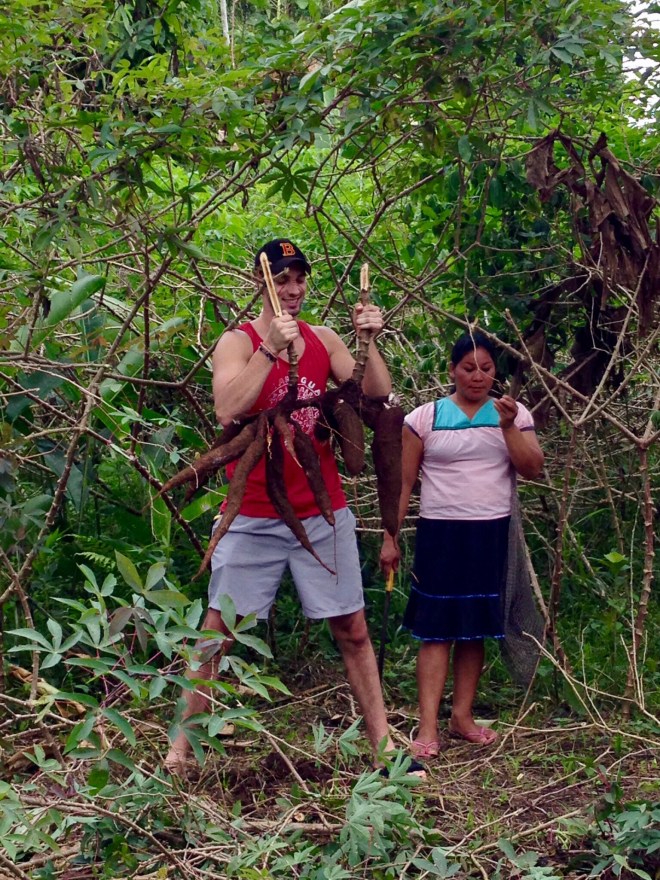 It pretty much tastes like potatoes.
 —
—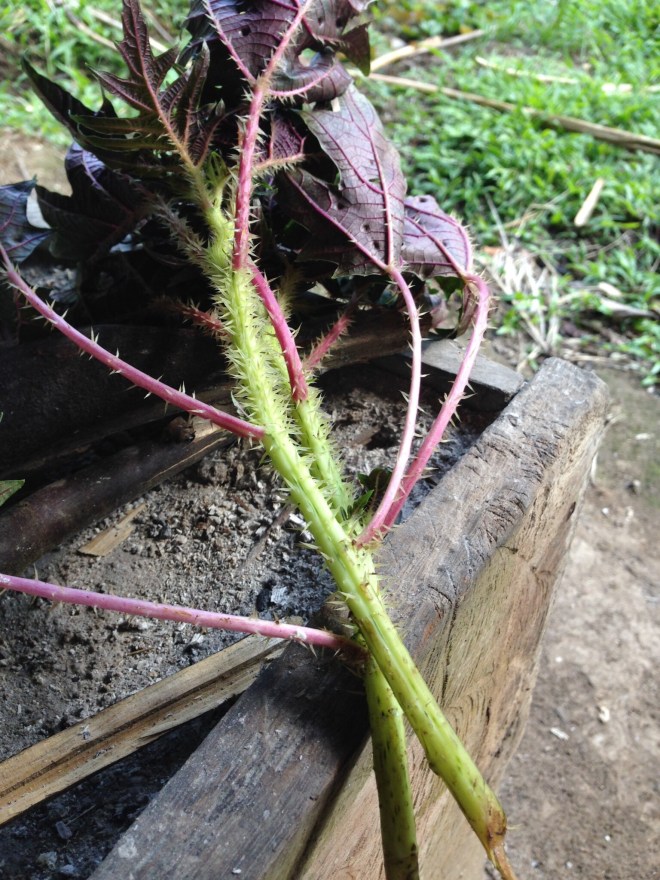 This is the prickly plant!
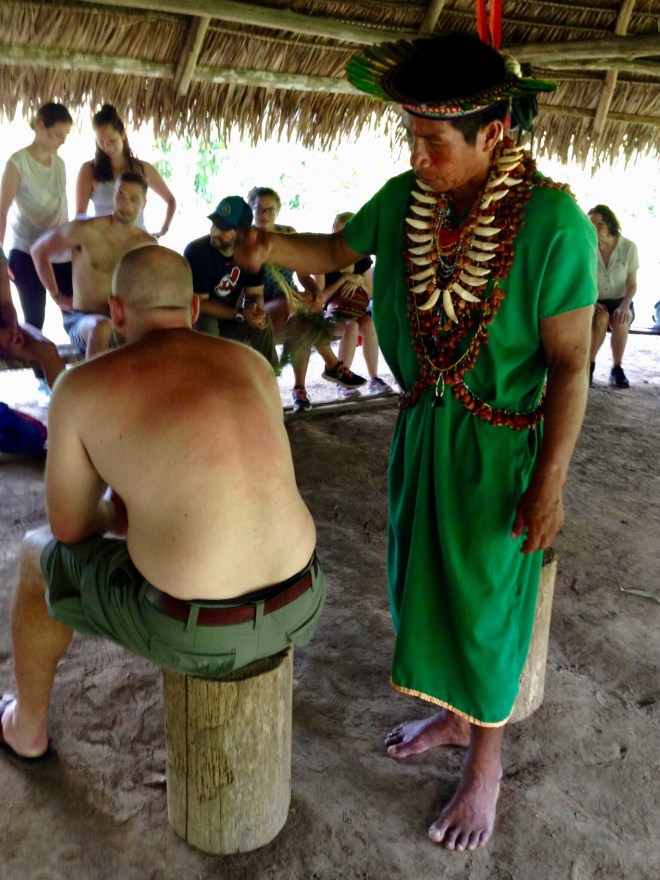
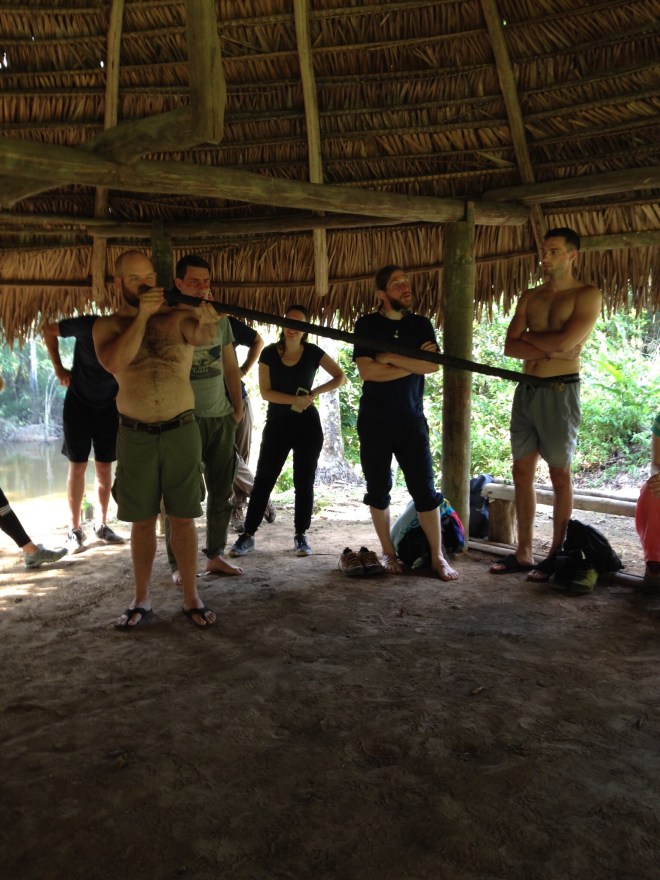
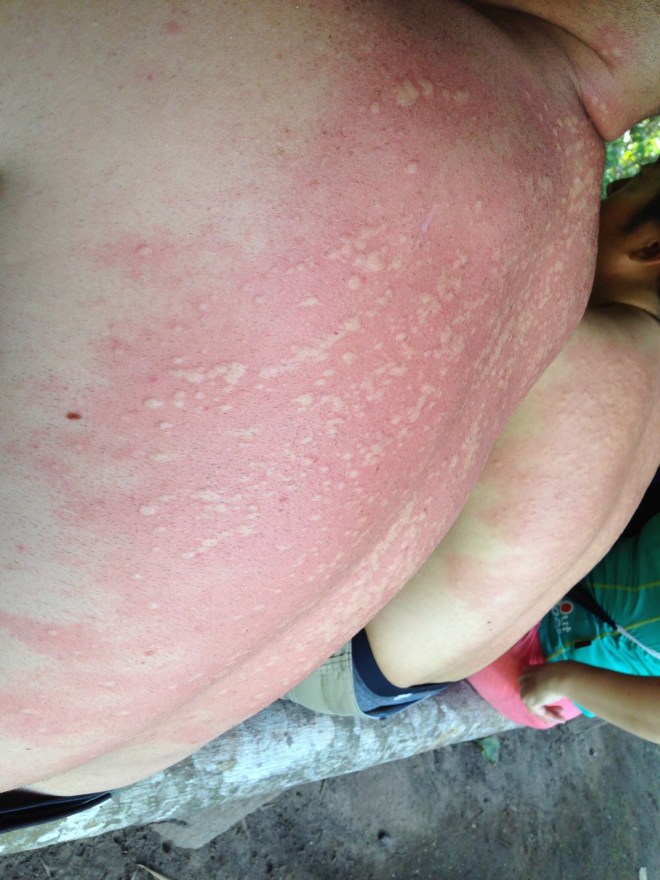 This is a picture of Kirks back after the demonstration (the guy sitting next to him volunteered too!) It looks painful, but they said it’s supposed to relax you. We don’t know what was in that plant, but by evening Kirk was saying he definitely felt more relaxed and he slept great that night.
 —
— —
—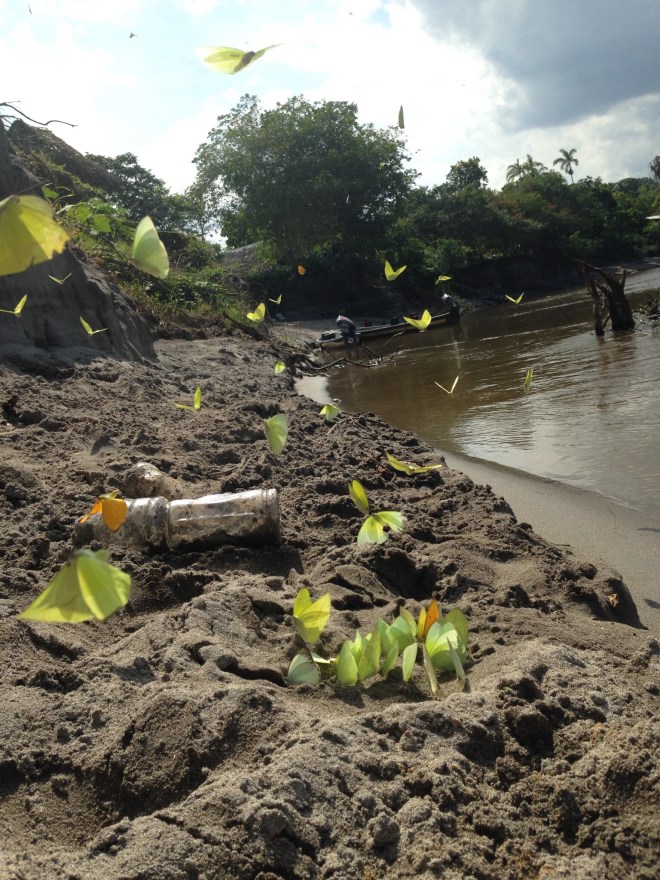 This is a swarm of butterflies we saw by the village.
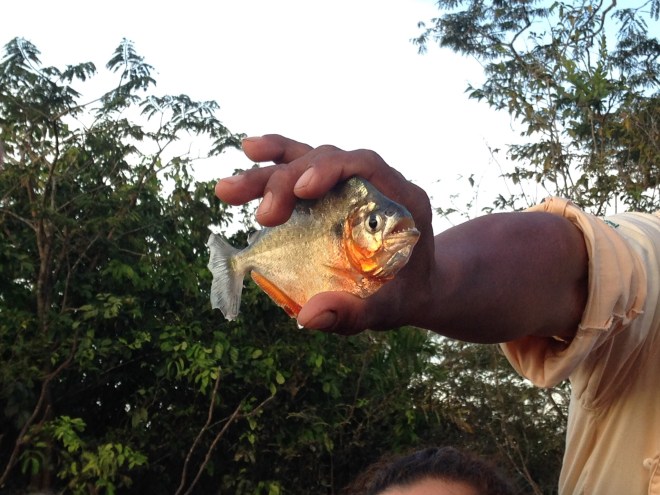 Look at those teeth!
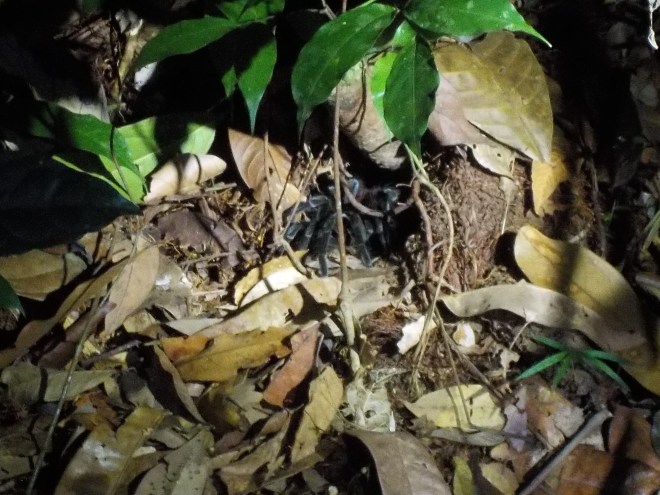 Tarantula
 Leaf (top) next to a bug that looks like a leaf. (How our guide spotted all these in the dark still baffles me)
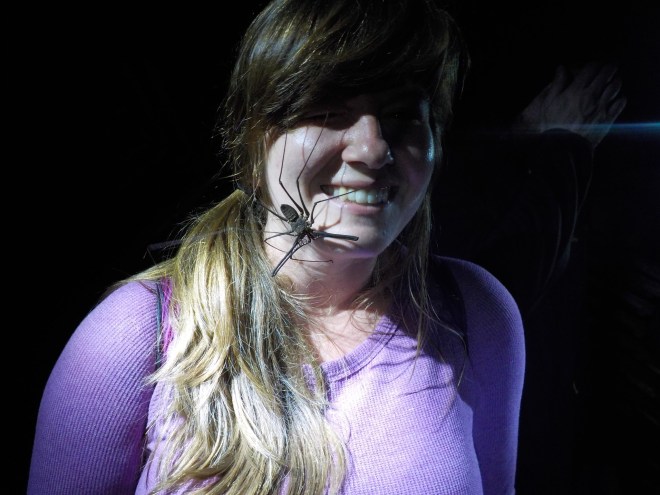 That is a scorpion spider on my face. I volunteered when they said they aren’t dangerous, mostly because it reminded me of something out of Harry Potter😂. It started on top of my head, which seems a little less creepy, ha.
 Overall it was a fantastic trip! I’d recommend the Caiman lodge to anyone!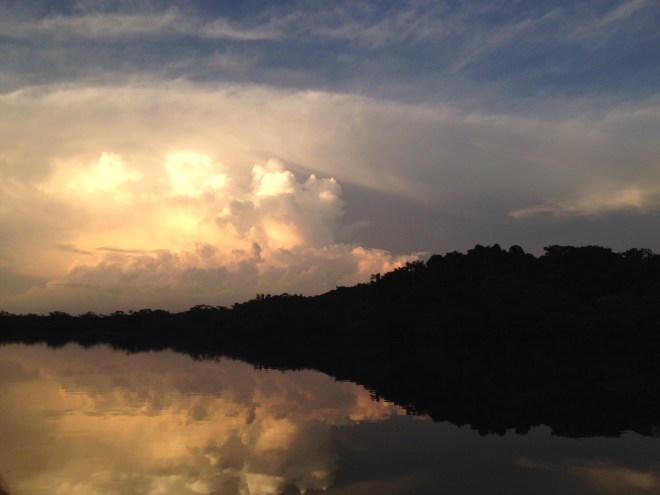





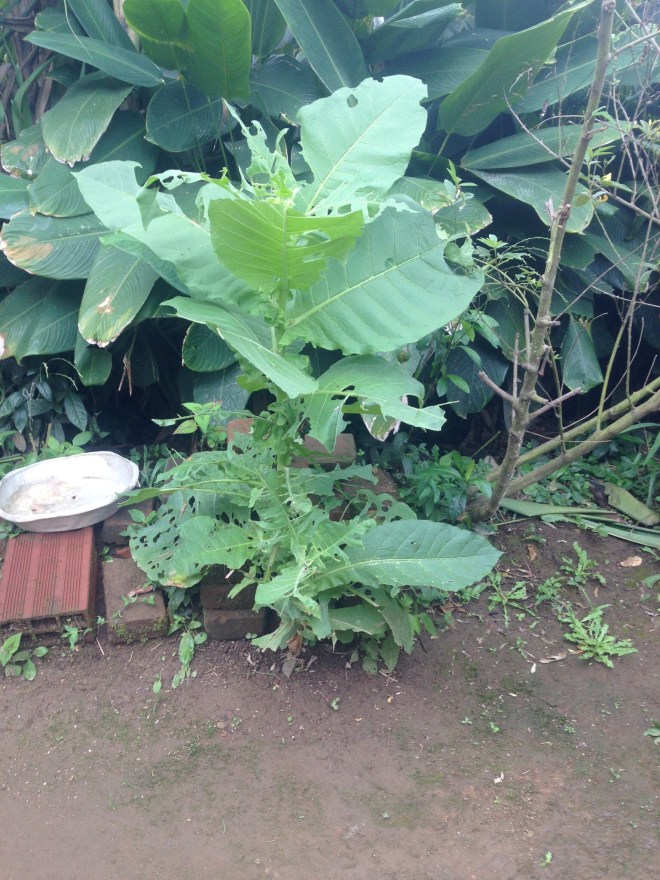
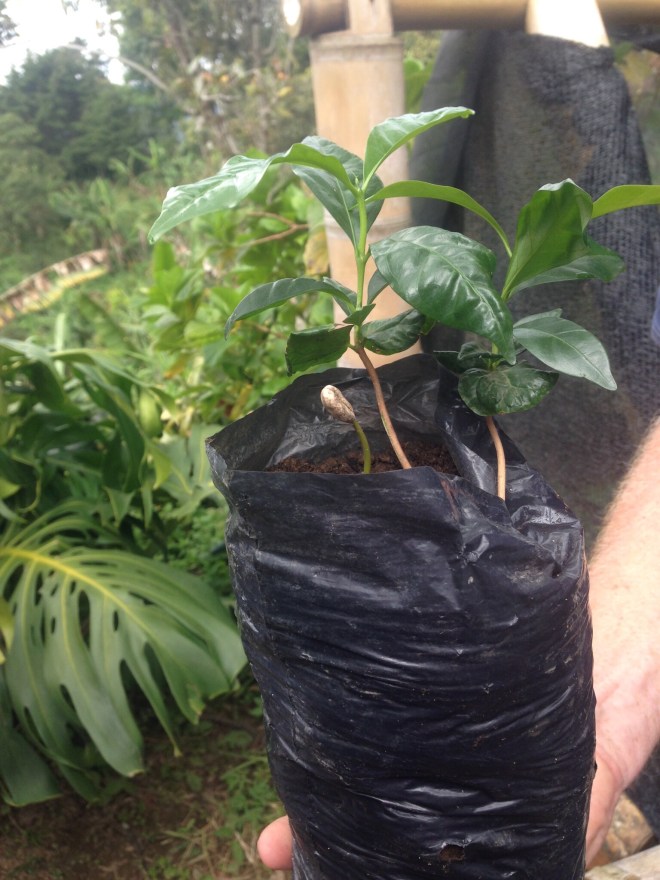 A baby coffee plant.
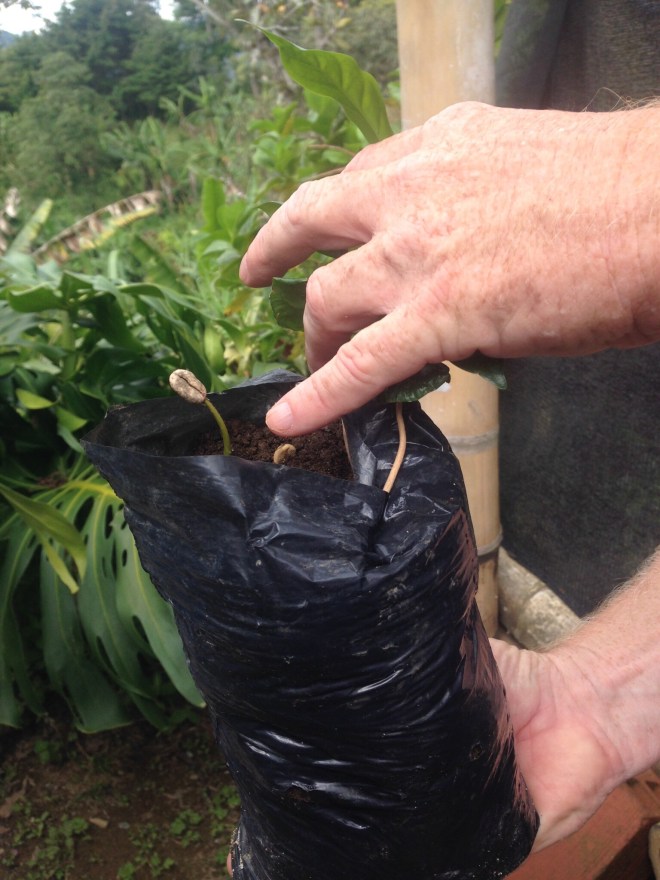 The actual bean comes out of the ground and opens up into two green leaves.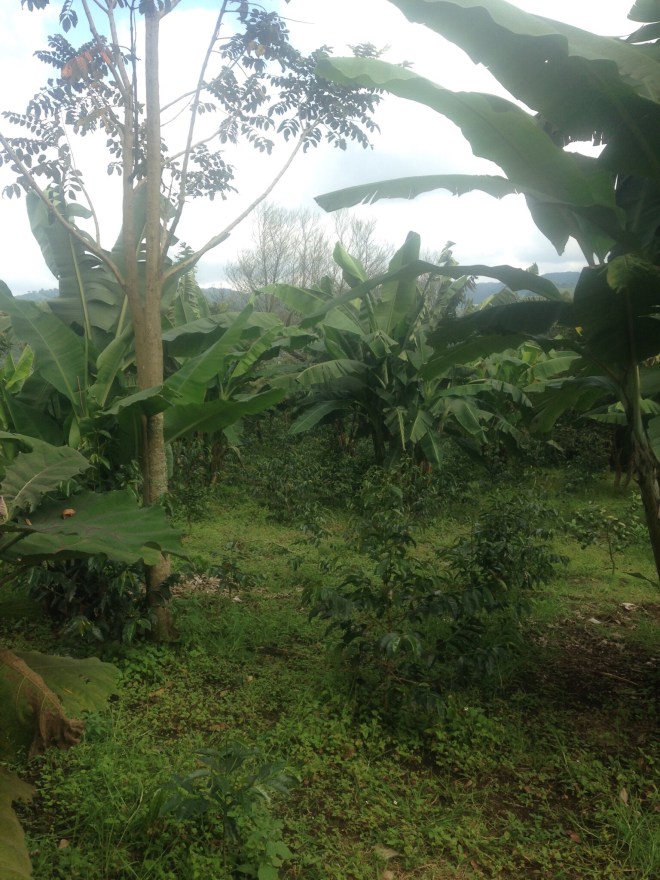

 —
— —
— —
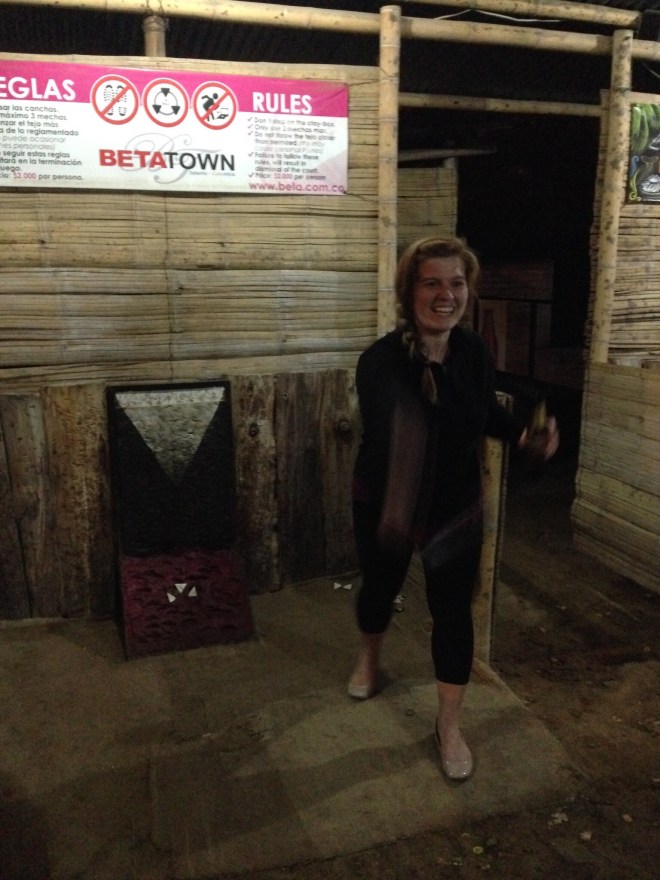
—
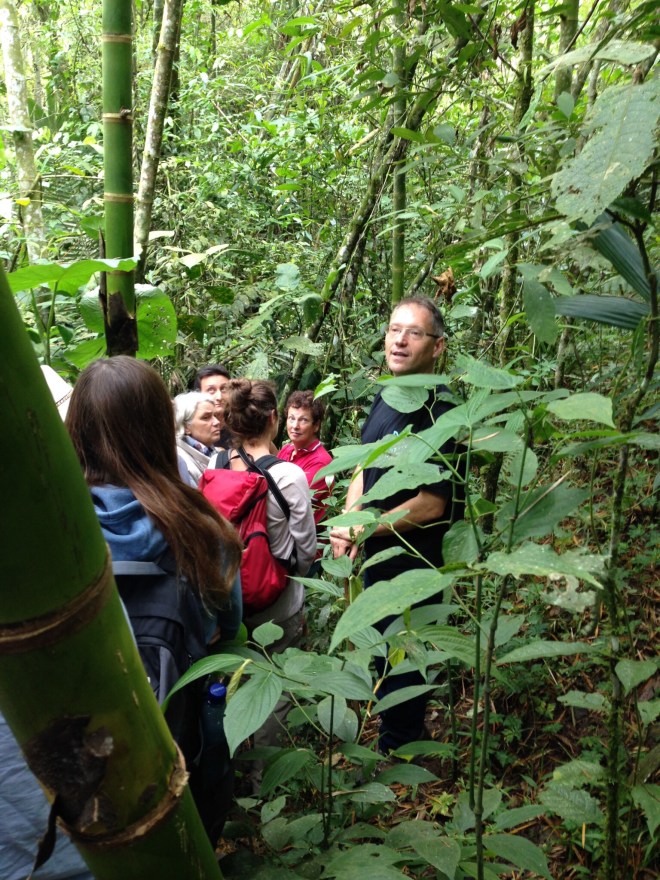 Our group and guide in the forest.
 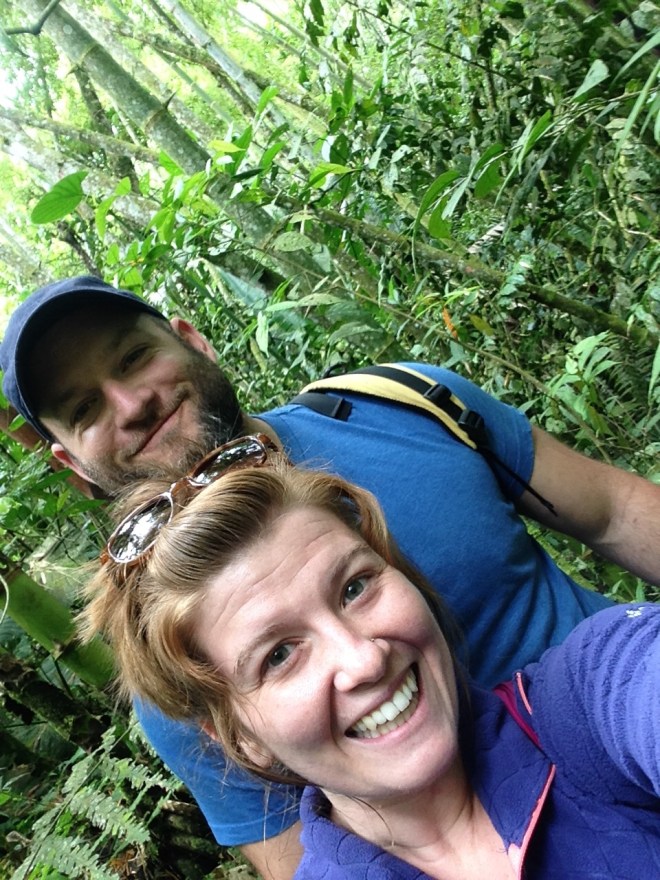 Us 🙂
Us 🙂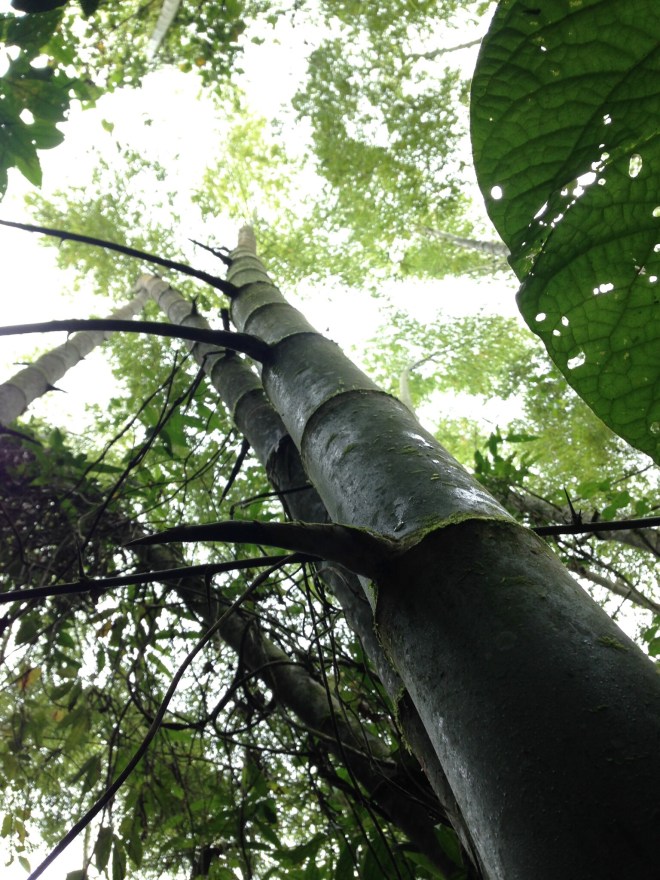 The “bamboo” is huge (they don’t call it bamboo because its different than what we see at home, but similar!)
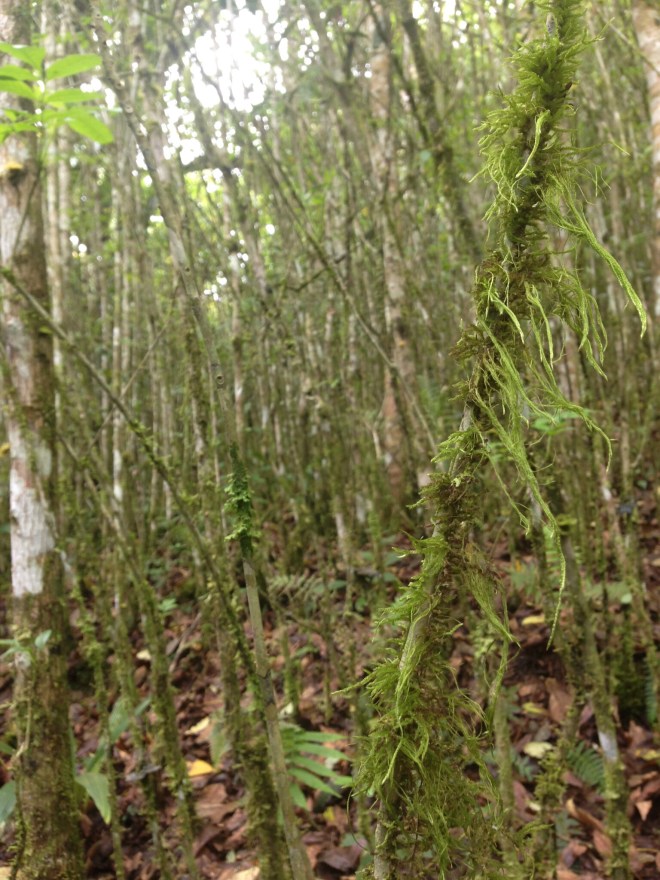 I think the moss that grows on everything is beautiful!
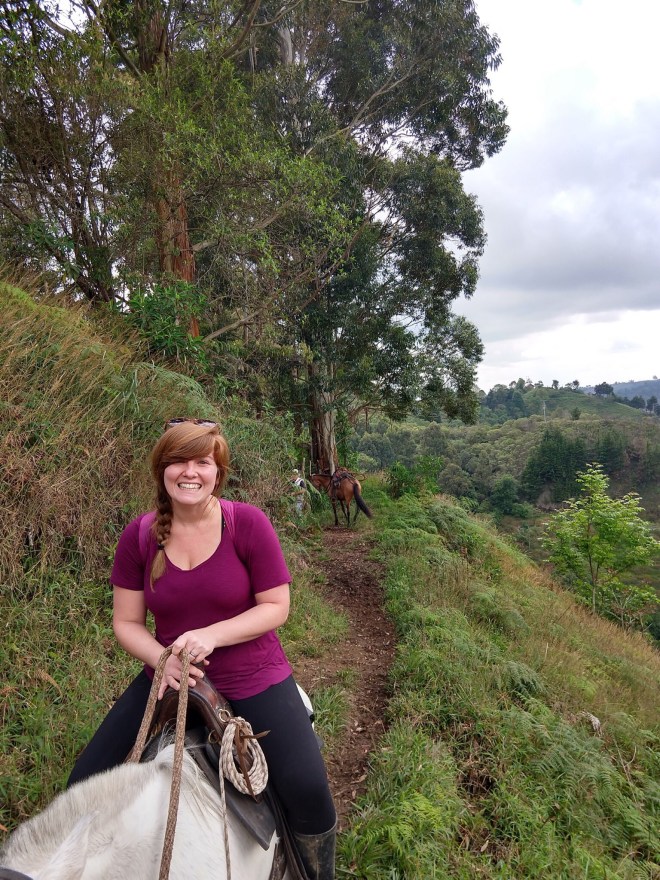 —
— —
— —
— Through the river! I was thankful for the boots they lent us!
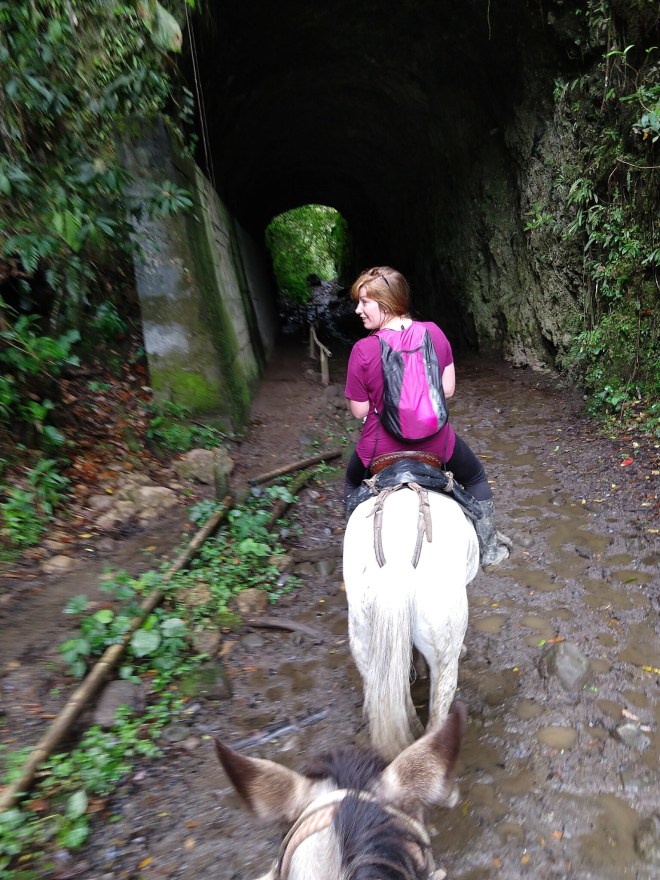 Through the tunnel! It was much cooler in person. This is an old train tunnel that was constructed, but the rails were never put in!
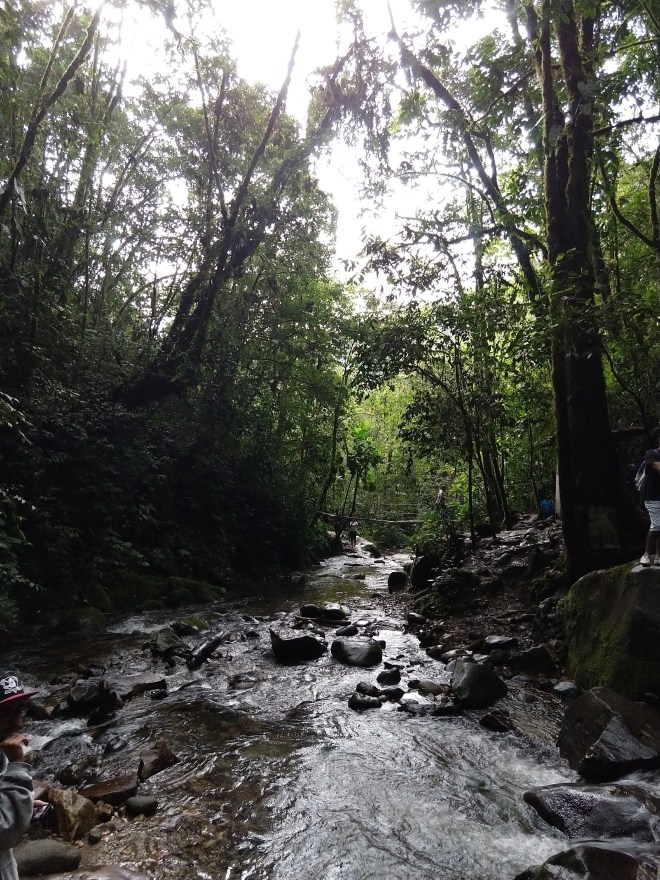 The river that waterfall fell into.
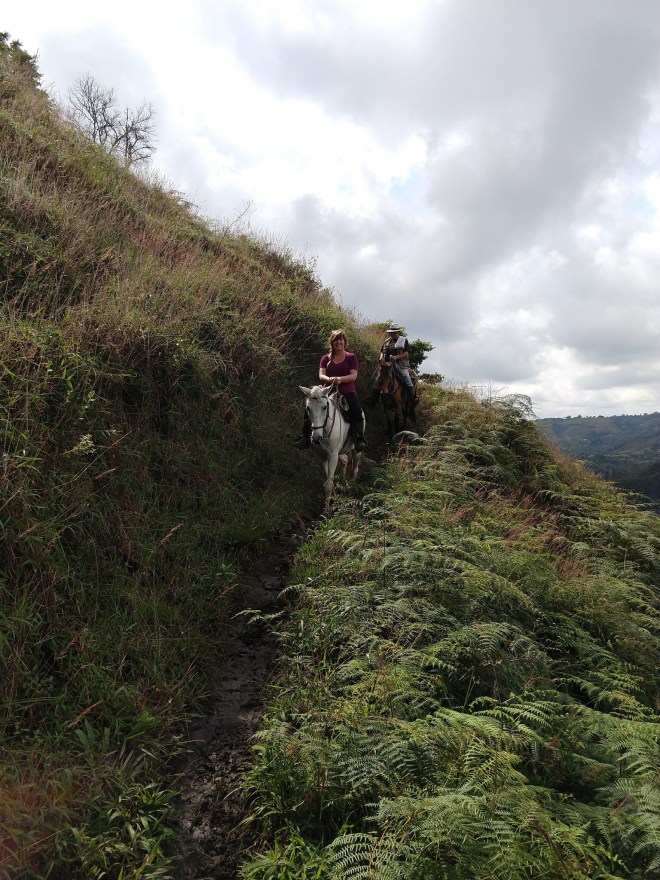
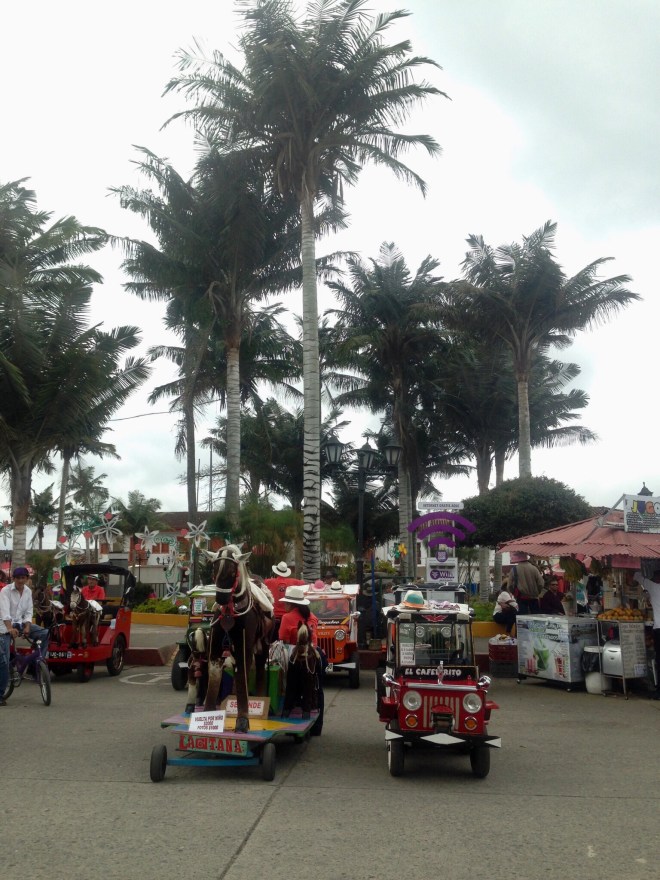
 Some of the beautiful scenery we saw while riding!


 —
—

 —
— —
—
 —
— —
— —
—
 —
—
 —
— —
— —
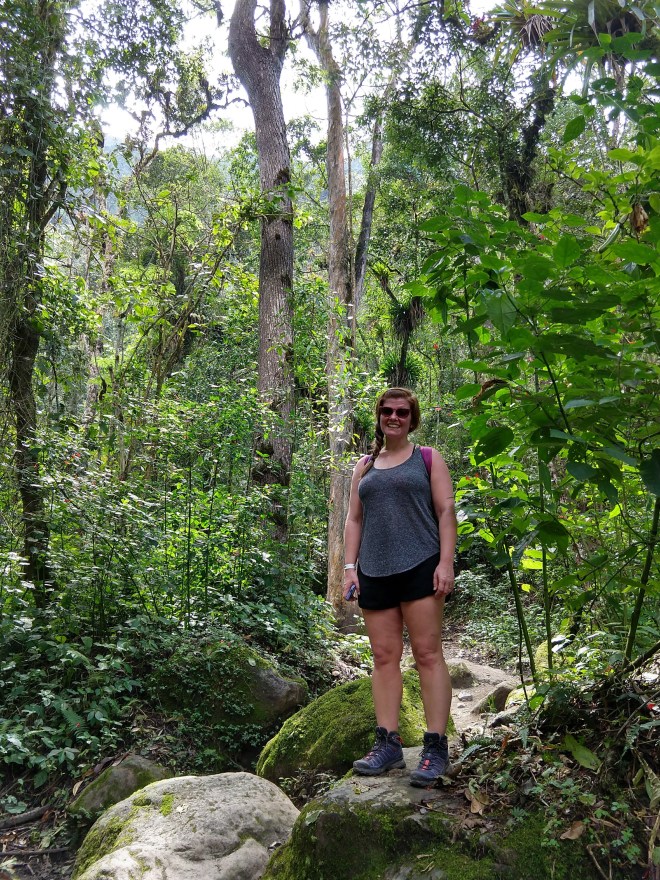
—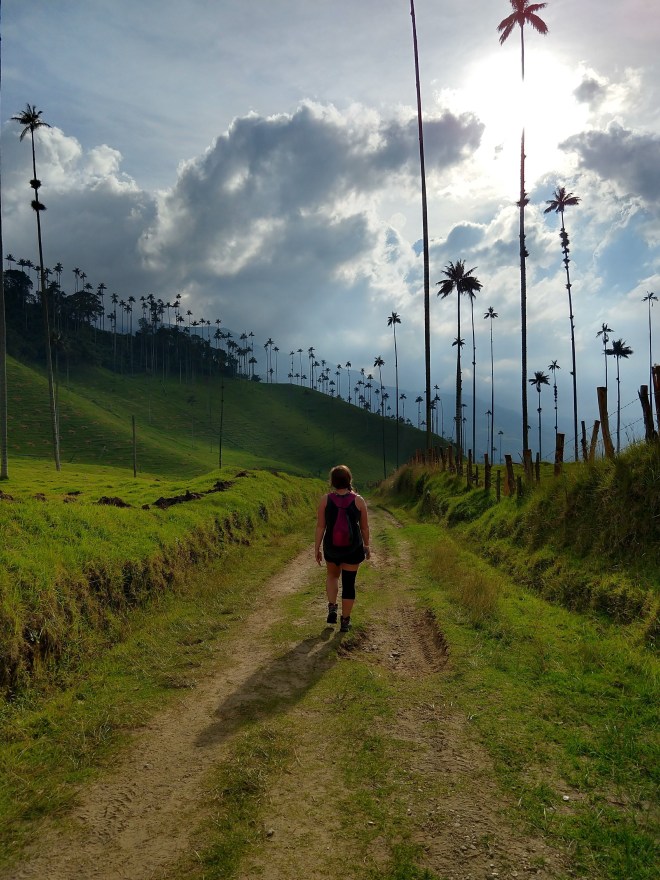 (I’m not currently injured. The knee brace was for protection from an injury long ago. It was easy on my knees going up the mountain, but hard coming down, and the brace offered some assurance!)


 The Yonderers