In total, our time in Vietnam was 30 days, six cities. While Kirk has visited Vietnam on several occasions in the past, this is my first time there. As I write this, we are on our way out of our last city in Vietnam, traveling towards Cambodia. Today’s post is about the city we flew into, my first introduction into Vietnam, Hanoi.
You likely won’t be surprised to hear that for the most part, I love it here. Though my stress level has been significantly higher here due to the unruly traffic and ridiculously loud and often used horns, the beautiful greenery and outstanding fresh food has won me over.
Vietnam is the world’s number one producer of rice, and riding through the Vietnamese countryside, this is very clear. While Hong Kong was filled with shiny buildings, fancy cars, and random green space in between the concrete, Vietnam as a whole is more of a vibrant green, water filled land, with jam packed, hard working, somewhat dingy cities in between. The main mode of transport here are motorbikes/scooters and the amount of people wearing face masks to protect from the fumes of the city number make up about 1/3 of the population. Even the naked faced individuals occasionally cover their faces with their clothes though – some of the truck fumes are pretty bad!
I’ve felt it would be too rude to ask to take a picture of someone with the mask on, but the kids wearing them are particularly cute – kids masks usually resemble some type of animal face :).
Like Hong Kong, the food here has left me wanting more. I was certain that by 4 weeks in I’d be tired of noodle bowls, but the crisp deliciousness inside them usually just leaves me wanting more. We’ve found that each city/region within Vietnam has their own special dish – although our favorite we discovered comes from this first city in which we found ourselves – the dish is called Bun Cha.
Bun Cha is essentially a pork noodle bowl that is served with fresh herbs and greens. Upon ordering the cook brings a small bowl filled with a hot, sweet and savory, sometimes garlic-y, vinegar broth with thin soaked slices of green papaya and carrot. Just before giving you the bowl they drop in a few strips of perfectly marinated, freshly grilled pork and a few small sweetly charred pork patties. On the side, you receive a plate of rice noodles and a bowl of lettuce and fresh herbs (mint, Vietnamese lemon mint, basil, sometimes cilantro, and some other types of herbs we haven’t yet figured out). There are also usually a set of “condiments” nearby – freshly chopped, quite hot peppers, a vinegary garlic sauce, soy sauce, fish sauce, sweet chili sauce. I usually just add the hot peppers and garlic 🙂
You eat the dish by gradually adding the noodles and greens to the broth, as the broth goes down. I wish I could send flavors! In the States I usually do not prefer vinegar based dishes and sauces (for example, I prefer sweet barbeque sauce to a vinegar one), but here, the mix of herbs and, well, probably the sugar they add, makes it taste more like a fresh salad – a fresh noodle salad. Since you eat the dish with chopsticks and a spoon, you usually end up eating the noodles/greens/meat first, and sipping the leftover broth at the end.

How they bring Bun Cha to you- everything separate.
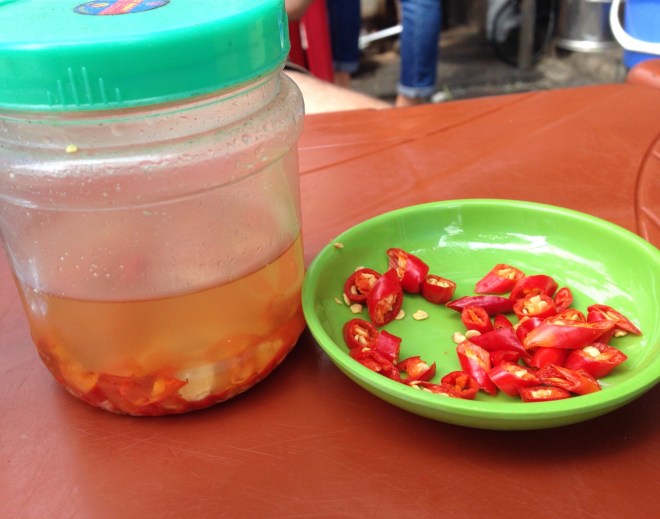
Hot peppers and a hot pepper garlic sauce
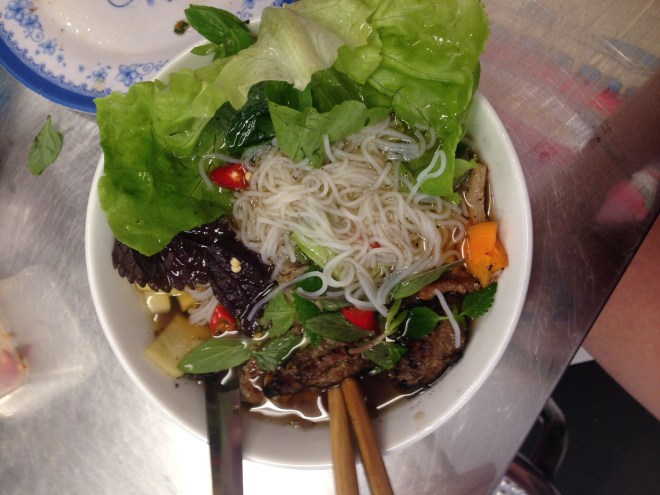
My Bun Cha bowl ready to eat :)!

Our favorite place for Bun Cha in Hanoi. We found it by accident, and never found any others that quite compared! Also – 30,000 dong is less than $1.50 US (around 23,000 dong per USD)
As for other foods we had in Hanoi…
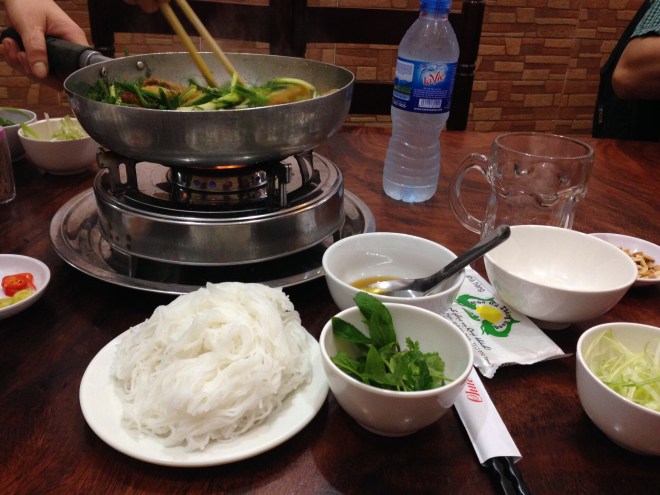
This is Cha Ca – Tumeric fish with fresh dill, lemon grass, and green onions that is served with rice noodles, fresh herbs, lime, and a light vinegary sauce. Strangely, the dill had very little flavor at the place we had it, but it was still pretty tasty.
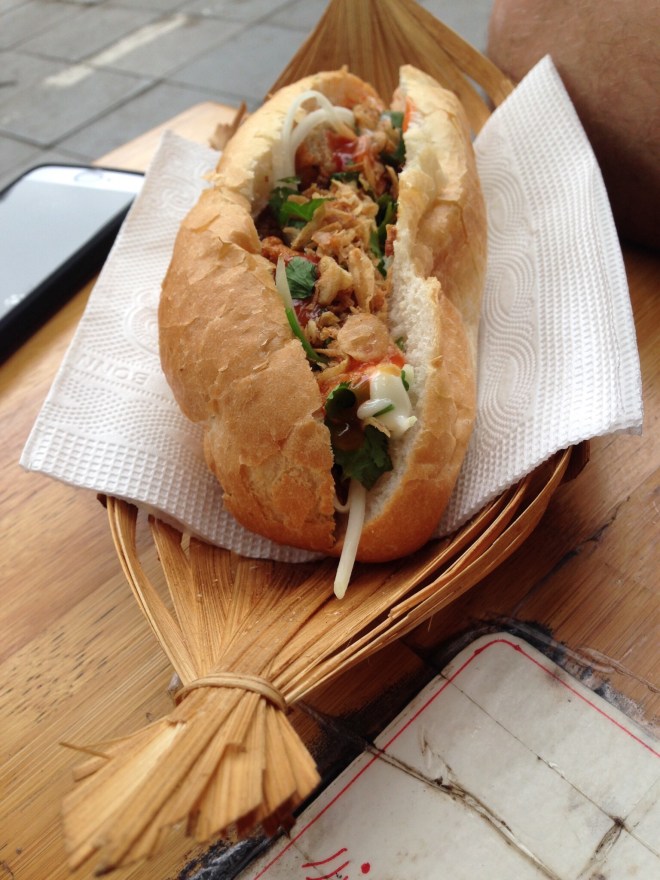
Banh Mi – Vietnamese Sandwich. It comes in a variety of meats and has a collection of different vegetables (often pickled) and herbs – they are more delicious than your average sandwich and cost around 15k ( .70 cents US)

Bun Bo Xao, a beef noodle salad with bean sprouts, peanuts, fried onions, greens, herbs, rice noodles, and a light sweet vinegar based sauce.
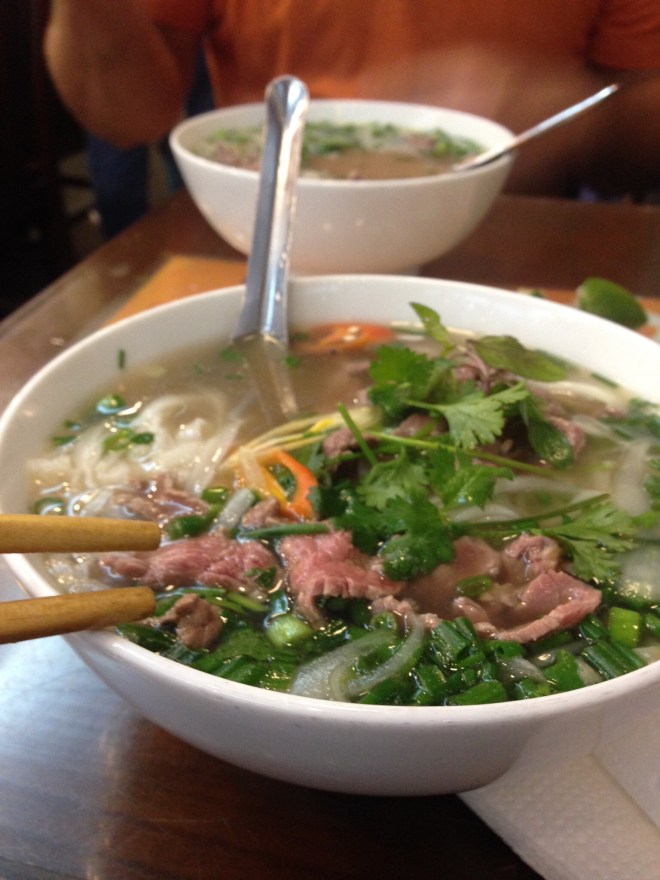
And the ever famous – Pho, in this case, Pho Bo, Beef Pho. All phos are not created equal and I’ve found my favorite ones either have a light mix of ginger, cloves, and cinnamon or a heavy onion taste to the broth. There is also a stir fried version of this, everything seen here fried up in a pan, minus the broth. That too is tasty!
If you ever find yourself in Hanoi, I also recommend hunting down “King Roti Coffee Buns” and getting the coffee bun filled with chocolate. My nose found this delicious pastry as we were on our way home one day and I couldn’t resist going back, though I never got a picture of it. It was somewhat like the pineapple bun in Hong Kong, texture wise, (soft with some kind of crumble on top) but it actually had a hint of coffee! Delicious!!
We also had our fill of spring rolls and fried wonton/dumpling type foods, but most of those aren’t too different that what you see back home.
Onto something other than food 🙂
Hanoi itself is the capital of Vietnam and the resting place of Ho Chi Minh, the communist leader who led Vietnam to independence. In the middle of the old city, is a large, beautiful lake called Hoan Kiem that is a center of activity for the city. In fact, on the weekend nights, all the streets around it become pedestrian only and street vendors and performers set up around the area to sell to and entertain the crowds. There are also plenty of Zumba type groups that come out – you can watch as groups of people dance shamelessly at various places around the lake.

The lake with one of its beautiful flowerbeds.
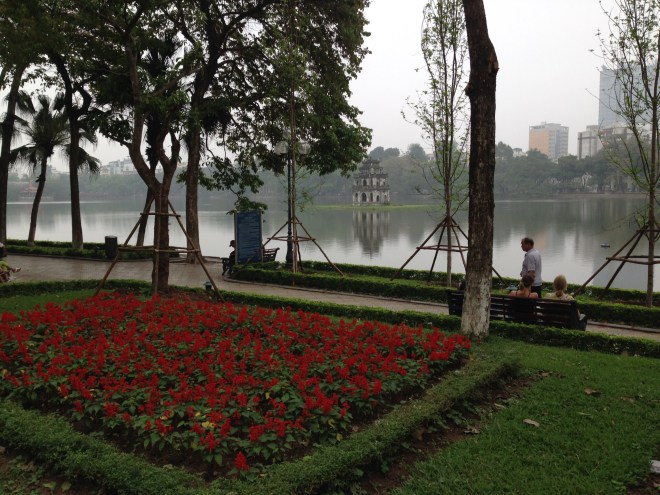
Another view of the lake with “Turtle Tower” seen in the middle.

An edge of the lake – this is not a lake for swimming!
There are also several notable sights around the lake.

This is the entrance to the “Temple of Jade Mountain,” a temple located on an island in the middle of the lake.
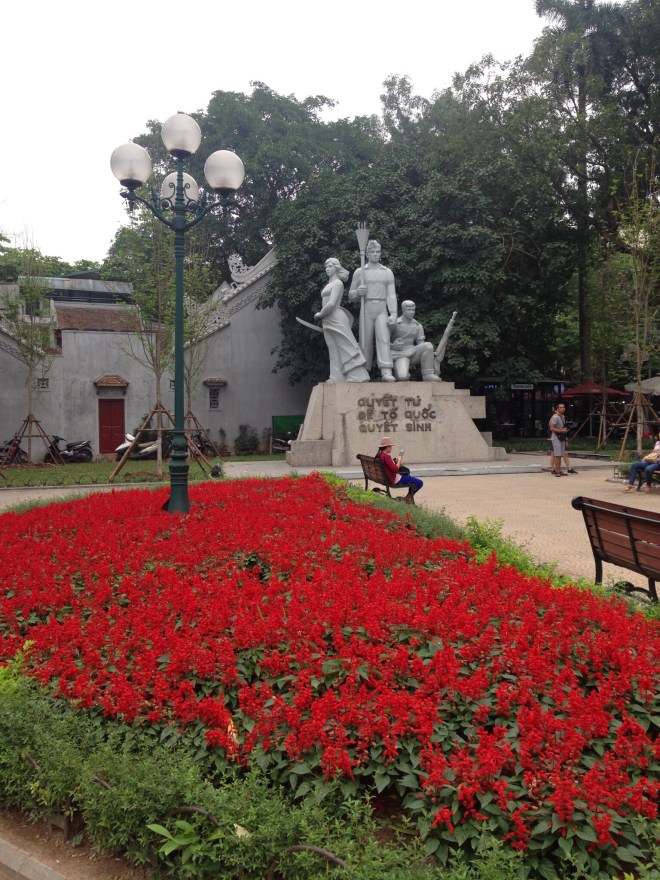
A war monument near the lake

A building with a large picture of Ho Chi Minh, located across the street from the lake.
I mentioned earlier that Hanoi is the resting place of this former Vietnamese leader. What you may not know is that Ho Chi Minh’s body is fully preserved and kept in a glass case in a large mausoleum within the city. Last time Kirk visited, he was able to see the body on display, but when we visited this time we were unable to go inside, but did take a look around the Presidential Palace grounds. 
The front of the mausoleum
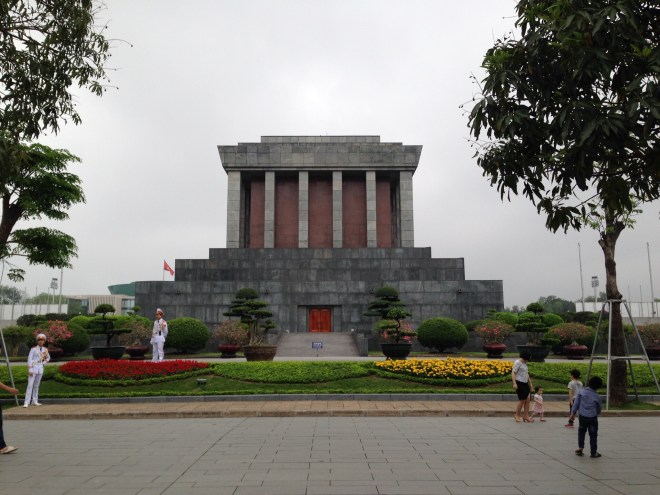
The back of the mausoleum

The Presidential Palace, built for the French Governor when France was still the ruling power. Though it’s the “Presidential” Palace, Ho Chi Minh refused to live here due to it’s grandiosity and had a much more modest residence built nearby.
According to what we read, Ho Chi Minh practiced what he preached, which seems to be part of the reason he was so loved. Below are a few pictures of his humble home.
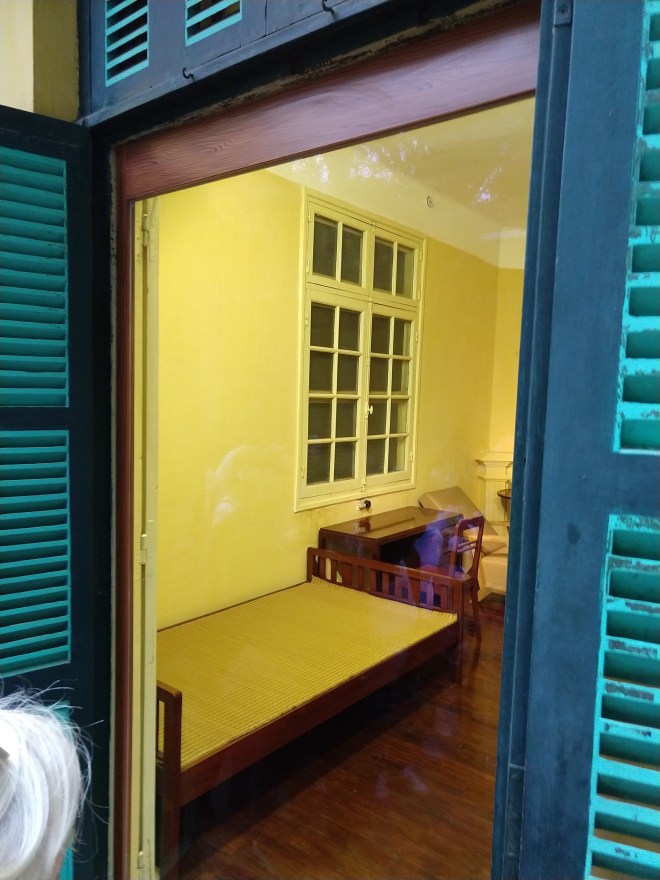
His bedroom
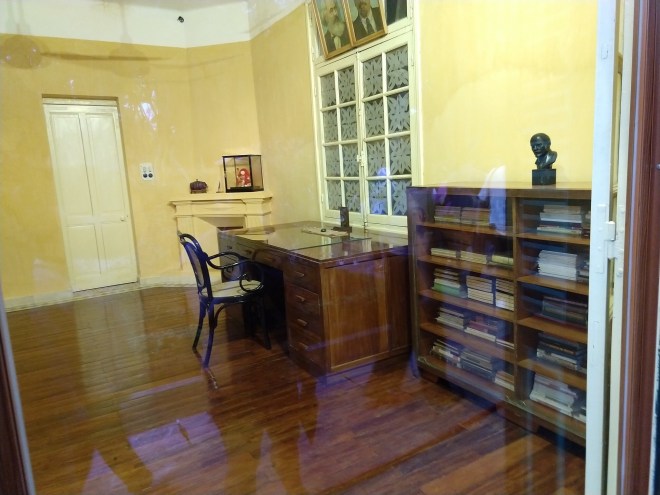
His office

His dining room
It was really fascinating to learn about the circumstances surrounding the Vietnam War while in Vietnam. Honestly, if I was taught about the Vietnam war in school, it must have only been a few sentences because I have no recollection of it. I knew the Vietnam war had something to do with communism and that a lot of people died, but I had never even put together the pieces that it’s a war we lost. I’m thankful that my traveling partner is a history buff, as he has been able to help fill in the missing pieces for me.
If you are as unaware as I was, I’ll take a brief moment to fill you in on my current understanding of what happened in the Vietnam War – though I’m pretty sure parts of this are still debated. Very long story short – the French conquered and colonized Vietnam in the 1800’s and ruled over them up until WWII. In WWII the Japanese came into Vietnam and ran the French out. Towards the end of the war the US worked alongside Vietnamese rebels as advisors to help overthrow the Japanese and at the end of WWII, and when the Japanese left, those Vietnamese rebels declared independence. As the leader of the movement for independence in Vietnam at this time, Ho Chi Minh wrote numerous letters to the US asking for our assistance in their independence (the Vietnamese Declaration of Independence is actually closely modeled on the US Declaration of Independence). The US turned him down to support the French instead, and in the end, Ho Chi Minh strengthened his relationships with Russia and China. It’s still debated whether Uncle Ho (as they call him here in Vietnam) would have fully turned to communism if the US hadn’t have turned him down in support of the restoration of the French colony, but Ho Chi Minh certainly had socialist tendencies prior to the US support for the French. I guess we’ll never truly know what could have happened if the US had offered help (nor do I think dwelling on the past is a good way to move forward, but it is an interesting aspect of the story that I previously didn’t know!).
After WWII, the French ended up coming back into Vietnam to reclaim their colony with great financial support from the US, but the newly declared independent Vietnamese were unwilling to be controlled again. After a nearly 8 year war, the French gave up their claims to Indochina. In the treaty to end the French war, Vietnam was divided into two countries with the communists controlling the North (Both North and South wanted independence, but the South didn’t want to be communist). By this time, US foreign policy was centered around stopping the spread of communism throughout the world, and the fear of communism had spread amongst the US people, so when the American government saw opportunity to support the South, we stepped in. It now seems that while both South Vietnam and the US saw this as a fight against communism, the north Vietnamese still saw this as a war for independence.
Ho Chi Minh is quoted to have said to the French, “You can kill ten of my men for every one I kill of yours, but even at those odds you will lose and I will win.”
In 1975, the US withdrew our last troops. The final numbers of lost lives turned out to be just under 60,000 US lives and well over 3 million Vietnamese lives (two million of those being civilians from both the north and the south).
Vietnam has been a communist country ever since, though there is still somewhat a divide in the country both between the north and south and, ironically, between the rich and poor. Some from the South still face the effects of having fought against the what the country’s history now deems as the “wrong side,” struggling to find work and feeling unable to speak out against government if they wanted to – though this lessens as more time passes. The divide between the rich and poor remains, making me wonder further about how much of the North’s fight was actually about communism to begin with. Having visited Vietnam Military History Museum in Hanoi, it seems as if this immense desire for independence was their true guiding light.
Here’s a little about the museum:
Before entering the museum there is a “graveyard” of old war equipment from centuries past set up next to a very old citadel. There’s everything from old canons to modern helicopters and each piece has a story beside it. Some machines were captured and later used by the Vietnamese, while others were shot down or left behind when the war was over. Some of the older canons were found hundreds of years later on old battle grounds.
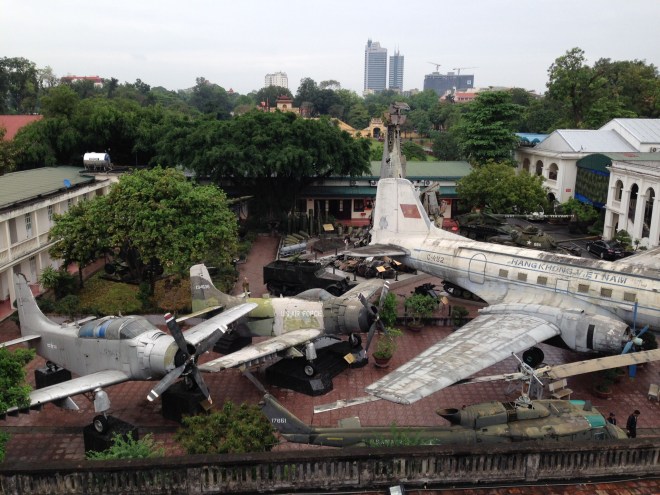
A picture of the “graveyard” from the top of the citadel.
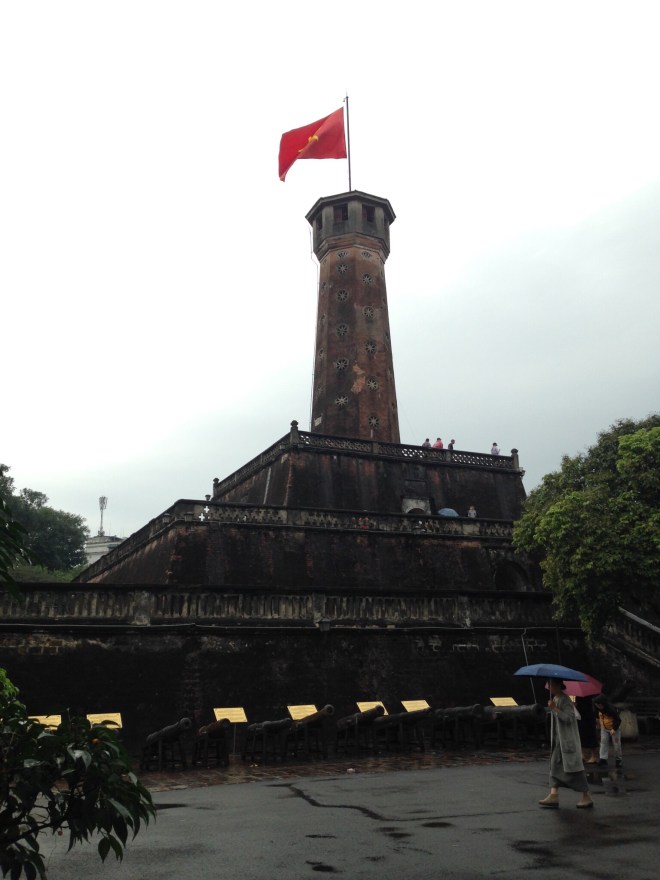
A picture of the citadel and canons. This citadel was built in 1812 and is one of the few pieces of the old city that survived the French invasion in the 1800’s.
Entering into the museum itself, you very quickly find yourself immersed in a story of oppression and resistance. A series of rooms in the museum goes through the history of 1000’s of years in which the Vietnamese were were taken over, but never stopped fighting. They describe themselves as a people who continue fighting, even if it’s behind the scenes while someone else is the ruling power.
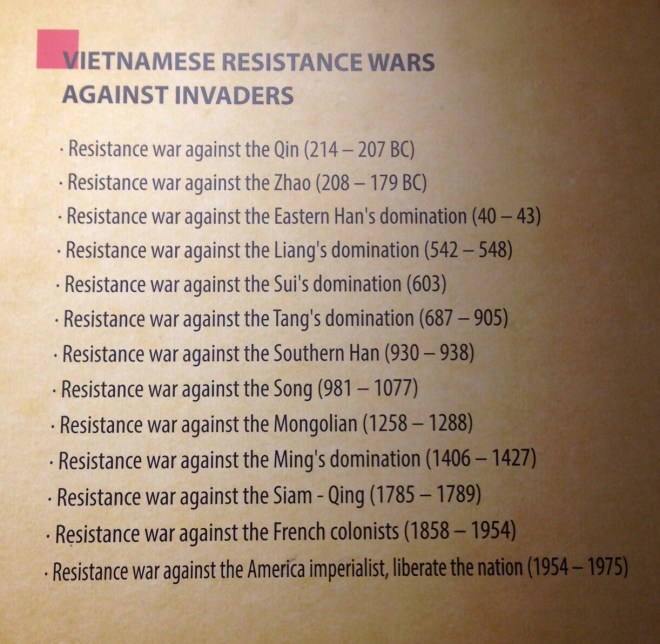
A list of wars talked about in the museum.
Through the storyline presented, you easily see the passion behind the need for liberation that they had reached by the end of WWII. The whole museum builds up to the final Battle – “The American War.” In this final section they describe their war tactics, displaying artifacts with a very exact description of each – this was a fascinating read. The descriptions read more like a history of a people passed down verbally, rather than a textbook type explanation (which says something of the culture itself). A sword, for example, might say – “This sword was owned by *name* who used it to kill 5 enemy soldiers in *city*, commandeering two enemy rifles in the process.” It’s very different than an experience you have in a US museum – it’s not as concise – but it’s kind of cool to see history told in such a personal way. Afterall, it’s not just leaders who are talked about in the museum, but the everyday man.
Here’s a picture of an example of that:

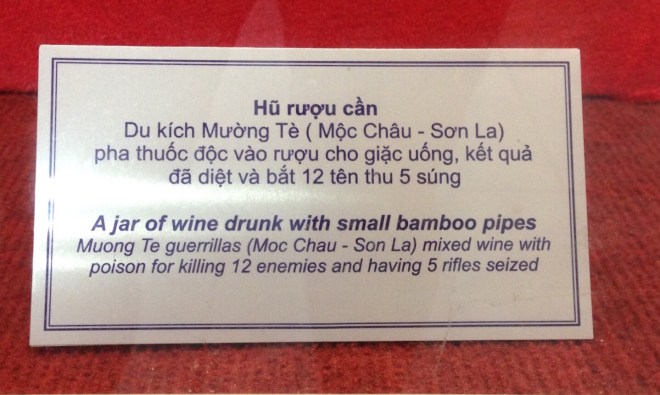
We learned a lot by visiting the Vietnam Military History Museum, but there was another museum that Kirk had visited previously that he wanted me to see – Hao Lo Prison Museum.
According to the museum, Hao Lo Prison was built by the French and used as a political prison for Vietnamese dissentors during the French reign. After the French had been run out, this was building was used for US prisoners of war during the Vietnam/American War – for example, John McCain was kept here. I would describe this museum as having possibly the strongest bias I’ve ever seen at a museum, but even a strong bias tells a story.
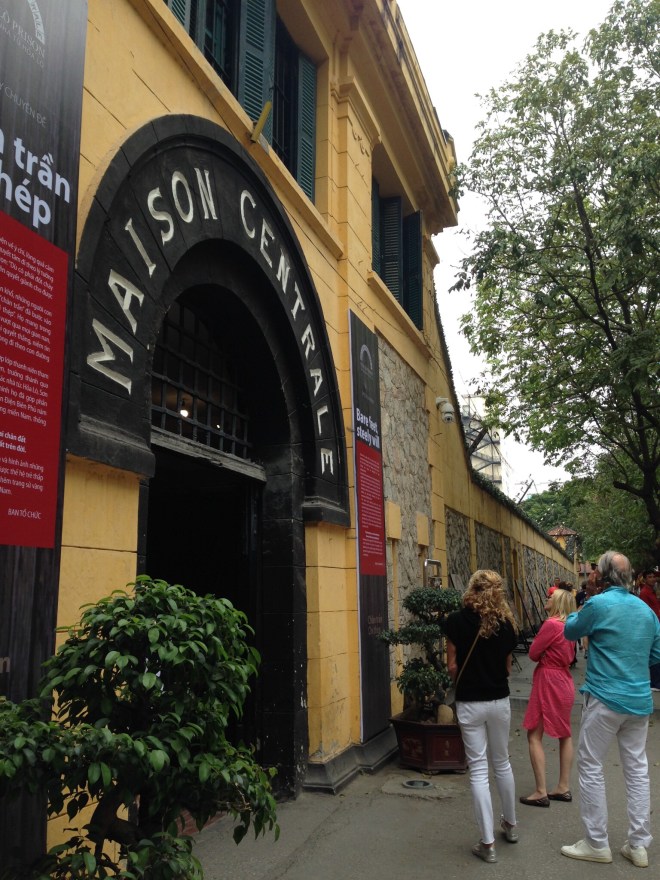
The outside of the prison/museum.
In brief, the first half of the museum is about how terribly the French treated the Vietnamese prisoners in this facility (alongside information about how the Vietnamese never quit fighting for freedom); the second half of the museum is about how nice the Vietnamese were to the American prisoners. Photos are below.
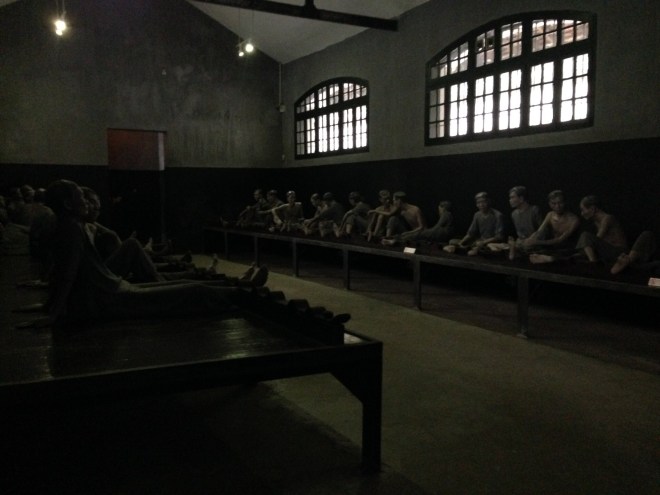
One of the rooms where Vietnamese prisoners were kept, feet shackled.
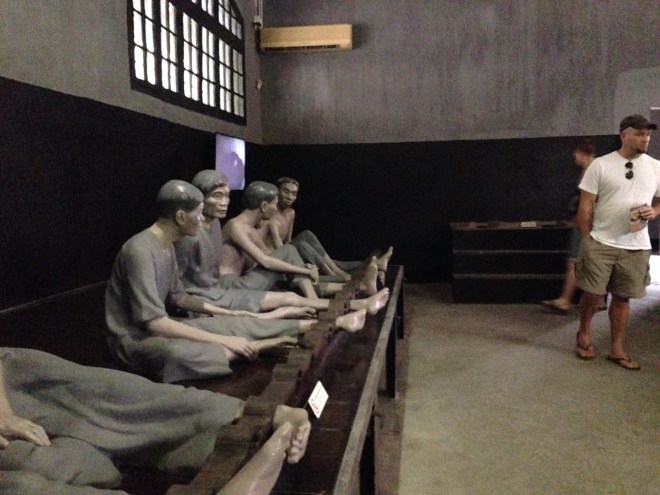
Another photo of the same room showing the “toilets” at the front of the room where they had to relieve themselves in front of everyone.
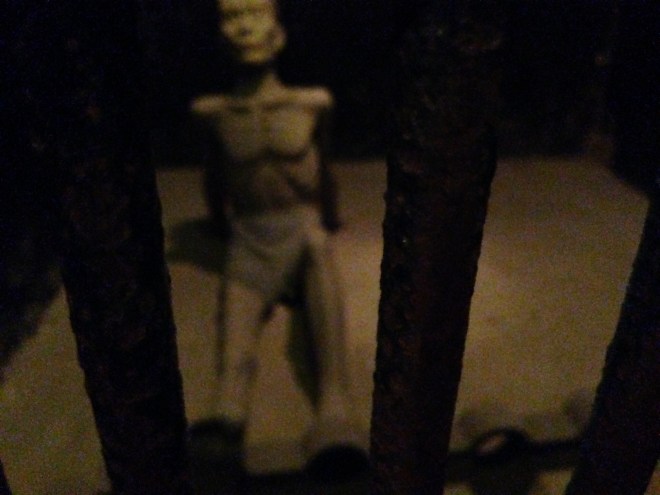
Solitary confinement for Vietnamese prisoners -this room would have been completely dark, and, according to the museum, prisoners were often left to relieve themselves right where they were sitting, leading to disease.
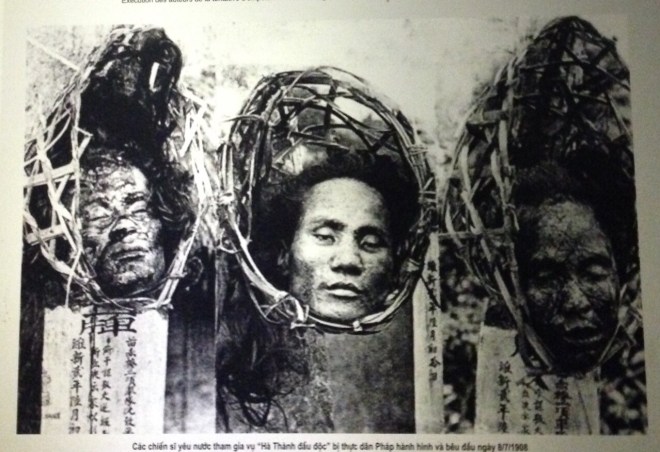
A picture of a picture that was next to a guillotine used by the French for decapitating Vietnamese prisoners, their heads then placed publicly as an example.
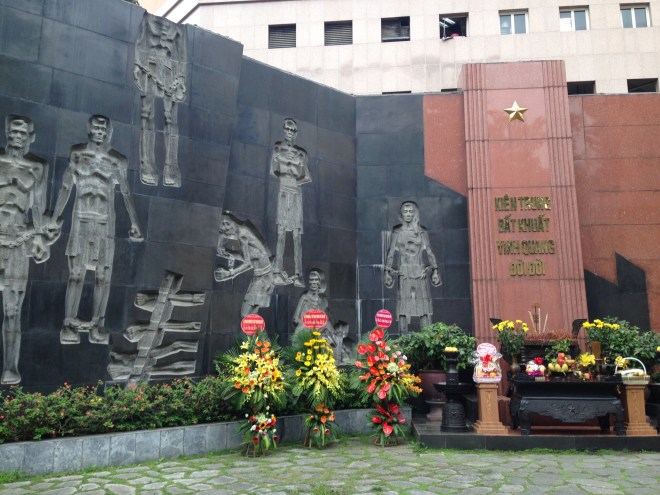
A monument for the Vietnamese prisoners.
Onto the American prisoners…
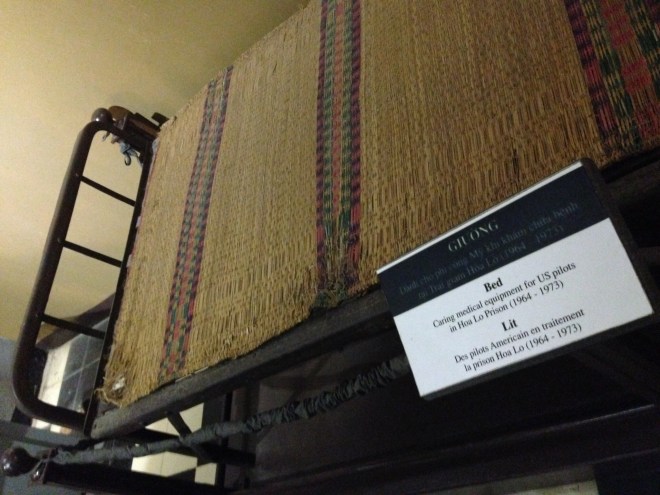
In case it’s hard to read, the description says, “Caring medical equipment for US pilots in Hoa Lo Prison (1964-1973)”
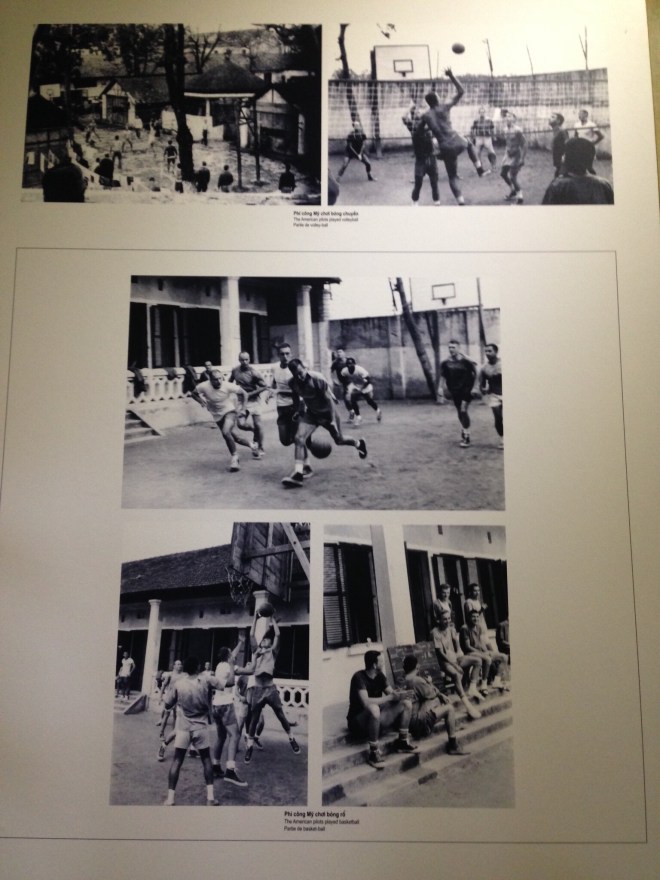
—
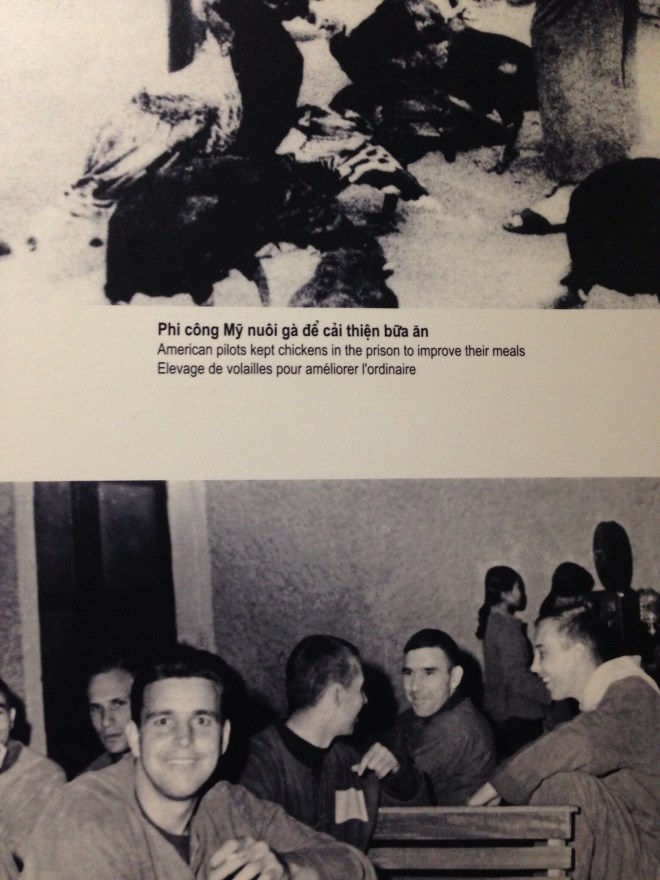
“American pilots kept chickens in the prison to improve their meals”
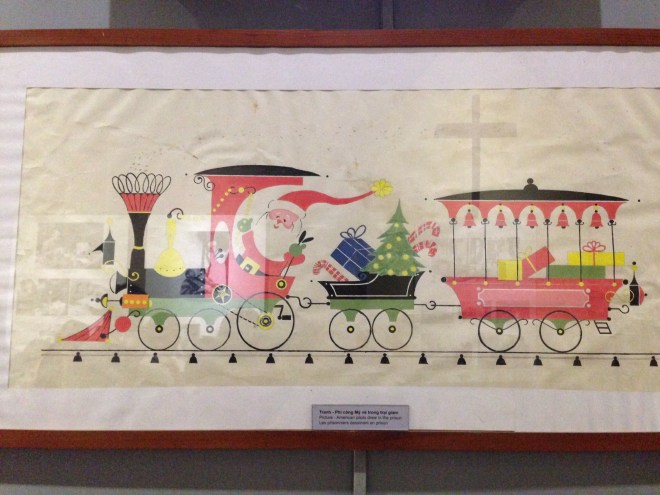
“American pilots drew in the prison”
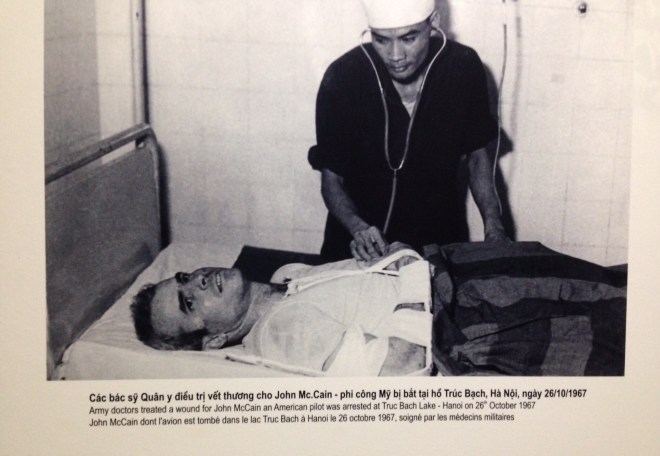
“Army doctors treated a wound for John McCain an American pilot was arrested at Truc Bach Lake – Hanoi on 26th October 1967″
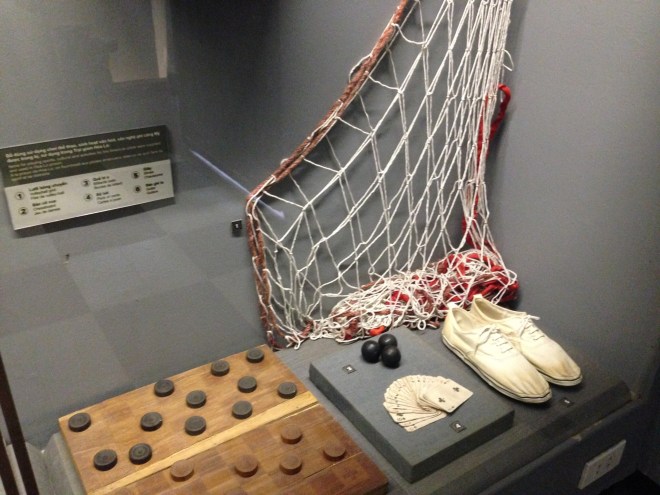
“Items for playing sports cultural and activities for the American pilots were supplied and used in Hao Lo Prison”
Other than a few notes about how the US pilots were captured, this is essentially the only type of information presented about the American POWs, and there were many other objects and photos like these on display – the POWs having Christmas dinner together, clothes presented to the POWs…
I mean, to be fair, I do think it’s possible that the Vietnamese prisoners were treated more harshly by the French than the Vietnamese treated the American POWs – the guillotine picture alone shows how harsh the French must have been to them – BUT it’s also well known that the Vietnamese on both sides were especially torturous to prisoners of war. I suppose everyone has their own view of history – this just serves as a pretty solid reminder that all history we hear is from a perspective – even our own. Though after visiting many museums throughout Vietnam, I think it’s pretty safe to say that they have an especially strong bias/agenda (more to come!).
At the end of the museum there was a picture of John McCain visiting the museum – I’d be fascinated to hear his thoughts.
Anyway, that’s more than enough of an introductory to our time in Vietnam. The next blog will be mostly pictures of one of the most beautiful bay I’ve ever seen. Stay tuned!
I leave you with a short clip of a random man crossing the street in Vietnam. Traffic never stops here, so you have to just keep going! There is a popular tourist shirt with a stop light on it that says:
(Green light) I can go
(Yellow light) I can go
(Red light) I can still go
It’s all too true!

 The Yonderers
Love the perspectives!
LikeLiked by 1 person